Cutis laxa

LAST UPDATED: Nov 21, 2021


Introduction

Cutis laxa is a rare, inherited or acquired condition of skin elasticity, characterised by the appearance of loose, wrinkly and prematurely aged skin. The way in which the condition presents differs according to how it is inherited or acquired, with variable involvement of elastic tissues in other organs, notably the lungs, cardiovascular system, joints and gastro­intestinal and genito‐urinary systems.

This chapter, which is set out as below, provides a very brief overview of this condition.


Aetiology

  • Most cases are inherited, and can be x-linked recessive, autosomal dominant, or autosomal recessive, the latter is the most common and also the most severe

Clinical findings

Inherited cutis laxa

Cutaneous features 

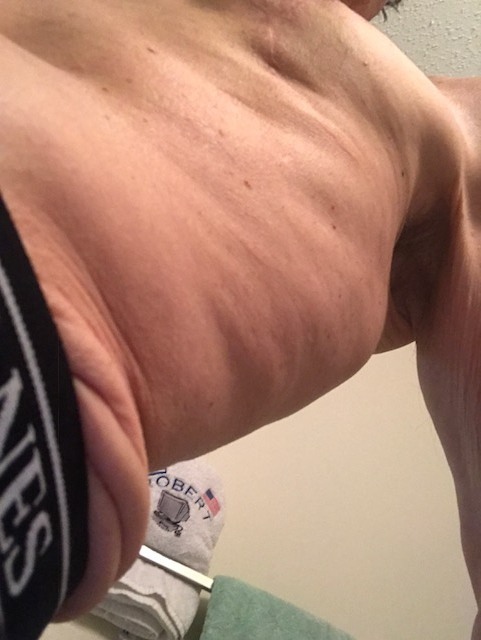
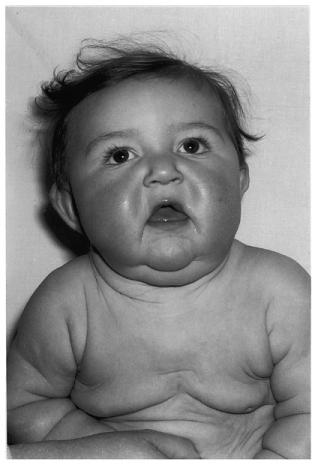
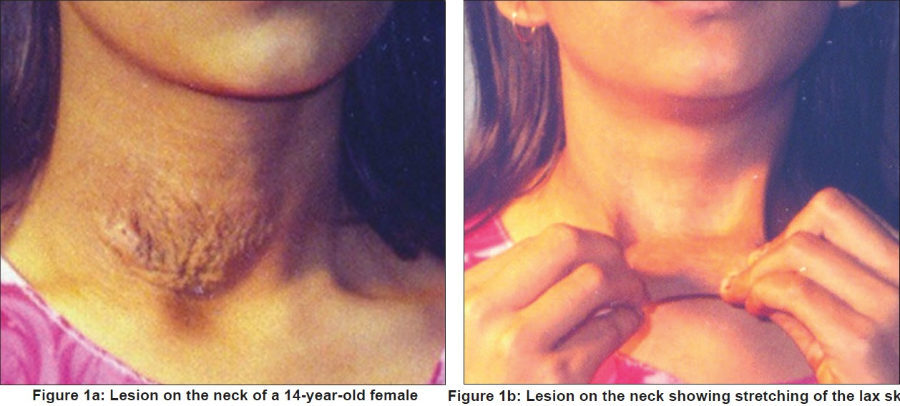
  • The loose skin is most prominent around the eyes, face, neck, shoulders and thighs - around the face and neck this gives a 'bloodhound' appearance
  • Inelastic skin, with reduced elastic recoil when skin is stretched 
  • Individuals appear much older than they actually are

Specific clinical features relate to the type of inheritance:

  • Autosomal recessive: usually begins in infancy with loose skin:
    • Type 1 - comprises severe forms with life‐threatening complications and death occuring between infancy and young adulthood usually from cardiorespiratory compromise. The skin changes are generalised but may be particularly prominent over the neck, axillae, and groins, and give the face a droopy, aged appearance
    • Type 2 - the cutaneous features vary between wrinkly skin and more pronounced cutis laxa with excess folds of skin over the face, large flexures and dorsa of the hands and feet, which may improve over time. Unlike in type 1, there is often pronounced developmental delay, seizures and neurological impairment
  • Autosomal dominant: lax skin and a prematurely aged appearance with onset between childhood and early adulthood. Gastrointestinal diverticulae and inguinal hernias may arise. More serious systemic changes are uncommon
  • X-linked recessive: is the least common. Features include loose skin, joint hyperextensibility, bone abnormalities, gastrointestinal and urological features, and mild mental retardation

    Acquired cutis laxa

    • May develop at any age, but often begins in adulthood
    • Can occur spontaneously, or, in 50% of cases develops following episodes of urticaria or angioedema, extensive inflammatory skin disease, adverse cutaneous drug eruptions, or a number of other dermatological conditions
    • Clinically there may be widespread massive folds of lax skin or the changes may be mild and confined to an area of previous inflammation 

    Cutis laxa should be readily distinguishable from the Ehlers–Danlos syndrome, in which the skin is hyperextensible but not lax, and it recoils quickly


    Clinical Images

    Please refer to notes on image rights at bottom of the page with regards to individual image ownership.

    Management

    • Although there is no specific treatment for cutis laxa or for preventing progression, patients with acquired cutis laxa, and inherited autosomal dominant cutis laxa usually have a normal life expectancy
    • Treatment is directed at managing any complications that may arise from associated internal organ involvement
    • Cosmetic surgery to reduce redundant skin folds may be performed but often produces only temporary benefit

    Disclaimer - the author PCDS cannot accept responsibility for any misleading or incorrect statements, and the management of individual patients remains the direct responsibility of the individual doctor. We do however hope that visitors to this site can contact us regarding comments that are considered misleading or incorrect so that we can continue to improve the site.

    Image Rights - The PCDS would like to thank Dermatoweb, DermQuest (Galderma), and others who have contributed images. All named individuals and organisations maintain copyright for the relevant images.

    Quick Links

    The following pharmaceutical companies have had no involvement in the content of this website or in our conference programmes


    Almirall
    Galderma
    Glenmark
    Johnson & Johnson
    La Roche-Posay
    LEO Pharma
    Pierre Fabre
    Schuco