Dermatitis herpetiformis
LAST UPDATED: Nov 21, 2021
Introduction
Dermatitis herpetiformis (DH) is a rare, and intensely itchy, chronic skin condition associated with gluten enteropathy, although few patients have significant gastrointestinal symptoms.
This chapter is set out as follows:
Aetiology
-
It is an immunobullous condition ie a blistering eruption caused by an abnormal immunological reaction
-
Up to 10% of patients have a positive family history of DH or coeliac disease (syn. gluten enteropathy)
-
There is an association with thyroid and other autoimmune conditions
History
-
Age - most commonly presents between the age of 20-55, but may arise at any age
-
Gender - two-thirds of cases are male
-
Skin symptoms
-
The onset can be sudden or gradual
-
Lesions are intensely itchy
-
Some patients notice a fluctuation of symptoms related to the amount of gluten (found in grains such as wheat, barley and rye) in their diet
-
GI symptoms
-
Although 90% of patients will have associated coeliac disease only a few are symptomatic, conversely 15-25% of patients with coeliac disease develop DH
-
Symptoms include fatigue, abdominal discomfort and bloating, diarrhoea or constipation, weight loss and pale stools that float on the surface of the toilet pan
Clinical findings
Distribution
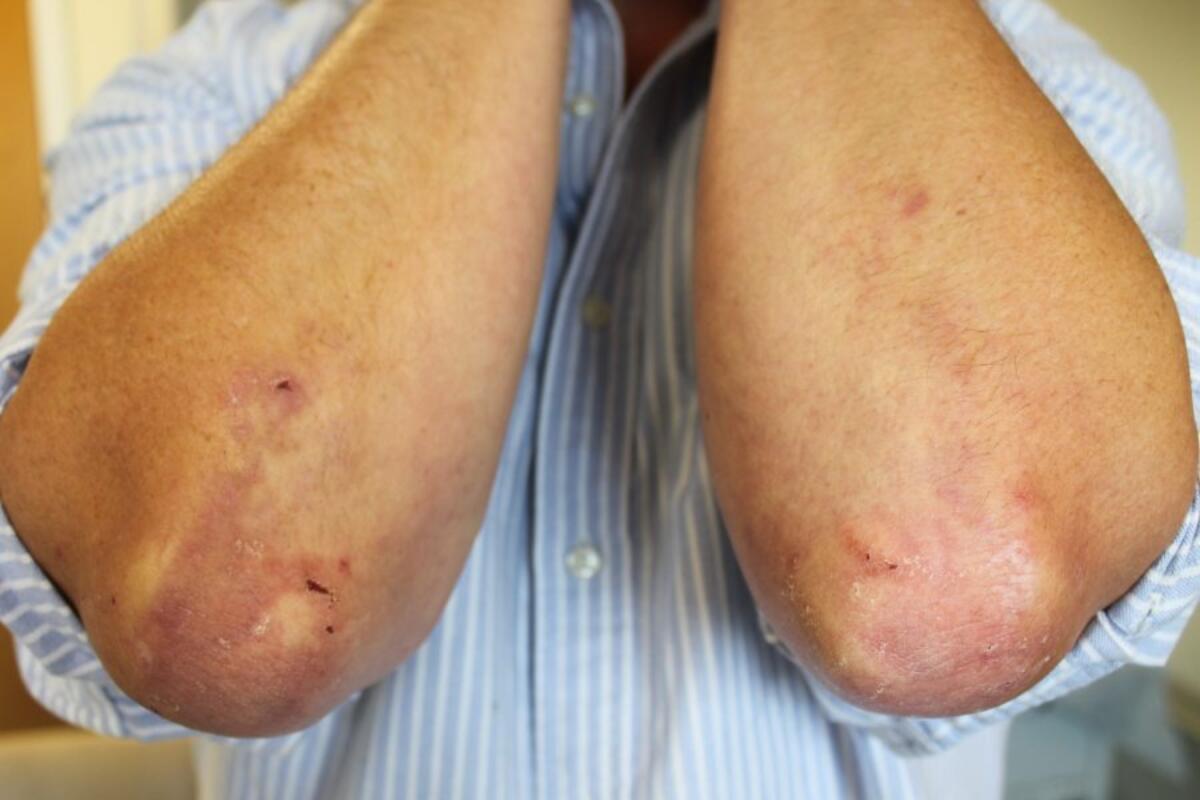
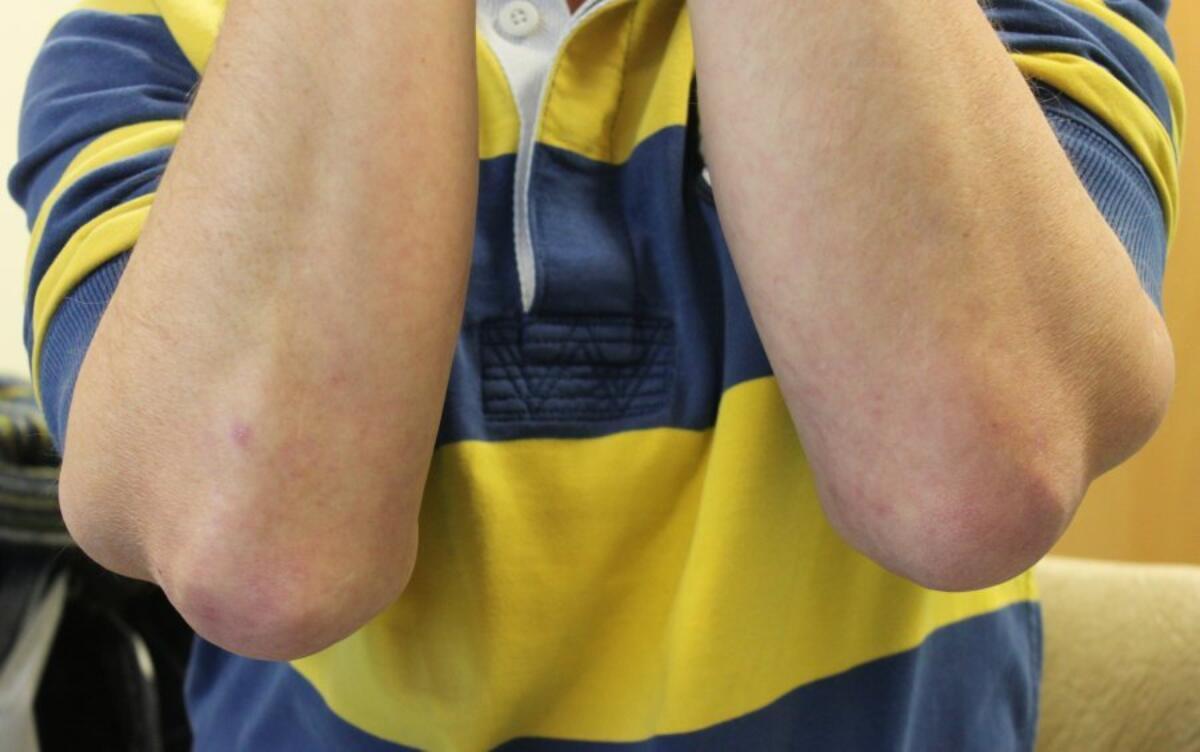
- Symmetrical
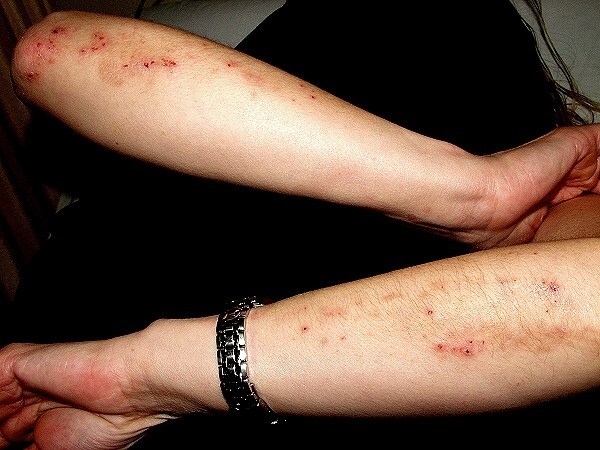
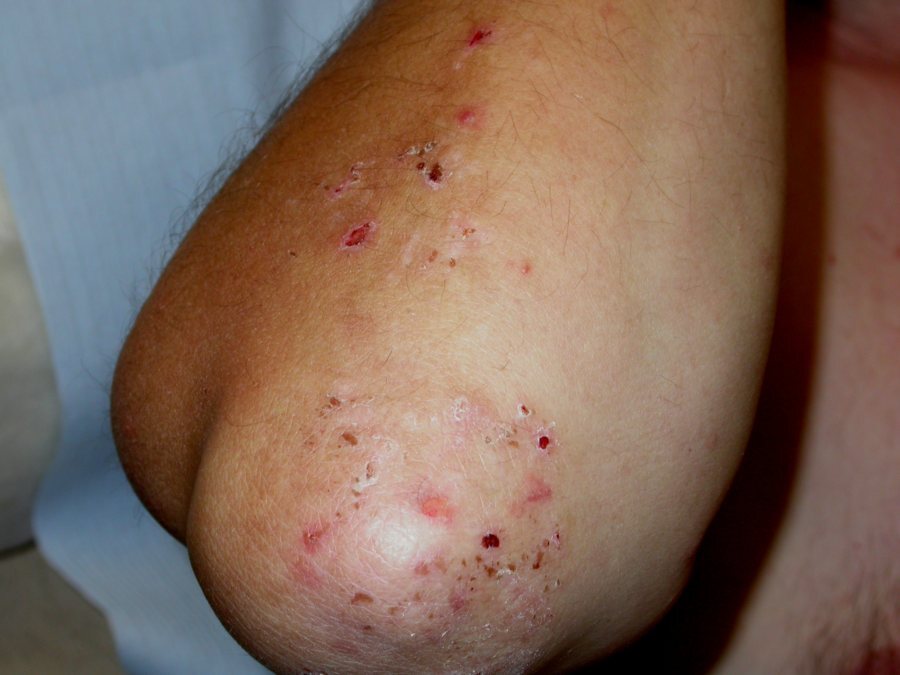
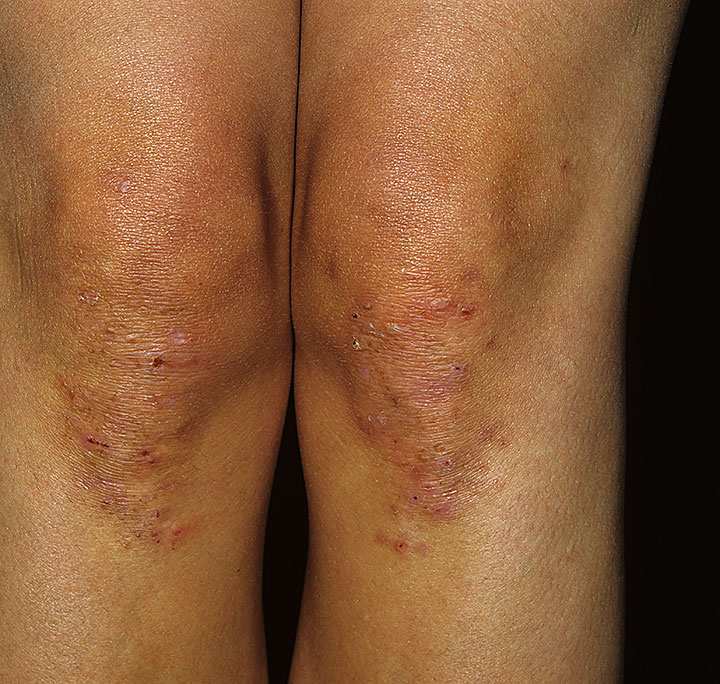
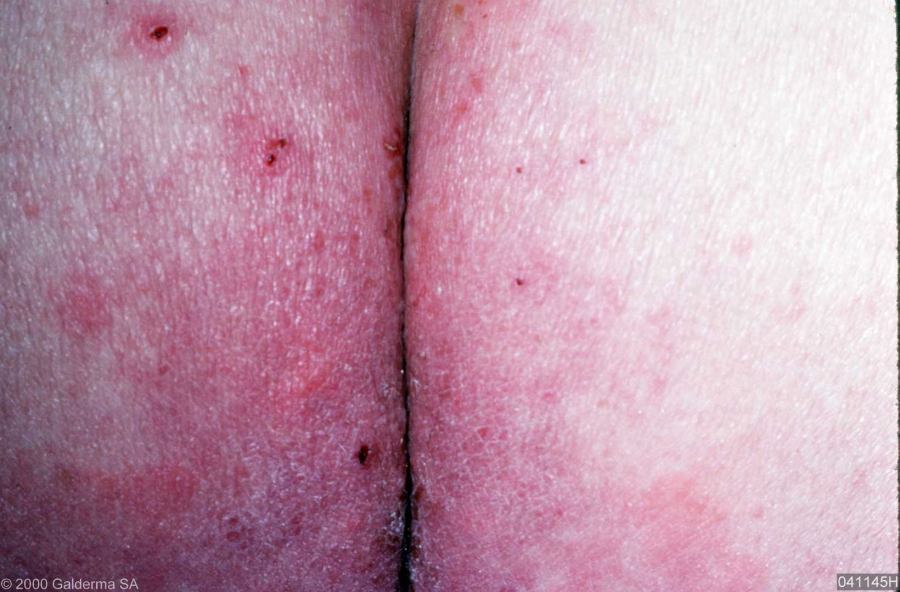
- Extensor surfaces of limbs (classically the knees and just below the elbows), scalp, scapula and natal cleft are characteristic. Other sites can also be affected
Morphology
-
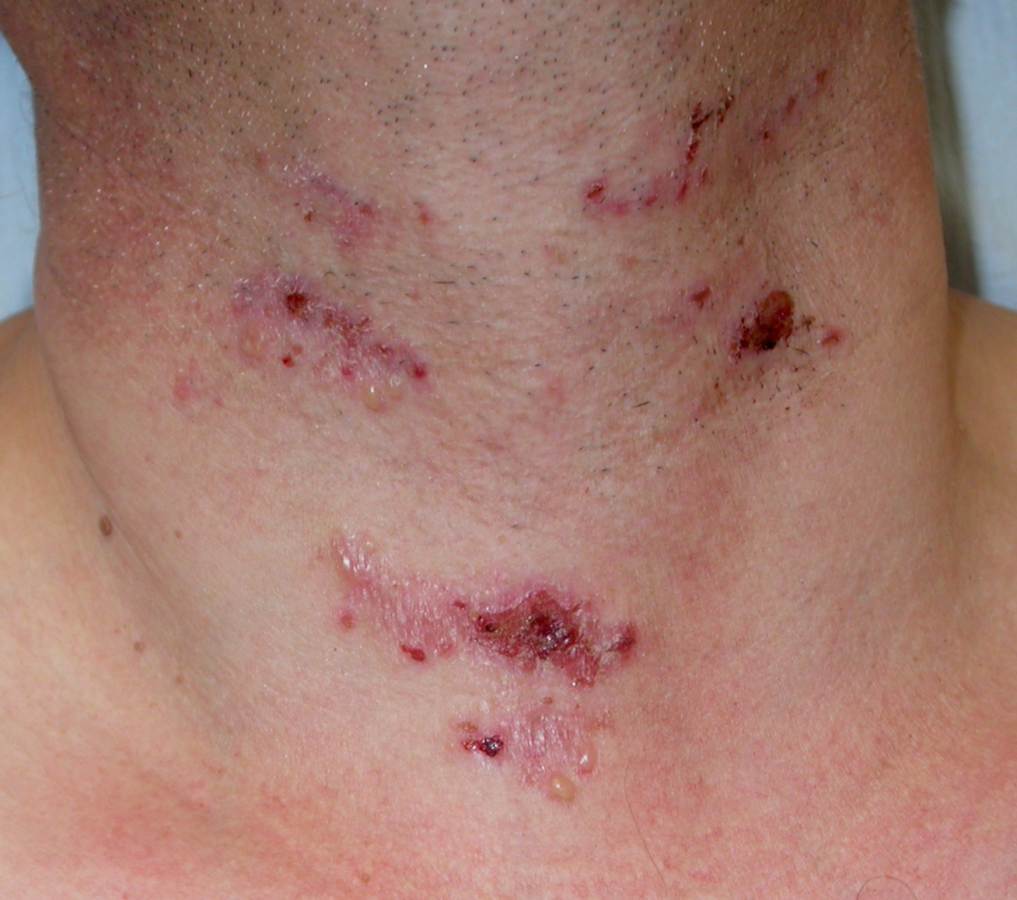
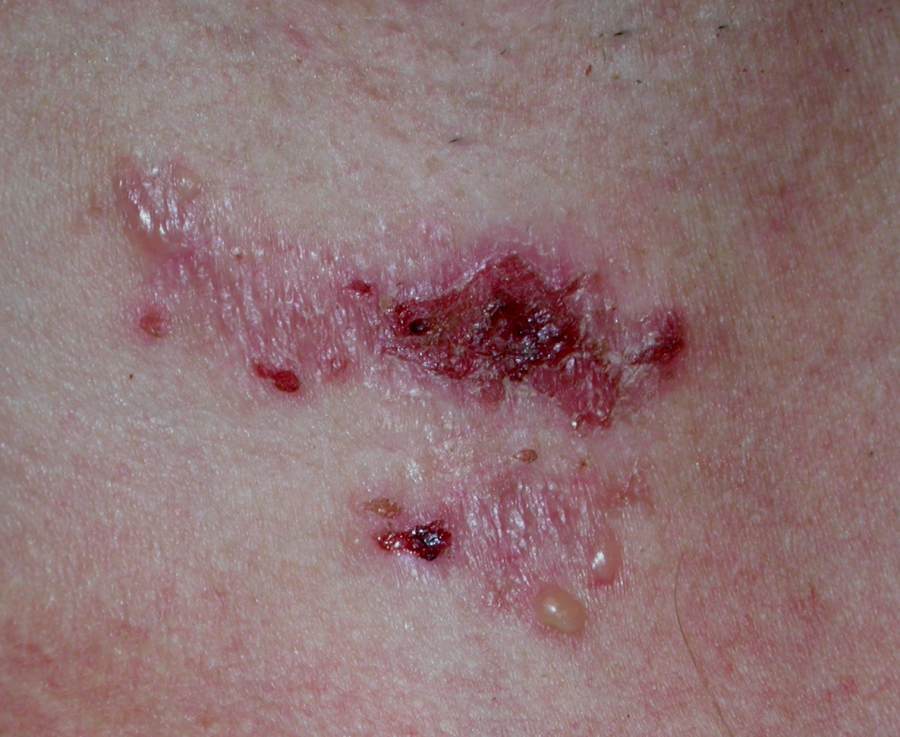
Small papules or vesicles, which are often grouped together on erythematous patches of skin
-
Blisters 1-2 cm in diameter are less common
-
The intense itch of DH normally provokes vigorous scratching, which frequently destroys areas of vesicles / blisters and leaves behind erosions
Clinical Images
Please refer to notes on image rights at bottom of the page with regards to individual image
ownership.
Investigations
-
Bloods tests for coeliac disease
-
IgA and tissue transglutaminase levels
-
FBC (looking for a macrocytosis secondary to folate deficiency) and ferritin levels (looking for iron deficiency. Ferritin levels can be low, even in the presence of a normal FBC)
-
Skin biopsies
- An active lesion should be removed for histology, which should reveal a sub-epidermal blister - the typical histological features are most commonly seen in the area of erythema that surrounds the central blister/excoriation
- A second biopsy, of peri-lesional skin (within 2 cm of the blister), is also required for direct immunofluorescence (DIF). The sample must be put on top of a piece of plain gauze, which has been soaked in a small amount of normal saline, and placed into a dry pot, the specimen must be examined the same day. If the sample cannot be examined the same day it must be placed in a suitable transport media eg Michel's solution, in order to preserve the sample. The result of DIF can sometimes be false negative, and if needed a further biopsy sample can be taken from unaffected skin of the buttocks or thighs
- Investigations and gluten-free diets
- Patients on gluten free diets (or a very much reduced gluten diet) may have normal investigations (bloods, negative DIF and normal GI investigations), as such before starting investigating patients should be on a normal diet that contains gluten (one recommendation states a diet that includes six slices of bread a day) for approximately six weeks
Management
Step 1: general management principles
Step 2: dapsone and other second line treatments
- A dermatology referral is required
-
Most patients will require dapsone, which will reduce itch substantially within a few days of starting treatment
-
Dapsone can occasionally cause a widespread rash, haemolytic anaemia and, rarely agranulocytosis. Such complications normally occur early. Patients need regular monitoring tests, including an FBC, reticulocyte count, U&E and LFT. Patients must report immediately if they develop a skin rash, a high temperature, a sore throat or mouth ulcers, and any unexplained bruising or bleeding. Occasionally a distal motor neuropathy occurs, this is more commonly seen in patients on higher doses of long-term dapsone therapy
-
Glucose-6-phosphate deficiency (G6PD)
-
Patients with G6PD have a two-fold increase in sensitivity towards dapsone-induced haemolytic anaemia
- Patients should be tested for G6PD deficiency prior to treatment - people of Mediterranean, African and Asian ancestry are especially at risk and can be tested for this deficiency before dapsone is prescribed
-
For patients unable to tolerate dapsone, particularly those who develop haemolysis, sulfasalazine (1–2 g/d), sulfapyridine (2–4 g/d), and sulfamethoxypyridazine (0.25–1.5 g/d) are valid alternatives
-
Other less effective treatments for dermatitis herpetiformis include colchicine, prednisolone, ciclosporin and azathioprine - the latter two should be used with caution in patients with dermatitis herpetiformis because of a potential increase in the risk of developing intestinal lymphomas. Phototherapy may provide some symptomatic relief
Step 3: refer to a gastroenterologist
-
Patients need to be investigated for the possibility of coeliac disease
Step 4: refer to a dietician
-
For a gluten-free diet
-
Adherence to a gluten-free diet has two benefits in that it:
-
lowers the risk of intestinal lymphoma, a known complication of coeliac disease
-
improves control of DH meaning that some patients only need take dapsone periodically
Disclaimer - the author PCDS cannot accept responsibility for any misleading or incorrect statements, and the management of individual patients remains the direct responsibility of the individual doctor. We do however hope that visitors to this site can contact us regarding comments that are considered misleading or incorrect so that we can continue to improve the site.
Image Rights - The PCDS would like to thank Dermatoweb, DermQuest (Galderma), and others who have contributed images. All named individuals and organisations maintain copyright for the relevant images.