Erythroderma (syn. exfoliative dermatitis)
LAST UPDATED: Jan 13, 2022
Introduction
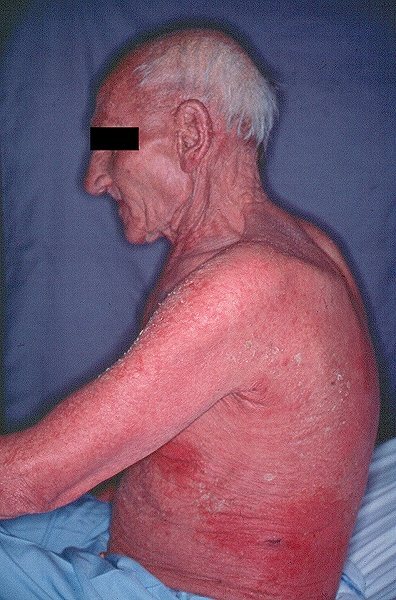
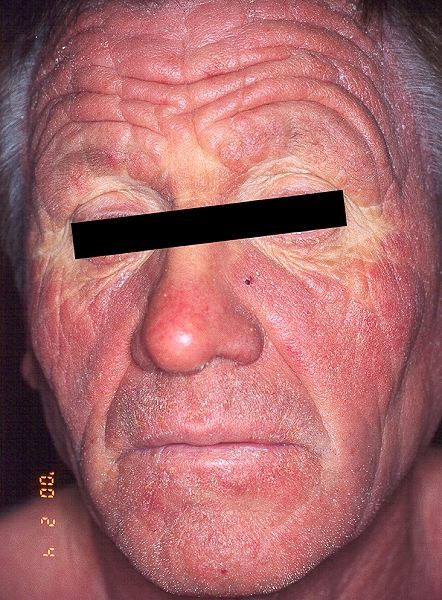
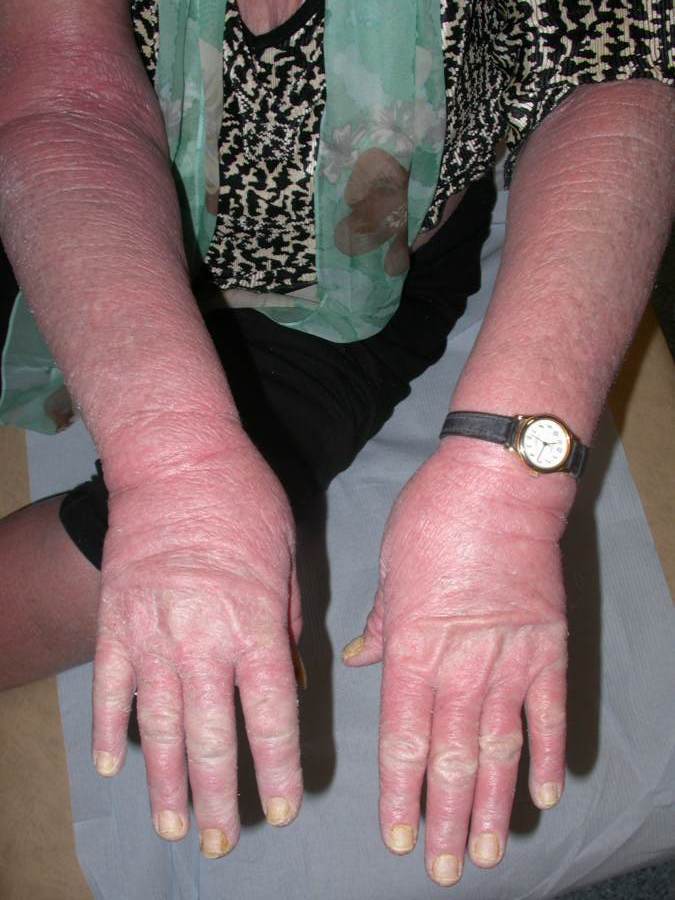
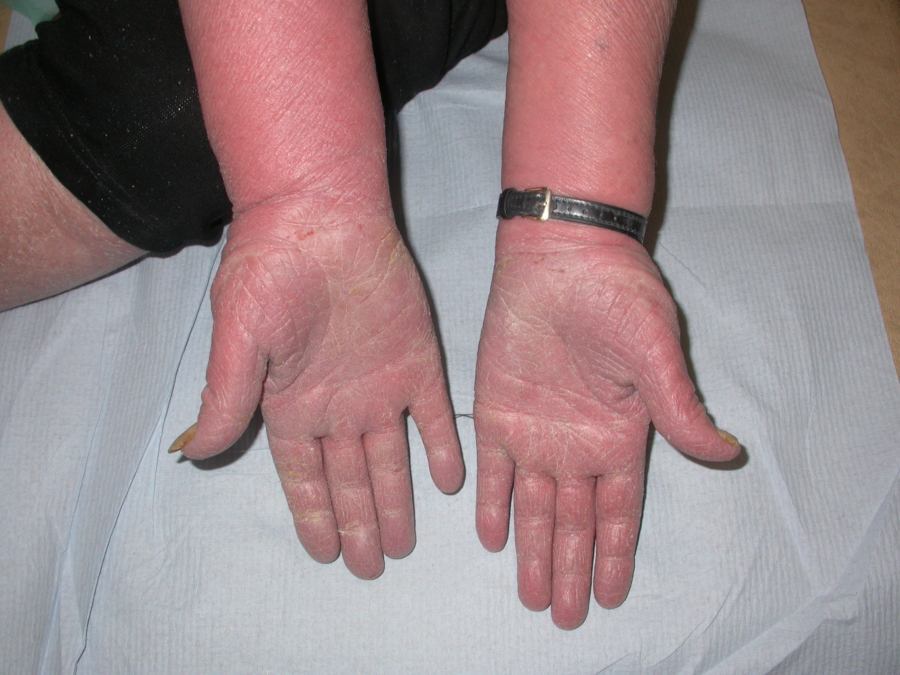
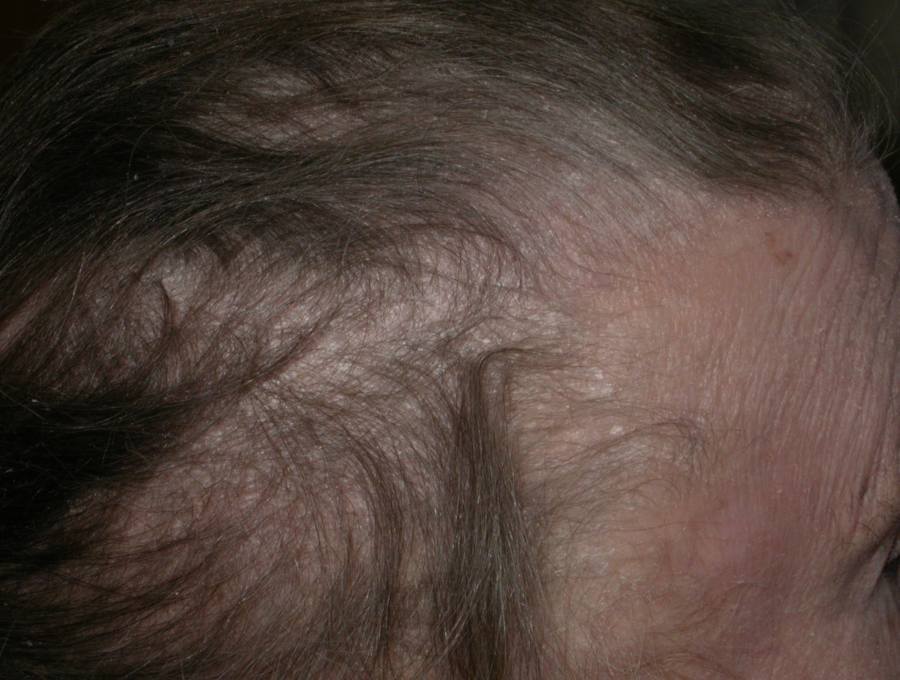
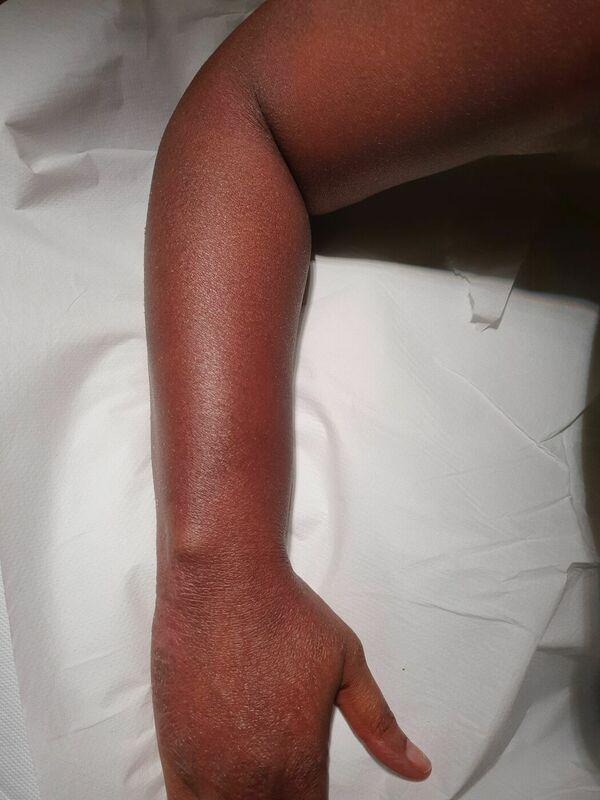
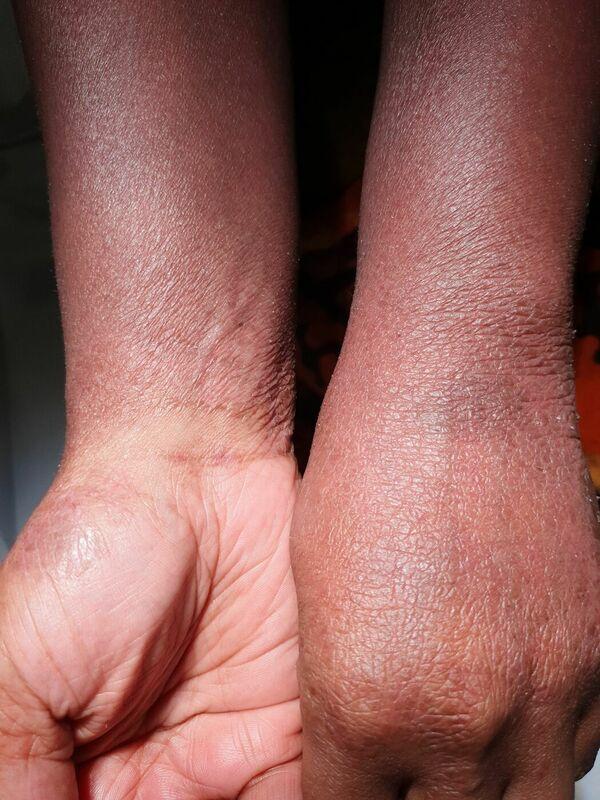
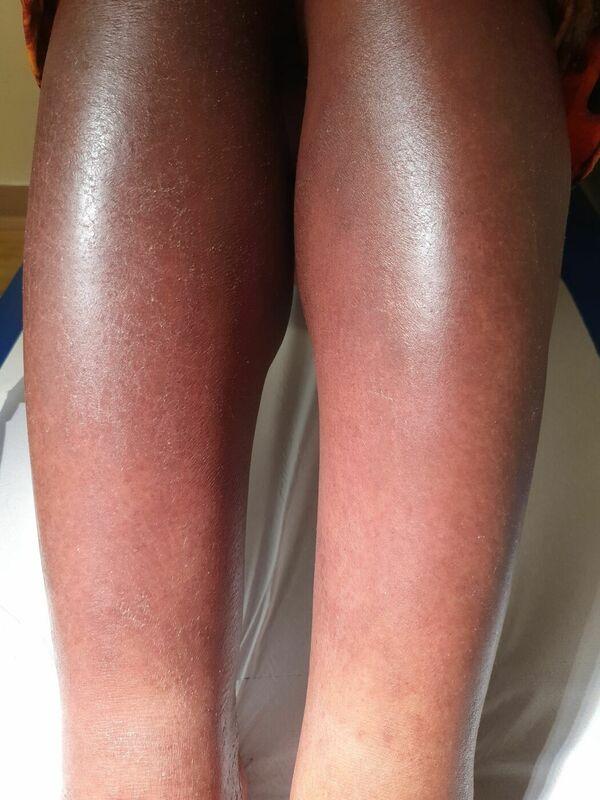
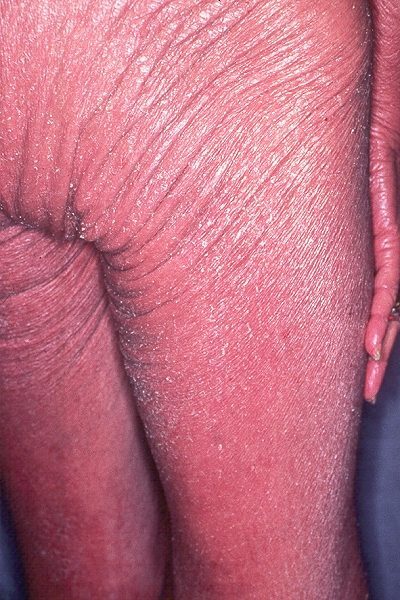
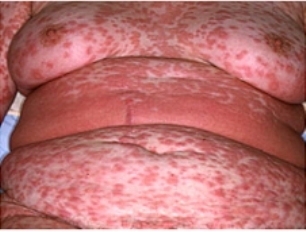
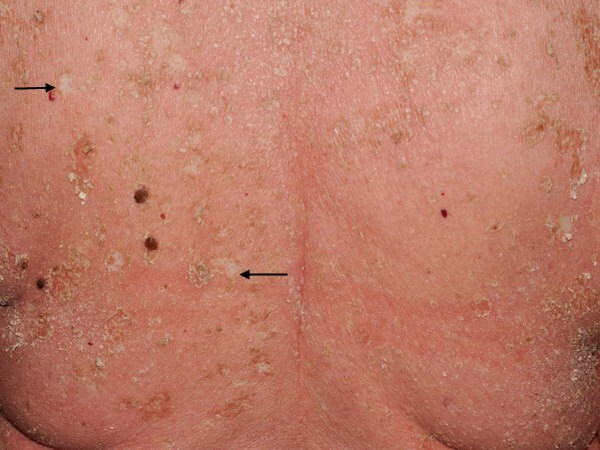
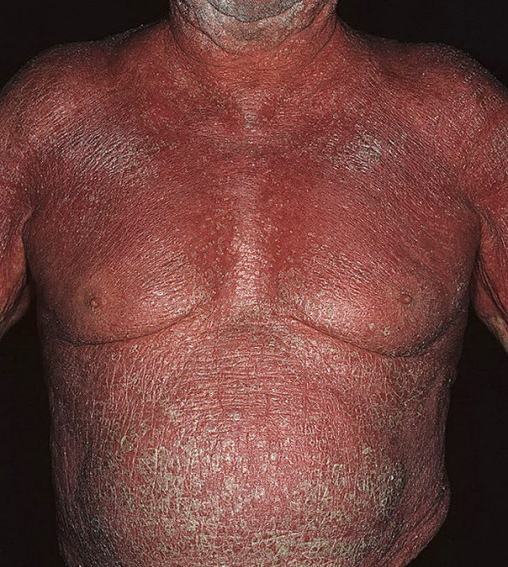
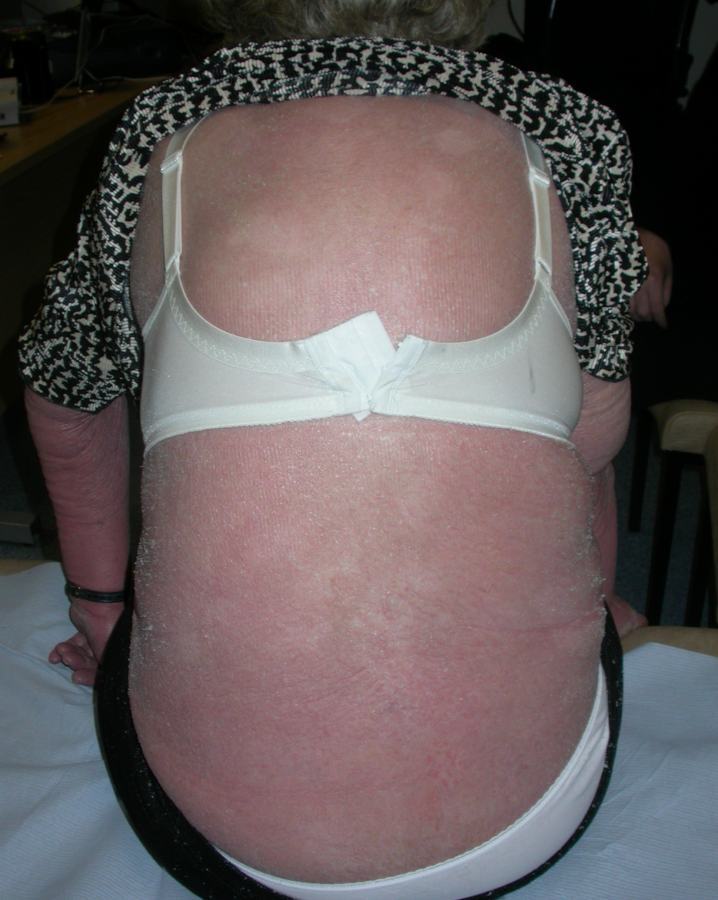
Erythroderma is a term used to describe erythema affecting more than 90% of the body surface. The term exfoliative dermatitis is also used, and describes the exfoliation (skin peeling) found in erythroderma. The extent of the skin changes can obscure the primary lesion making it difficult to diagnose the underlying cause.
This chapter is set out as follows:
Aetiology
The causes, in order of frequency, are:
-
Eczema (including atopic, seborrhoeic and contact allergic)
-
Psoriasis
-
Lymphoma and leukaemia (cutaneous t-cell lymphoma followed by Hodgkin’s disease are the most common malignant causes). The Sézary syndrome is one form of cutaneous t-cell lymphoma associated with erythroderma
-
Drugs - more than 60 drugs have been implicated. The most commonly associated drugs include the sulphonamides, isoniazid, penicillin, antimalarials, phenytoin, captopril and cimetidine
-
Idiopathic
-
Rare causes - these include pityriasis rubra pilaris, pemphigus foliaceus, dermatomyositis, and those usually presenting at birth eg ichthyosiform erythroderma
History
-
Males are affected 2-3 times more commonly than females
-
Variable degrees of itch, which sometimes can be severe
Clinical findings
Clinical features
-
Erythema spreads quickly to affect more than 90% of the body surface
-
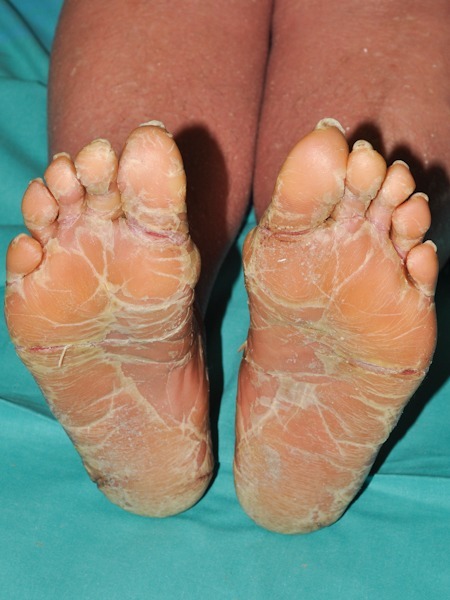
Scaling appears days 2-6 and the skin becomes thickened
-
Although the skin feels hot, patients often feel cold
-
Keratoderma develops ie thickened skin on the palms and soles
-
After several weeks, erythema and scaling of the scalp can lead to hair loss
-
The nails become thickened, ridged and may be lost
-
Lymphadenopathy is common
-
Secondary infection may arise
-
The patient may become systemically compromised
Defining the cause
Making a diagnosis of erythroderma is usually straightforward, however, determining the cause can be much more difficult. In some cases it may take several years before the diagnosis becomes apparent, and in others the cause remains undetermined (idiopathic). The following may provide clues to the diagnosis:
-
Speed of onset - the rash usually evolves rapidly when it results from a drug reaction, and malignancies such as lymphoma or leukaemia. The rash may evolve less quickly when it arises from eczema or psoriasis
-
Past and/or family history of inflammatory dermatoses
-
Medication - both prescribed and over-the-counter medication, including any homeopathic treatments
-
Psoriasis may be scaly from the onset
-
Adverse drug reactions often start with a morbilliform rash, and resolve within six weeks of the drug being discontinued
-
Lymphoma and leukaemia - the skin is often very infiltrated and lymphadenopathy can be considerable
-
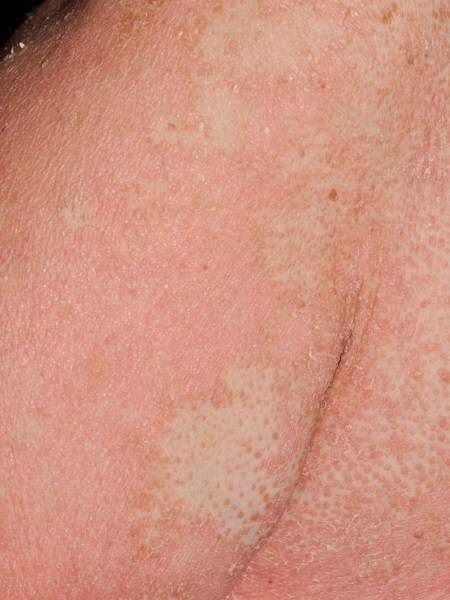
Pityriasis rubra pilaris - the erythema, which often has an orange tinge, starts at the head and spreads downwards, islands of normal skin persist within the erythrodermic skin, and scaly papules are often found on the backs of the fingers as well as on the elbows and knees
Papuloerythroderma of Ofuji
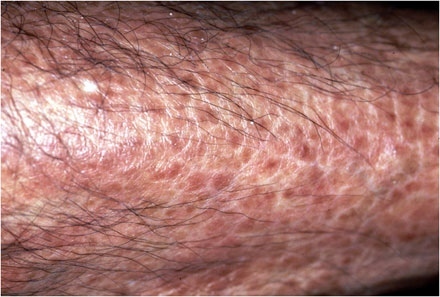
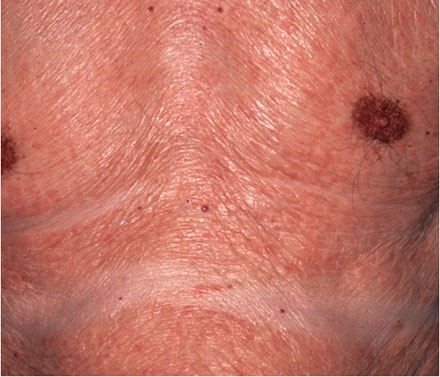
This is a rare variant of erythroderma, predominantly affecting elderly male patients. Pruritus can be severe. The condition presents with brown-red flat-topped lesions that become confluent. There is sparing of the face and flexures, especially axillary and inguinal sites.
Clinical Images
Please refer to notes on image rights at bottom of the page with regards to individual image
ownership.
1
2
3
4
5
6
7
8
9
10
11
12
13
14
15
16
17
Investigations
-
Patients require a thorough work-up
-
A FBC and peripheral blood film should be examined for abnormal cells. Sézary cells (atypical lymphocytes with cerebriform nuclei) are often observed in erythroderma but when they constitute more than 20% of the circulating peripheral blood mononuclear cells they become diagnostic of a form of cutaneous t-cell lymphoma known as the Sézary syndrome
-
Histology: multiple biopsies may aid in the diagnosis
Management
-
Erythroderma is a medical emergency and should be discussed with the on-call dermatologist
-
If the patient is systemically compromised, or the patient is high-risk, eg elderly and living alone or is in poor general health, the patient will need admitting
-
Otherwise an urgent out-patient appointment will be needed
-
Consider stopping all non-essential medications
-
Large quantities of emollients, mainly ointments, are required to improve the skin barrier function
-
Topical steroids are required, although one has to be mindful that the skin barrier function is very compromised and as a result much larger amounts of topical treatments will be absorbed
-
The optimal management of erythroderma remains unclear, although partly depends on the cause
-
The prognosis of erythroderma depends on the cause, which if can be removed or corrected then the prognosis is generally very good. If erythroderma is the result of a primary skin condition such as psoriasis or eczema, it usually clears with appropriate treatment of the condition but may recur at any time
Disclaimer - the author PCDS cannot accept responsibility for any misleading or incorrect statements, and the management of individual patients remains the direct responsibility of the individual doctor. We do however hope that visitors to this site can contact us regarding comments that are considered misleading or incorrect so that we can continue to improve the site.
Image Rights - The PCDS would like to thank Dermatoweb, DermQuest (Galderma), and others who have contributed images. All named individuals and organisations maintain copyright for the relevant images.