Ganglion

LAST UPDATED: May 28, 2022
Introduction

A ganglion is the commonest cause of a lump on the hand and wrist, and arises from the synovial lining of joints and tendons. The synovium functions to produce lubricating fluid which helps protect joints and aids the movement of tendons. Ganglia are usually pulsion diverticulae, and as such represent herniation of the synovium.

This chapter is set out as follows:


Aetiology

  • It is not known what triggers the formation of a ganglion, although they are more common among gymnasts, who repeatedly apply stress to the wrist
  • Ganglia that develop at the distal metacarpophalangeal joints of the finger, also known as myxoid or mucous cysts, are typically associated with arthritis, and are more common in women and between the ages of 40 and 70 years 

History

  • Ganglia are more common in young to middle-aged adults, although myxoid cysts are more common in older patients 
  • There is a female predominance 
  • Lesions tend to be asymptomatic unless large enough to cause a pressure effect or interfere with joint function 

Clinical findings

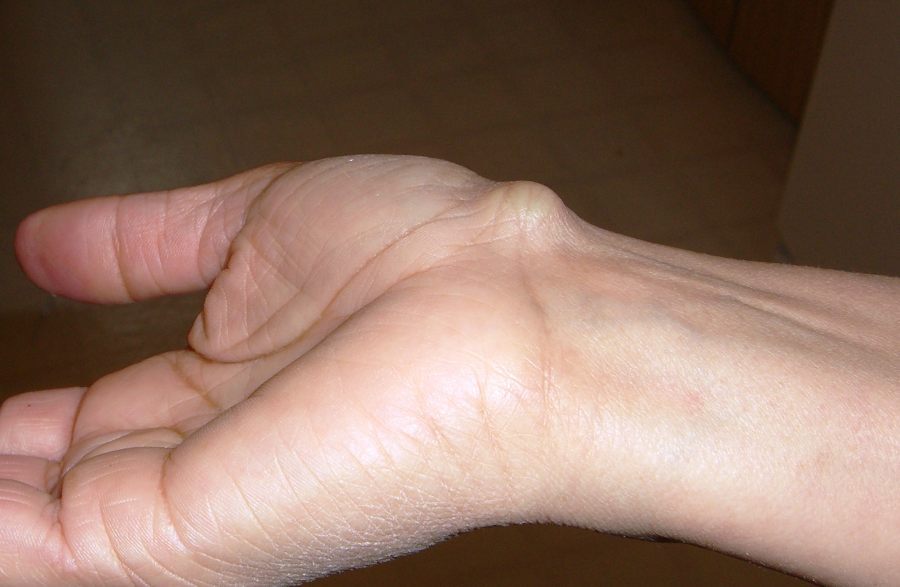
  • Ganglia present as swellings, commonly, over the back of the wrist, the front of the wrist over the radial pulse, the base of the fingers on the palmar aspect and on the back of the fingers near the joints
  • They can also occur around other joints, especially the ankles
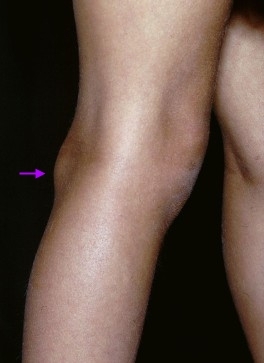
  • The largest ganglia form behind the back of the knee, causing a sense of fullness or tightness. A ganglion here is referred to as a Baker's cyst, after the doctor who originally described the condition
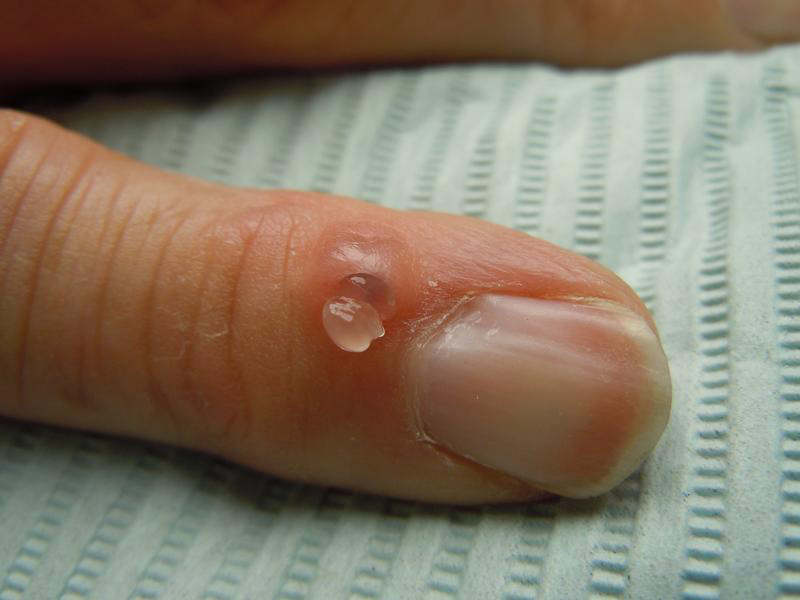
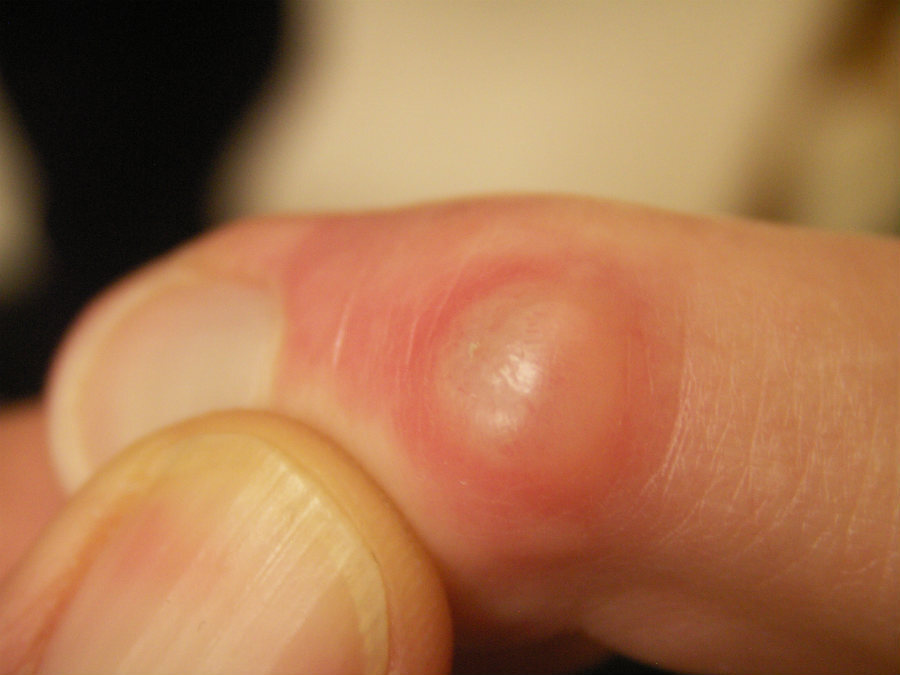
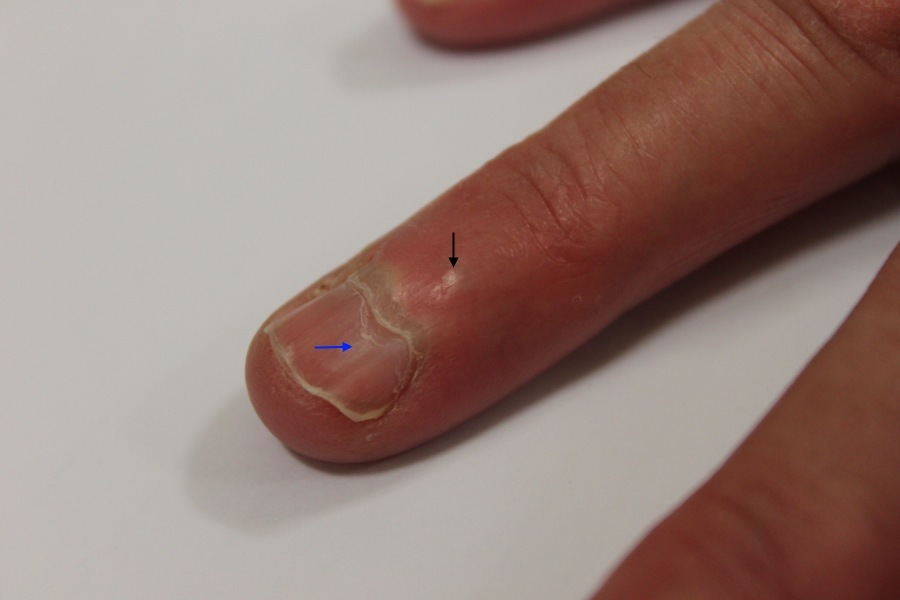
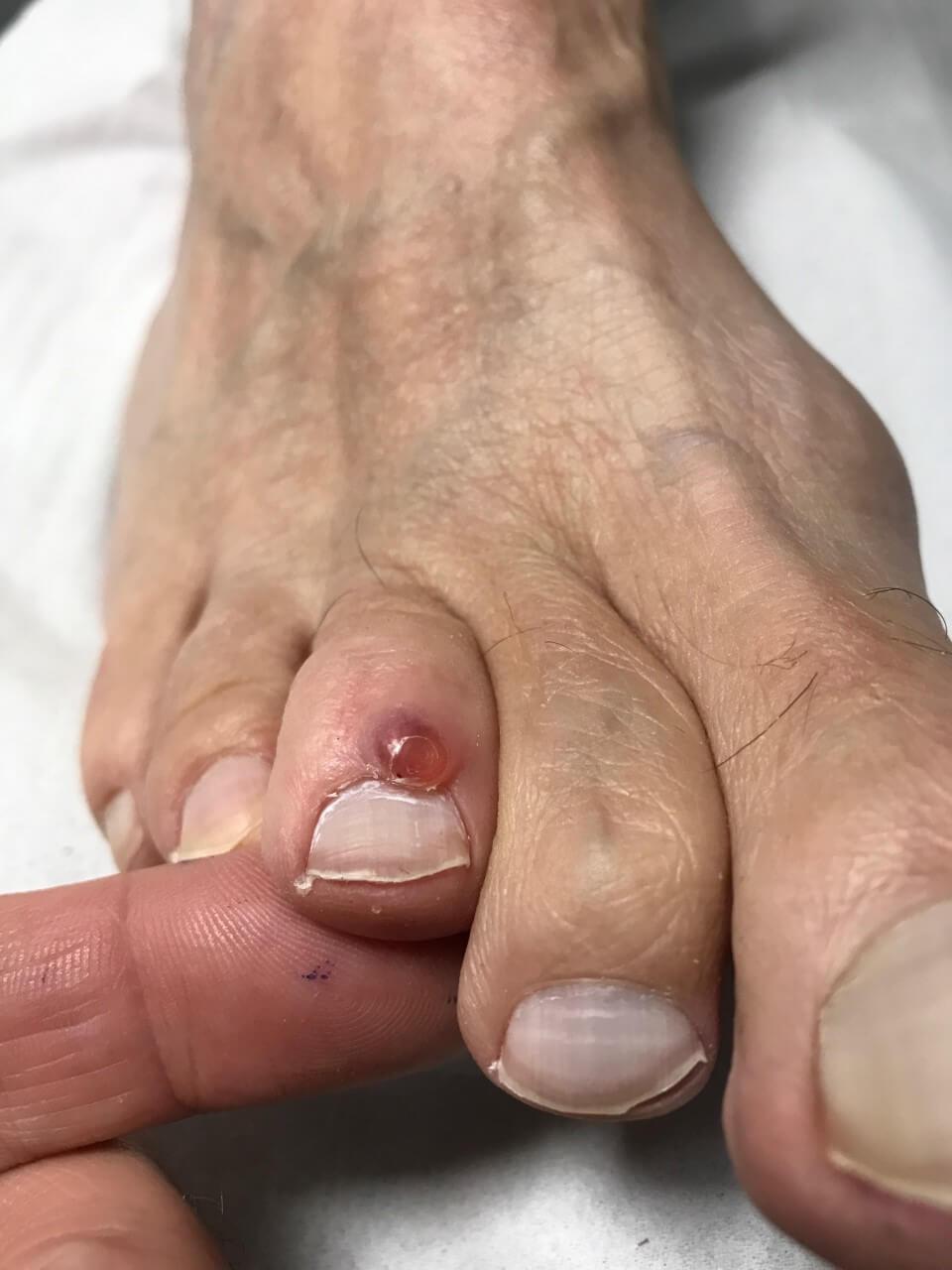
  • A myxoid cyst is a type of ganglion, which is found around the proximal nail fold. It is generally arises secondary to osteoarthritis. The cyst has a smooth shiny surface, and a clear jelly-like fluid may be expressed. As a result of pressure the cyst often causes a lateral groove in the nail, a few mm across, which extends the length of the nail

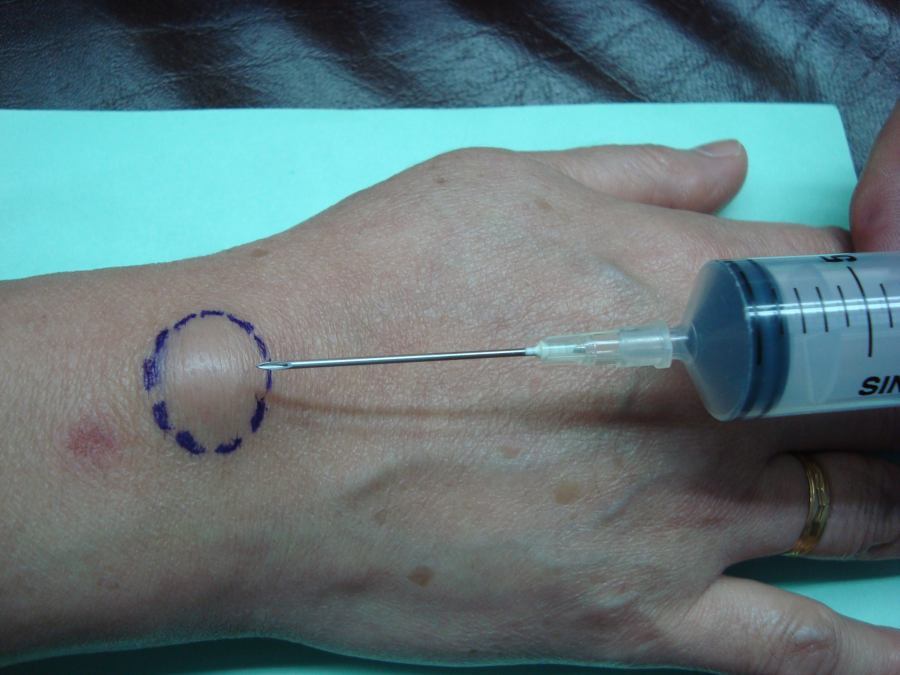
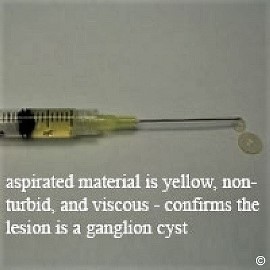
Clinical Images

Please refer to notes on image rights at bottom of the page with regards to individual image ownership.
Management

Step 1: conservative
  • For myxoid cysts provide a patient information leaflet

  • Many ganglia will improve over time and do not require treatment, however, if the cyst is painful, interferes with function, or has an unacceptable appearance, there are several treatment options available  

Step 2: aspiration 
  • Ganglia can be punctured and aspirated with a needle and syringe, needles need to be of a suitable diameter in order to draw up the aspirate 

Step 3: surgery 
  • For very persistent lesions the entire ganglion can be resected. Normally excision is a simple procedure, as ganglia are generally not too deep. But the close proximity of blood vessels and tendons always leaves the possibility of significant complications. Hence, excision should be performed by an experienced surgeon who has undergone the necessary training. Removal of the ganglion in its entirety should be ensured, as breaking of the ganglion cyst during removal causes some of its parts to remain inside the body, and increases the risk of recurrence

Disclaimer - the author PCDS cannot accept responsibility for any misleading or incorrect statements, and the management of individual patients remains the direct responsibility of the individual doctor. We do however hope that visitors to this site can contact us regarding comments that are considered misleading or incorrect so that we can continue to improve the site.

Image Rights - The PCDS would like to thank Dermatoweb, DermQuest (Galderma), and others who have contributed images. All named individuals and organisations maintain copyright for the relevant images.

Quick Links

The following pharmaceutical companies have had no involvement in the content of this website or in our conference programmes


Almirall
Galderma
Glenmark
Johnson & Johnson
La Roche-Posay
LEO Pharma
Pierre Fabre
Schuco