Grover's disease (syn. transient acantholytic dermatosis)
LAST UPDATED: May 02, 2024
Introduction
Grover's disease is a relatively common, itchy skin condition, predominantly affecting the trunk in middle-aged or elderly people. Although it is referred to as ''transient'', symptoms can be more persistent.
This chapter is set out as follows:
Aetiology
-
The cause is unknown
-
Heat and sweating are predisposing factors, however, it can also arise in relatively dry skin
-
It is more common is hospitalized patients
History
-
More common in middle-aged or elderly white patients, although it may be seen in other ethnic groups
-
Men are affected three times more often than women
-
Itch is the predominant symptom
-
Many patients have a chronic relapsing course with episodes lasting for weeks or several months. Patients with underlying UV-damaged skin may have persistent symptoms
Clinical findings
Distribution
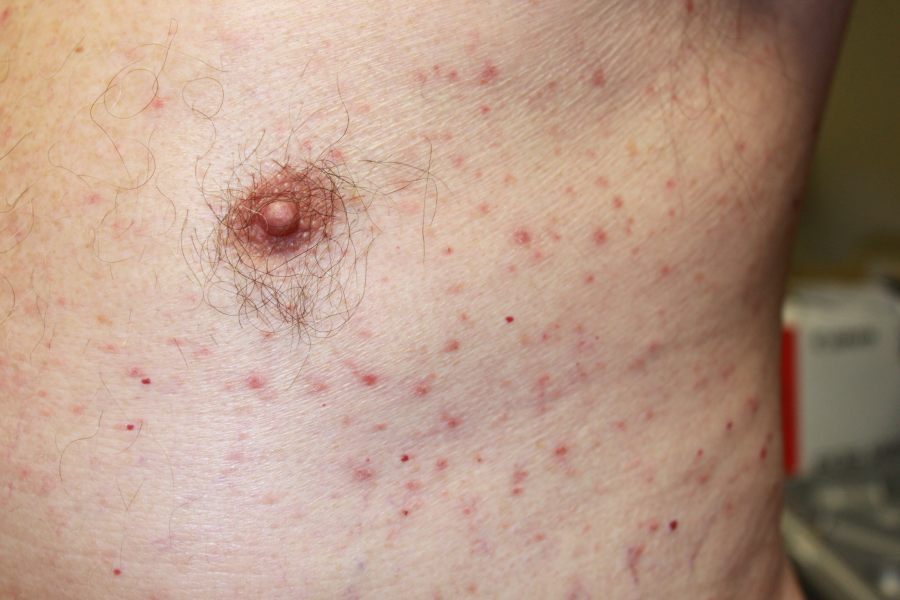
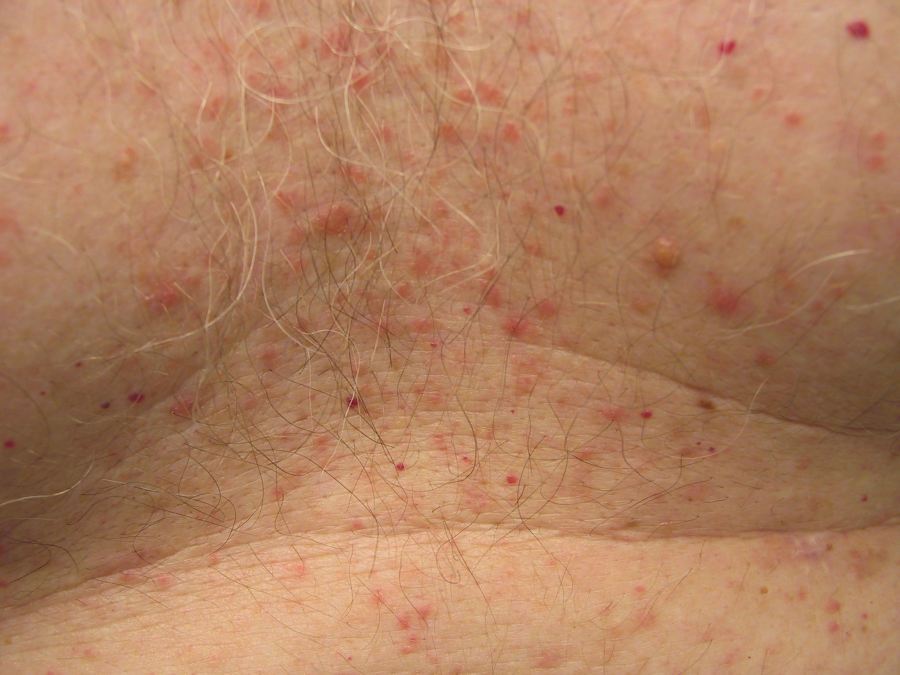
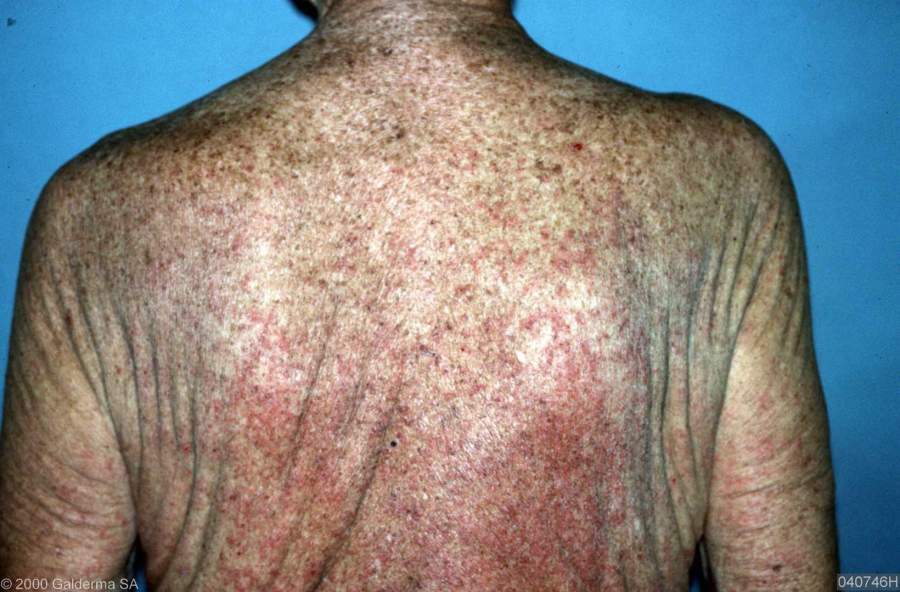
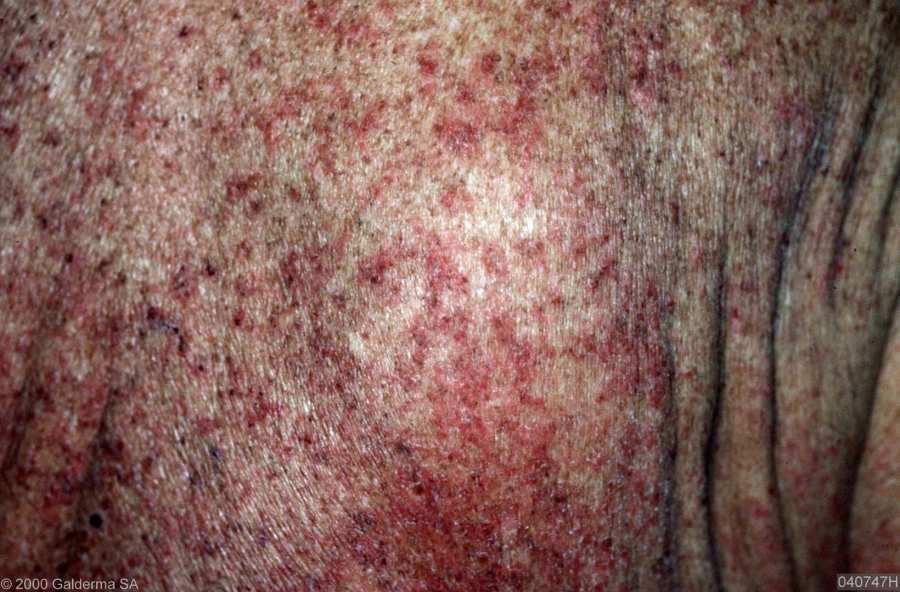
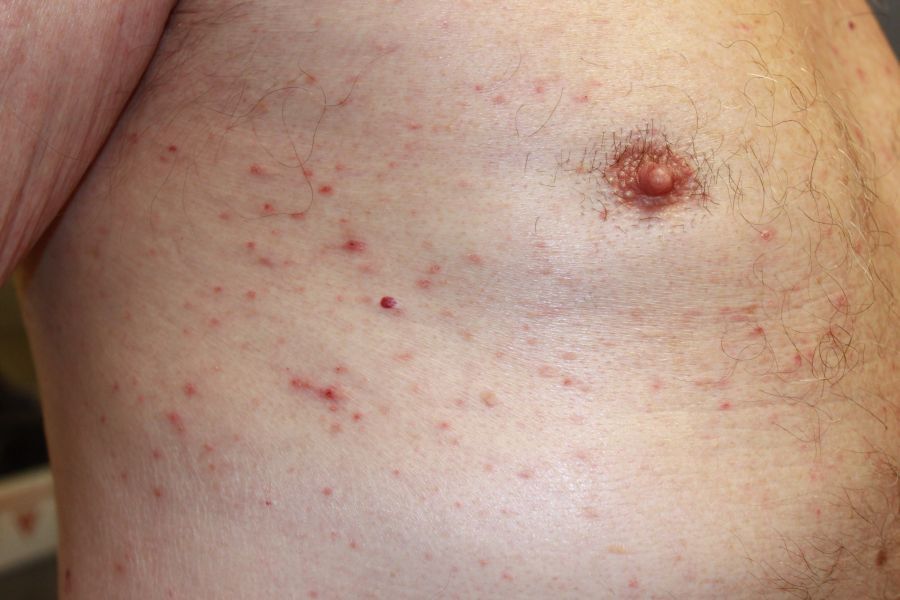
- The trunk, especially the lower chest and upper back
-
Patients who are severely affected may have widespread involvement, including the neck, shoulders, arms, and legs
Morphology
-
An acute eruption of erythematous to red-brown papules or papulovesicles
-
There may be background signs of UV-damaged skin
Clinical Images
Please refer to notes on image rights at bottom of the page with regards to individual image
ownership.
Investigations
-
If the diagnosis is unclear a biopsy may be needed
-
Histology shows focal acantholysis with or without dyskeratosis. Spongiosis is also commonly observed
Management
Step 1 - general measures
-
Remain cool, as sweating may induce more itchy spots
-
Cooling emollients containing menthol can help
Step 2: topical steroids (and other topical treatments)
-
Apply a moderate to potent topical steroid once to twice a day
-
Calcipotriol cream has been reported to be of benefit in some patients
Step 3: treatment in Secondary Care
-
For more troublesome symptoms, a number of treatments can be considered:
-
Phototherapy can be helpful, although in a few it may provoke symptoms
-
Oral retinoids such as acitretin or isotretinoin, as well as systemic steroids have been reported to be helpful. However, they have important side effects and should only be considered if other treatments have not been successful
Disclaimer - the author PCDS cannot accept responsibility for any misleading or incorrect statements, and the management of individual patients remains the direct responsibility of the individual doctor. We do however hope that visitors to this site can contact us regarding comments that are considered misleading or incorrect so that we can continue to improve the site.
Image Rights - The PCDS would like to thank Dermatoweb, DermQuest (Galderma), and others who have contributed images. All named individuals and organisations maintain copyright for the relevant images.