Psoriasis: guttate psoriasis

LAST UPDATED: Nov 18, 2021
Introduction

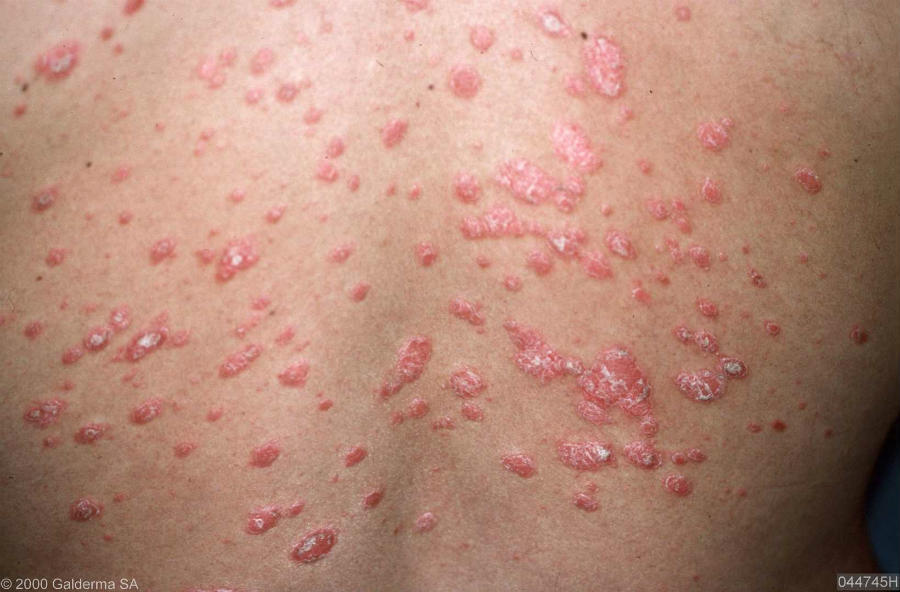
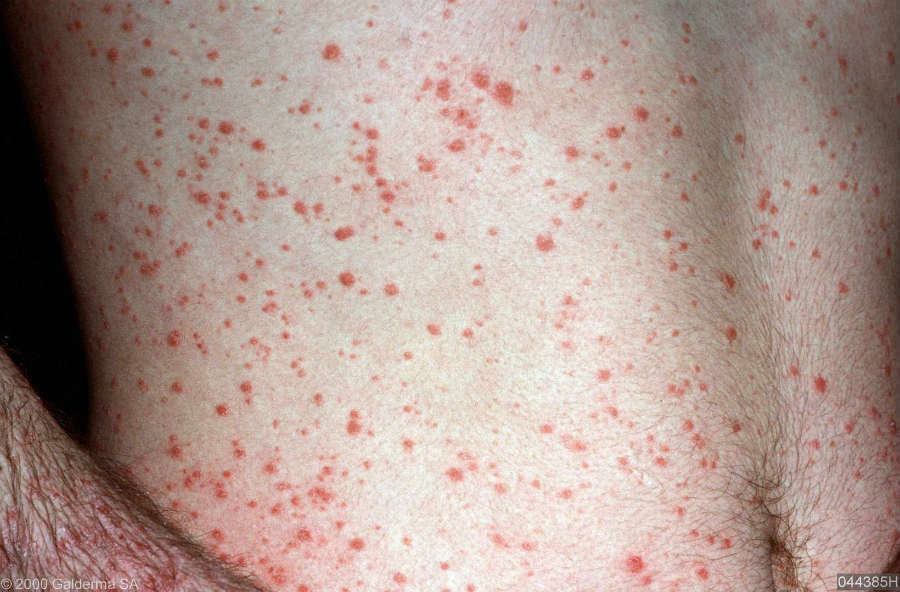
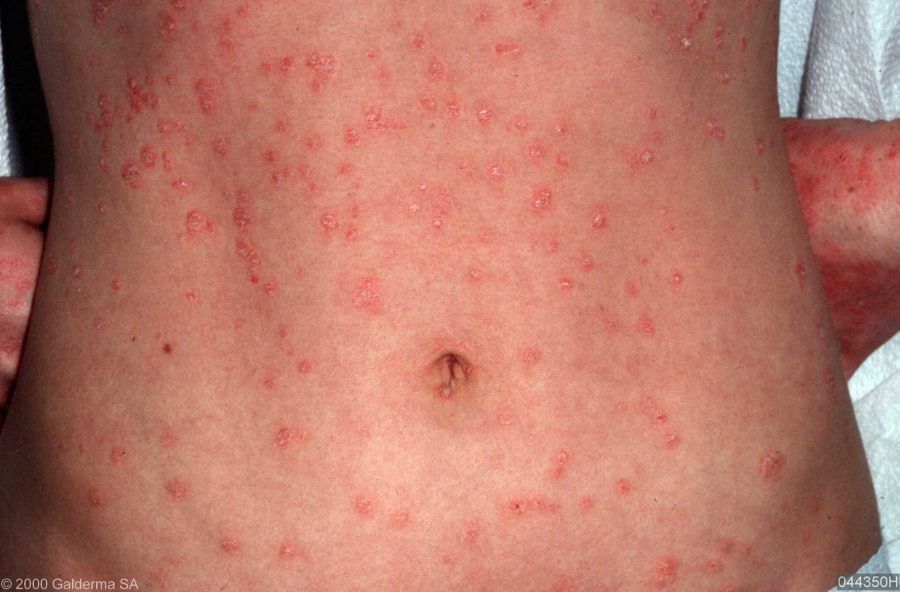
Guttate psoriasis is characterised by multiple small 'tear drop' lesions that tend to affect most of the bodyThe rash comes on very quickly and may follow a streptococcal infection of the throat. It tends to affect children and young adults and has a good chance of spontaneously clearing.

This chapter is set out as follows:


History

  • Guttate psoriasis is typically triggered 7-10 days after a streptococcal URTI
  • It is a common pattern in children and young adults
  • While some will go on to develop ordinary psoriasis at a later stage, one third do not have a family history and don’t go on to develop psoriasis in adulthood

Clinical findings

Distribution

  • An even distribution over the body, especially on the trunk and proximal limbs
  • Relative sparing of the face

Morphology

  • Small, round-oval scaly papules (palpable) up to one cm in diameter
  • In the early stages there may be little scale
  • The Köebner phenomenon may be present
  • These features should be differentiated from chronic small plaque psoriasis, which has a more insidious (usually) presentation consisting of multiple small flat scaly patches / plaques 

Clinical Images

Please refer to notes on image rights at bottom of the page with regards to individual image ownership.


Management

  • In mild cases of guttate psoriasis the use of an emollient regimen may be sufficient until spontaneous clearance occurs, usually after two to three months. While natural sunlight in moderation can improve guttate psoriasis, the use of sun-beds is discouraged
  • Topical treatment - coal tar preparations eg Exorex ® lotion or Alphosyl-HC ® cream can be beneficial as they can be applied more generally to a large area of skin. Vitamin D analogues can be used but because these treatments are best applied directly to the lesions, with large numbers of lesions application is very time consuming and may not be acceptable to some patients
  • Referral to dermatology for a course of narrow-band UVB phototherapy (TL-01) is an effective treatment for widespread / unresponsive cases

Disclaimer - the author PCDS cannot accept responsibility for any misleading or incorrect statements, and the management of individual patients remains the direct responsibility of the individual doctor. We do however hope that visitors to this site can contact us regarding comments that are considered misleading or incorrect so that we can continue to improve the site.

Image Rights - The PCDS would like to thank Dermatoweb, DermQuest (Galderma), and others who have contributed images. All named individuals and organisations maintain copyright for the relevant images.

Quick Links

The following pharmaceutical companies have had no involvement in the content of this website or in our conference programmes


Almirall
Galderma
Glenmark
Johnson & Johnson
La Roche-Posay
LEO Pharma
Pierre Fabre
Schuco