Hirsutism

LAST UPDATED: Mar 20, 2025
Introduction

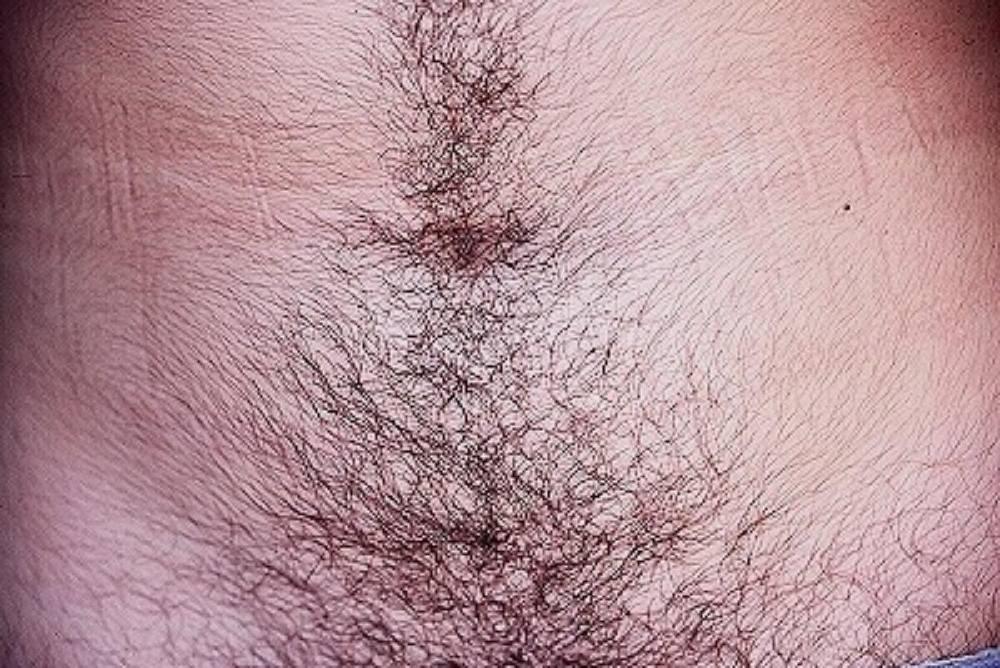
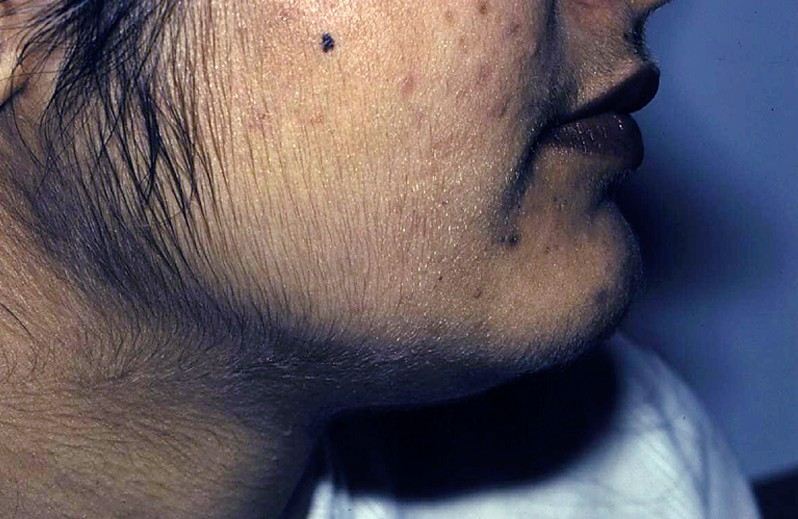
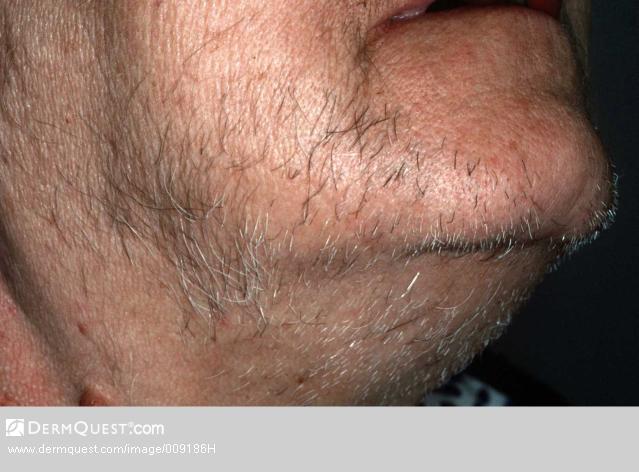
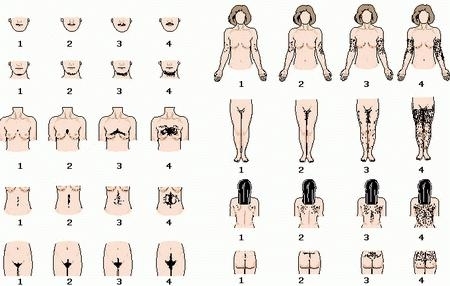
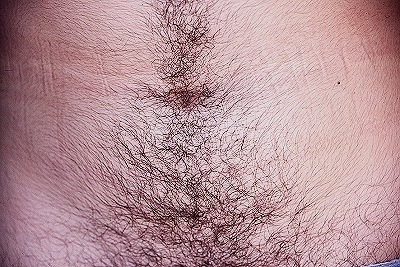
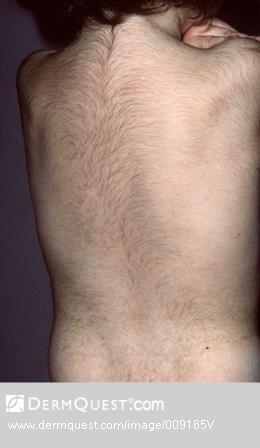
Hirsutism is the presence of excess terminal hair growth in women as a result of increased androgen production or increased skin sensitivity to androgens, or both. Hirsutism occurs in a male pattern distribution ie the moustache and beard areas, chest or an extension of pubic hair on to the abdomen and thighs. 

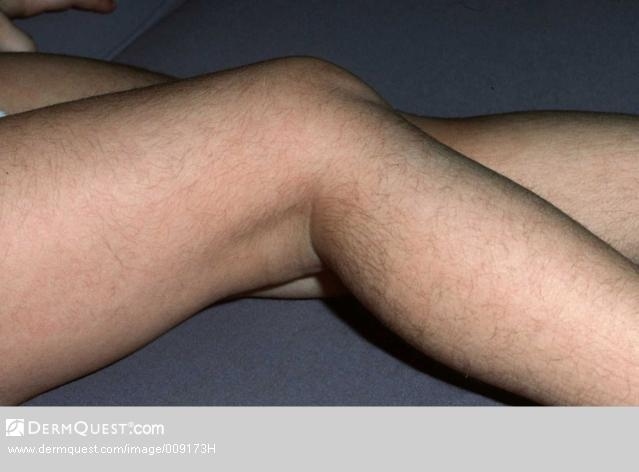
Hirsutism should be distinguished from hypertrichosis, which is androgen independent and causes uniform growth of non-terminal (vellus) hair over the body, particularly in non-sexual areas; this condition can be familial, related to drugs (such as phenytoin, ciclosporin, topical steroids) or caused by non-endocrine disorders such as anorexia nervosa.

Although hirsutism is often thought to be a cosmetic problem, unwanted hair growth adversely affects psychological wellbeing. It can have a similar effect on quality of life scores to that of asthma, epilepsy, and diabetes.

This chapter is set out as follows:


Clinical Images

Please refer to notes on image rights at bottom of the page with regards to individual image ownership.
Investigations

  • Hirsutism usually requires further investigation - refer to the related chapter Hyperandrogenism

Management

General advice

Topical approaches

  • Bleaching - makes the excessive hair less obvious
  • Depilatory creams - are mainly based on thioglycolate. A thick layer is applied to the hairy area of skin for 15-30 minutes and then wiped off, the hair comes away with the cream. Side effects include a contact irritant eczema. Due to the risk of skin irritation it is recommended that the cream is tested on a small area of skin before using it more widely
  • Vaniqa ® (Eflornithine) - applied twice daily, a cream that works to slow the growth of facial hair. Improvements can take two to four months. If improvement is noted the cream must be continued with to maintain effectiveness. Vaniqa ® is often used in combination with physical methods of hair removal / laser. If no improvement is seen within four months of using Vaniqa ® the treatment should be stopped   

Physical approaches used from home

While physical approaches can help, they can cause irritation, in growing hairs and a folliculitis, which may take several weeks to settle - hair removal has to be stopped, at least temporarily. If physical methods are used inappropriately or with too much force they can scar.

  • Shaving - cuts the hair at the skin's surface. Because shaving only cuts the hair it needs to be done frequently to maintain a hair-free appearance, and most women prefer not to shave facial hair as it tends to leave rough stubble
  • Plucking - can be quite traumatic
  • Waxing - involves applying a layer of wax to the surface of the skin and hair. A cloth is then applied to the layer of wax and quickly removed, pulling the hair out of the hair shaft. It can be done using a home waxing kit or by a professional. The effects last about three to six weeks
  • Epilators - are electric devices that remove hair by rotation or friction

Electrolysis (or thermolysis) / laser therapy / photoepilation 

These methods remove hair for longer periods compared to those methods described above. The best chance of preventing a hair from regrowing is to catch it during its anagen phase, the active growth phase of hair follicles, where the hair is visibly above the skin and attached to the papilla (the root). Because not all hair follicles are in the anagen phase simultaneously, multiple treatments are needed to get the best long-term results.  

  • Electrolysis - a small needle is inserted into the hair follicle and a small current of electricity is applied to destroy the follicle. Unlike the two other treatments listed here, electrolysis can treat all hair colours in all skin types. Patients should seek treatment given by an appropriately trained professional such as from the British Institute & Association of Electrolysis  
     
  • Laser therapy - different types of laser can be used, some are better than others. As with IPL (photoepilation), laser is most successful in patients with lighter skin tones and dark hair colour
     
  • Photoepilation (also known as intense pulse light or IPL) - a technique that focuses an intense light beam directly on the skin in order to treat several hairs simultaneously

Medical treatment 

  • Refer to the related chapter Hyperandrogenism
  • Patients require 6-12 months of treatment before assessing outcomes; if effective then patients need to remain on treatment for continued efficacy 

Other resources

  • The PCOS support group Verity has excellent patient support booklets including on hirsutism

Disclaimer - the author PCDS cannot accept responsibility for any misleading or incorrect statements, and the management of individual patients remains the direct responsibility of the individual doctor. We do however hope that visitors to this site can contact us regarding comments that are considered misleading or incorrect so that we can continue to improve the site.

Image Rights - The PCDS would like to thank Dermatoweb, DermQuest (Galderma), and others who have contributed images. All named individuals and organisations maintain copyright for the relevant images.

Quick Links

The following pharmaceutical companies have had no involvement in the content of this website or in our conference programmes


Almirall
Galderma
Glenmark
Johnson & Johnson
La Roche-Posay
LEO Pharma
Pierre Fabre
Schuco