Juvenile plantar dermatosis

LAST UPDATED: Jul 25, 2023

Acknowledgements: This chapter was kindly updated by Ivan Bristow PhD FRCPodM Fellow, Royal College of Podiatry.
Introduction

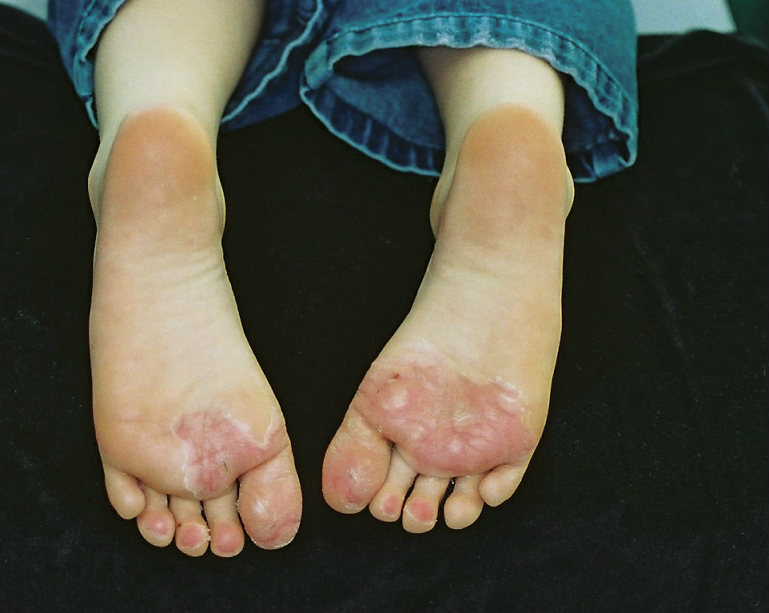
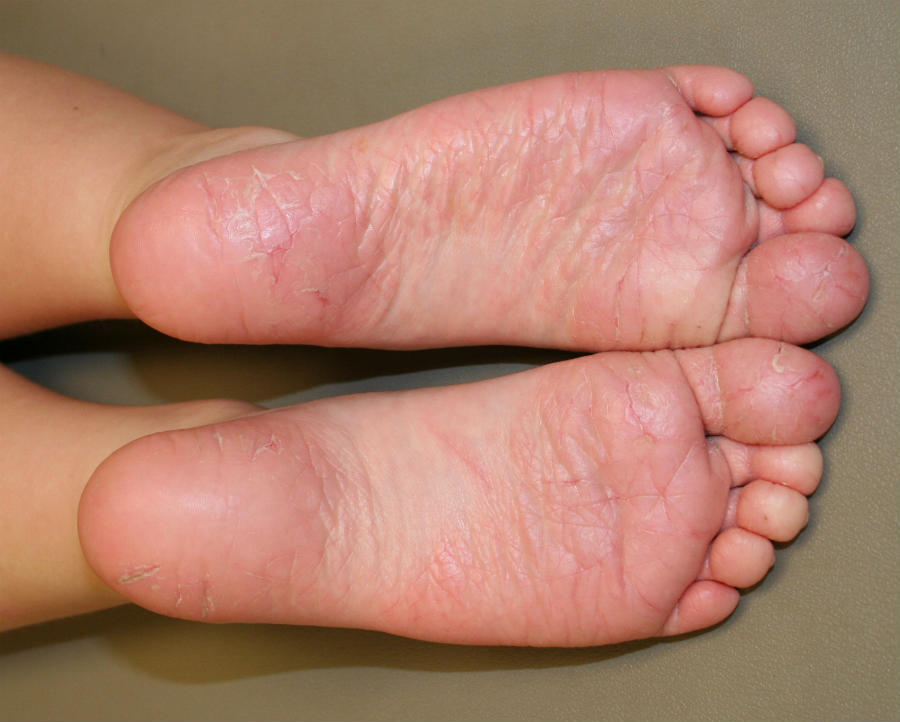
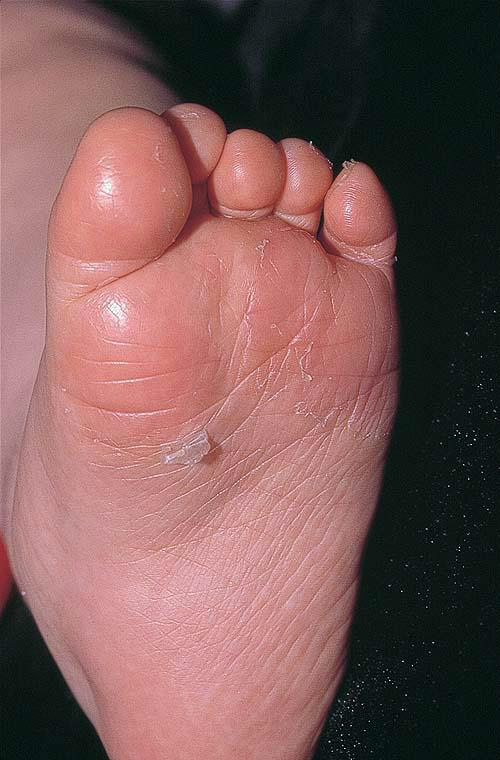
Juvenile plantar dermatosis (JPD) is characterised by symmetric, shiny erythema, along with superficial desquamation and fissuring, of the weight-bearing surfaces of the feet that affects children and young adolescents with a recurring course. A personal history of atopy is common. JPD is self-limiting and usually resolves by 12-16 years of age.

This chapter is set out as follows:


Aetiology

  • JPD is often seen in atopic children whose skin is generally more sensitive than others
  • It is thought a combination of sweat and occlusive footwear leads to skin maceration and weakening. The shearing force across the weight bearing epidermis, effectively displaces sweat ducts and so temporarily no sweat is released, producing dry, scaly skin with a glazed appearance

History

  • JPD occurs in children aged 3 to 15, but is seen most frequently in boys aged 4 to 8
  • It is frequently exacerbated in the summer, when the weather is warmer 

Clinical findings

Distribution

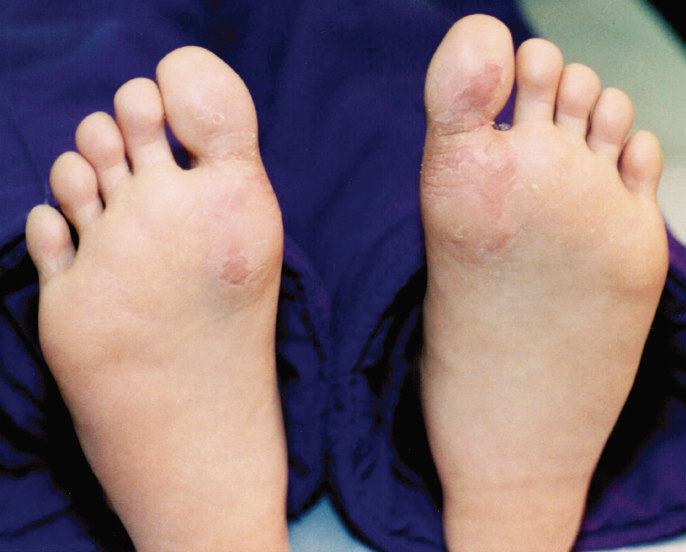
  • Sites most frequently affected are the plantar surfaces of the toes and the weight-bearing regions of the sole of the foot, usually the forefoot and volar surfaces of the toes
  • Less commonly affected sites are the dorsal surfaces of the toes, and the fingertips
  • Unlike in tinea, the spaces between the toes are spared 

Morphology

  • Affected sites become dry, red and shiny
  • In chronic cases scaling and fissuring may arise, which can take several weeks to heal

Clinical Images

Please refer to notes on image rights at bottom of the page with regards to individual image ownership.

Management

  • JPD is self-limiting and generally resolves at puberty with most patients having the condition for around 2-4 years
  • Provide appropriate advice
    • Shoes should be well-fitting to reduce friction, and made of more breathable material, preferably leather, as opposed to synthetic fibres
    • Synthetic insoles should be removed and replaced with natural fibres such as cork
    • Wear cotton socks and change them when damp
    • Remove shoes and walk barefoot as much as possible when indoors or safe to do so
  • ​Emollients 
    • Application of a moisturising cream containing urea, when socks and shoes are removed, is often beneficial 
    • ​Ointments such as Vaseline are particularly helpful if applied after a bath and before bed
  • Topical steroids are seldom more effective than emollients, although if the skin is erythematous and itchy a mild-moderately potent topical steroid can be applied thinly for a few days until symptoms improve   
  • Management of fissures - avoid strenuous exercise for a few days if possible. Occluding the fissures can be beneficial, which can be achieved in a number of ways:
    • Using a plaster 
    • Steroid impregnated treatments - there are two types, both of which can be left on for up to 24 hours before reapplying: 
      • Haelan ® tape (fludroxycortide tape) - attached is a video demonstrating how to use the tape
      • Betesil ® medicated plaster (betamethasone valerate 2.25mg) - attached is a video demonstrating how to use the plaster
    • A parent can apply either, clear nail varnish, or commercial superglue, with the latter great care must be taken

Disclaimer - the author PCDS cannot accept responsibility for any misleading or incorrect statements, and the management of individual patients remains the direct responsibility of the individual doctor. We do however hope that visitors to this site can contact us regarding comments that are considered misleading or incorrect so that we can continue to improve the site.

Image Rights - The PCDS would like to thank Dermatoweb, DermQuest (Galderma), and others who have contributed images. All named individuals and organisations maintain copyright for the relevant images.

Quick Links

The following pharmaceutical companies have had no involvement in the content of this website or in our conference programmes


Almirall
Galderma
Glenmark
Johnson & Johnson
La Roche-Posay
LEO Pharma
Pierre Fabre
Schuco