Kawasaki disease
LAST UPDATED: Aug 08, 2021
Introduction
Kawasaki disease is a rare, acute febrile vasculitic condition, presenting with fever, exanthem, and lymphadenitis. It often affects children under two years of age, and although is usually self-limiting, has a mortality rate of approximately 2%, mainly as a result of coronary artery aneurysm.
This chapter is set out as follows:
Aetiology
-
The cause is unknown, although bacterial superantigens may play a role
-
Epidemics of Kawasaki disease primarily occur in the late Winter and Spring
-
Although cases of Kawasaki disease have been reported in children of all ethnic origins, the highest incidence is in children of Asian descent especially Japanese
History
-
Approximately 85-90% of cases occur in children less than five years of age, with a peak incidence under the age of two years
-
The onset is acute with high fever
Clinical findings
The acute phase
-
Fever, which is typically high-spiking and remittent, with peak temperatures ranging from 102-104°F (39-40°C) or higher
-
Irritability - often out of proportion to the other signs
-
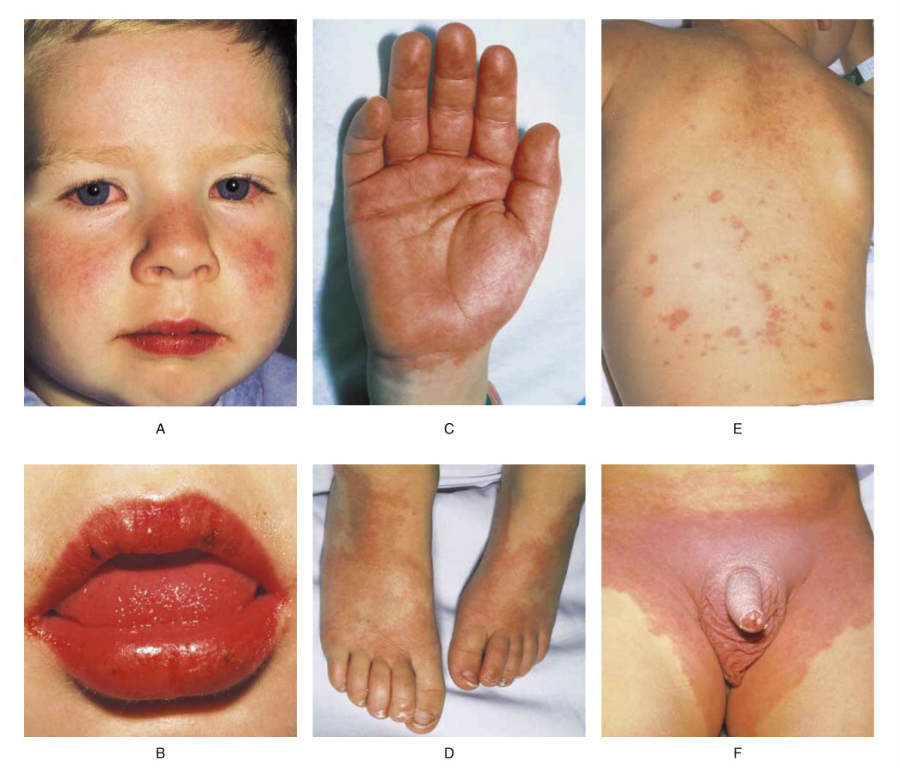
Eyes - non-exudative bilateral conjunctivitis (90%), anterior uveitis (70%)
-
Strawberry tongue and fissuring of the lips
-
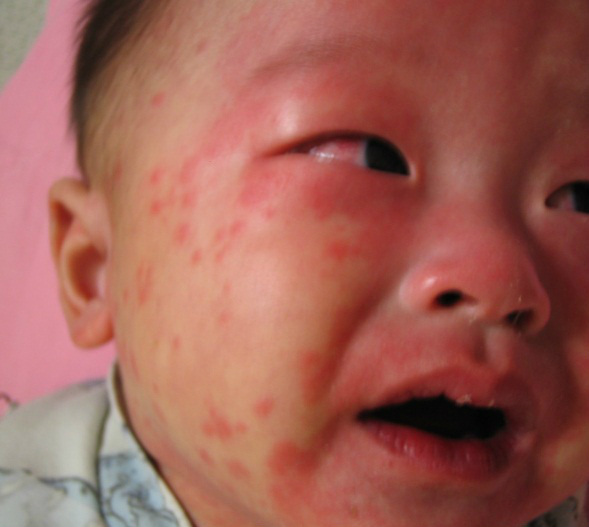
Rash - after 3-4 days there is a widespread exanthem on the limbs and trunk, which may become localised over the distal extremities. Occasionally the rash is morbilliform or target-like
-
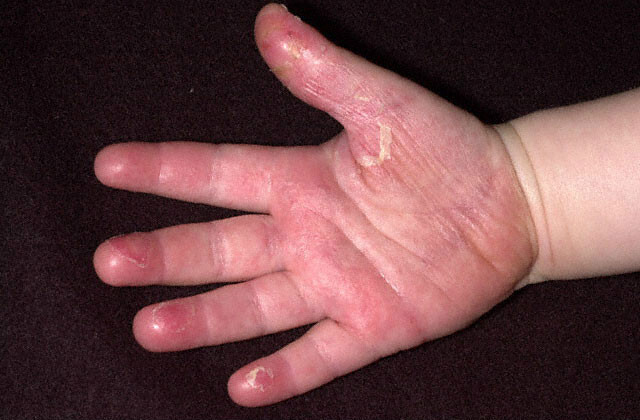
Erythema and oedema of the hands and feet
-
Lymphadenopathy (75%), generally a single, enlarged, non-suppurative cervical node measuring approximately 1.5 cm
-
Myocarditis and pericarditis, arthritis, as well as hepatic, renal, and GI dysfunction may occur
The subacute phase
- Begins when the fevers have abated, and it continues until weeks 4-6
-
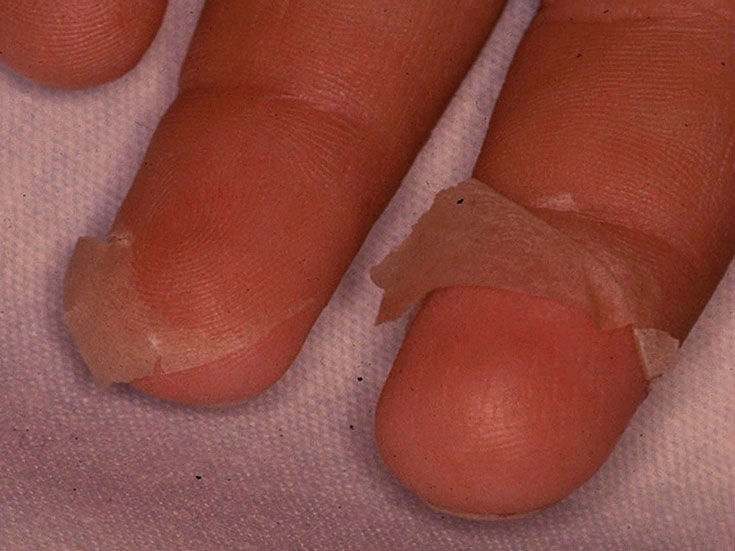
Desquamation of the digits
-
Thrombocytosis
-
The development of coronary aneurysms - the risk for death is highest at this stage
Diagnostic criteria established by the American Heart Association (AHA) are fever lasting longer than five days AND four of the five following features:
-
Changes in the peripheral extremities: initial reddening or oedema of the palms and soles, followed by membranous desquamation of the finger and toe tips or transverse grooves across the fingernails and toenails (Beau's lines)
-
Polymorphous rash (not vesicular): usually generalised but may be limited to the groin or lower extremities
-
Oropharyngeal changes: erythema, fissuring, and crusting of the lips; strawberry tongue; diffuse mucosal injection of the oropharynx
-
Bilateral, non-exudative, painless bulbar conjunctival injection
-
Acute non-purulent cervical lymphadenopathy with lymph node diameter greater than 1.5 cm, usually unilateral
Clinical Images
Please refer to notes on image rights at bottom of the page with regards to individual image
ownership.
Management
-
Suspected cases need urgent hospital admission
-
Treatment is with intravenous immunoglobulin, and often aspirin, which reduce the mortality and complications
-
Follow-up echocardiography is performed in all children with Kawasaki disease to look for cardiac complications
-
There is a 2% risk of recurrence of Kawasaki disease within the first few years of diagnosis
Disclaimer - the author PCDS cannot accept responsibility for any misleading or incorrect statements, and the management of individual patients remains the direct responsibility of the individual doctor. We do however hope that visitors to this site can contact us regarding comments that are considered misleading or incorrect so that we can continue to improve the site.
Image Rights - The PCDS would like to thank Dermatoweb, DermQuest (Galderma), and others who have contributed images. All named individuals and organisations maintain copyright for the relevant images.