Lipoedema
LAST UPDATED: Mar 11, 2026
Acknowledgements: This chapter has been developed with the support of Sharie Fetzer and Lipoedema UK
Introduction
Lipoedema was first described in 1940 and is a long-term condition involving a pathological build-up of adipose tissue (Allen & Hines, 1940). It typically affects the legs, hips and/or buttocks, and sometimes the arms, and may, although not always, cause considerable tissue enlargement, swelling and pain. It may significantly impair mobility, ability to perform activities of daily living, and psychosocial wellbeing.
This chapter is set out as follows:
Aetiology
-
Lipoedema almost exclusively affects women
-
Relatively little epidemiological research has been carried out on lipoedema and so it is unclear exactly how many people are affected and to what extent
-
The precise mechanisms responsible for the development of lipoedema are unknown, but it is likely that multiple factors are involved:
-
Lipoedema often first presents during puberty and in some cases oral contraceptive use, pregnancy and the menopause appear to be triggers. These observations suggest that hormonal change may be involved in initiating the characteristic build-up of adipose tissue
-
Onset of the disease after periods of significant weight gain have been reported
-
There is evidence of a genetic predisposition to lipoedema. A family history of the condition has been found in 15%–64% of patients. The genetic variants involved have not been identified fully, but research suggests that autosomal dominance with male sparing is the most likely mode of inheritance
-
The characteristic increase in subcutaneous fat tissue seen in lipoedema may be due to adipocyte hypertrophy (increase in size but not necessarily number of fat cells) and/or hyperplasia (increase in number of fat cells). In addition, there is evidence of an increase in the rate of adipocyte death, possibly due to hypoxia induced by excessive tissue enlargement, and infiltration of fat tissue by scavenger inflammatory cells. By inducing growth of new fragile capillaries in the fat tissue it has been suggested that hypoxia may contribute to the easy bruising often reported by patients with lipoedema
History
-
Patients often report joint pain and tissue hypersensitivity, the cause of which is unclear, but may relate to compression of nerve fibres by enlarged fat deposits, inflammation and/or central sensitisation
Clinical findings
The key diagnostic features include:
-
Changes usually begin around 10–30 years of age, almost exclusively affecting women
-
Usually bilateral and symmetrical
-
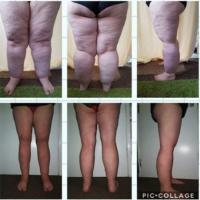
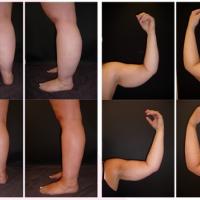
Tissue enlargement affects the legs, hips and/or buttocks, and sometimes the arms. Changes are often insidious
-
The changes stop abruptly at the ankles or wrists ('bracleting') so that there is a ‘step’ before the feet or hands which are usually unaffected. The concave areas posterior to the malleoli (retromalleolar sulci) and either side of the Achilles tendon are filled in
-
There is often bruising without apparent cause or due to minor trauma
-
Reduced skin temperature and altered tissue texture may be present and require palpation to detect
-
Stemmer’s sign - this can help differentiate lipoedema from lymphoedema:
-
‘Pure’ lipoedema - Stemmer’s sign is negative, as demonstrated when a fold of skin can be pinched and lifted up at the base of the second toe or at the base of the middle finger
-
Secondary lymphoedema -.Stemmer’s sign is positive, as demonstarted by the inability to lift the fold of skin
- Some patients develop lymphoedema secondary to lipoedema, possibly due to overloading of an essentially normal lymphatic system
-
Part of the reason that lipoedema may be underdiagnosed is that it may be mistaken for other conditions that cause subcutaneous tissue enlargement/swelling or fat deposition. The two most frequent misdiagnoses are generalised obesity (particularly in young, otherwise well patients) and lymphoedema. Infrequent causes of unusual fat deposition include Dercum’s disease, Polycystic Ovarian syndrome, Cushing’s syndrome, growth hormone deficiency and lipodystrophies that cause lipohypertrophy (e.g. analbuminaemia)
Clinical Images
Please refer to notes on image rights at bottom of the page with regards to individual image
ownership.
1
2
Investigations
-
Currently there are no diagnostic tests for lipoedema and the main purpose of investigation is to exclude other diagnoses or to inform lipoedema management strategies
-
Routine screening blood tests useful in excluding or identifying other or concomitant conditions, especially if weight gain and lethargy are present, may include FBC, U&E, LFT, TFT, glucose and sometimes BNP levels
Management
General management
-
Healthy eating and weight management
-
Physical activity and improving mobility
-
Skin care and protection - skin folds may be prone to fungal infections and should be washed and dried with care. Patients are also at increased risk of cellulitis, especially if oedema is present alongside lipoedema
Multidisciplinary approach
-
Lipoedema/lymphoedema specialist clinician - tissue enlargement (± oedema) / pain and hypersensitivity
-
Physiotherapy - abnormal gait / muscle weakness / joint pain
-
Podiatry - flat feet / abnormal gait
-
Occupational therapy - mobility problems / difficulty with day-to-day activities
-
Dietitian - advice and education about weight management and healthy eating
-
Pain clinic - unmanageable/chronic pain
-
Psychosocial support - management of expectations and education
Specific management of tissue enlargement (+/- oedema)
-
Compression therapy is designed to exert pressure on body tissues. Compression therapy will not reverse the adipose tissue enlargement of lipoedema (Fetzer, 2016), therefore unless there is oedema present, compression therapy will not produce a reduction in limb size. In lipoedema, the use of compression therapy has three main purposes:
-
To reduce discomfort, aching and pain by supporting the tissues
-
To support tissues and streamline uneven, distorted limb shape, so by reducing mechanical impairment and improving mobility
-
To reduce oedema in lymphoedema by reducing interstitial fluid formation and encouraging venous and lymphatic return. Compression therapy may reduce the risk of progression to lymphoedema although evidence for such effects is not currently available
-
Surgery - in carefully selected patients, and after non-surgical approaches have been implemented, case with severe tissue enlargement causing mobility impairment may be considered for liposuction to treat the tissue enlargement and/or bariatric surgery to treat obesity. While both types of surgery may help with symptoms neither has been shown to be curative of lipoedema
Other resources
Disclaimer - the author PCDS cannot accept responsibility for any misleading or incorrect statements, and the management of individual patients remains the direct responsibility of the individual doctor. We do however hope that visitors to this site can contact us regarding comments that are considered misleading or incorrect so that we can continue to improve the site.
Image Rights - The PCDS would like to thank Dermatoweb, DermQuest (Galderma), and others who have contributed images. All named individuals and organisations maintain copyright for the relevant images.