Psoriasis: flexural and genital psoriasis
LAST UPDATED: Dec 14, 2021
Introduction
This chapter discusses the management of psoriasis affecting the flexures and genitalia and is set out as follows:
History
-
It is always important to ask if patients have genital involvement as they may not otherwise come forward with the information - genital involvement can be very uncomfortable and can interfere with relationships
Clinical findings
Flexural psoriasis
-
Distribution
-
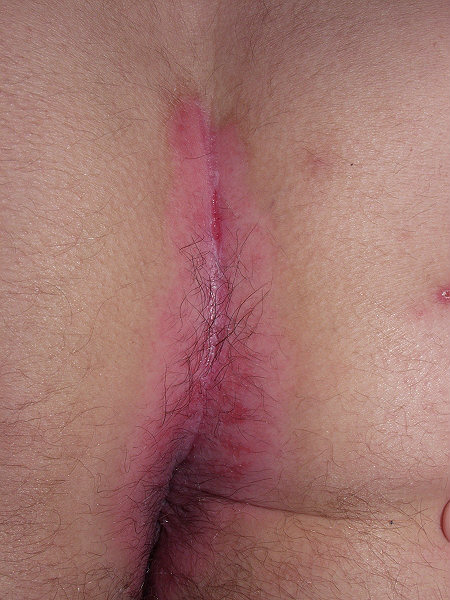
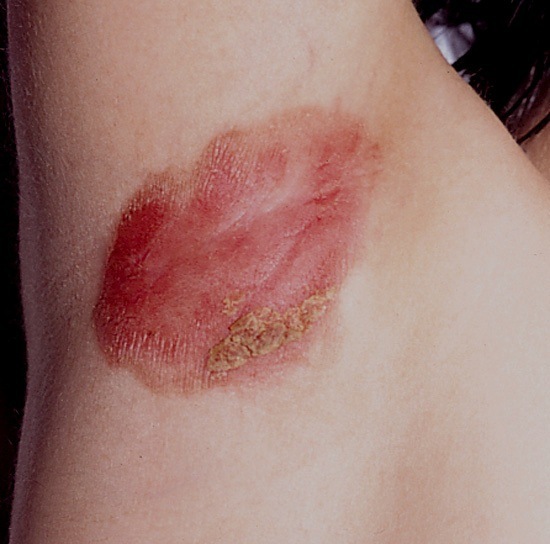
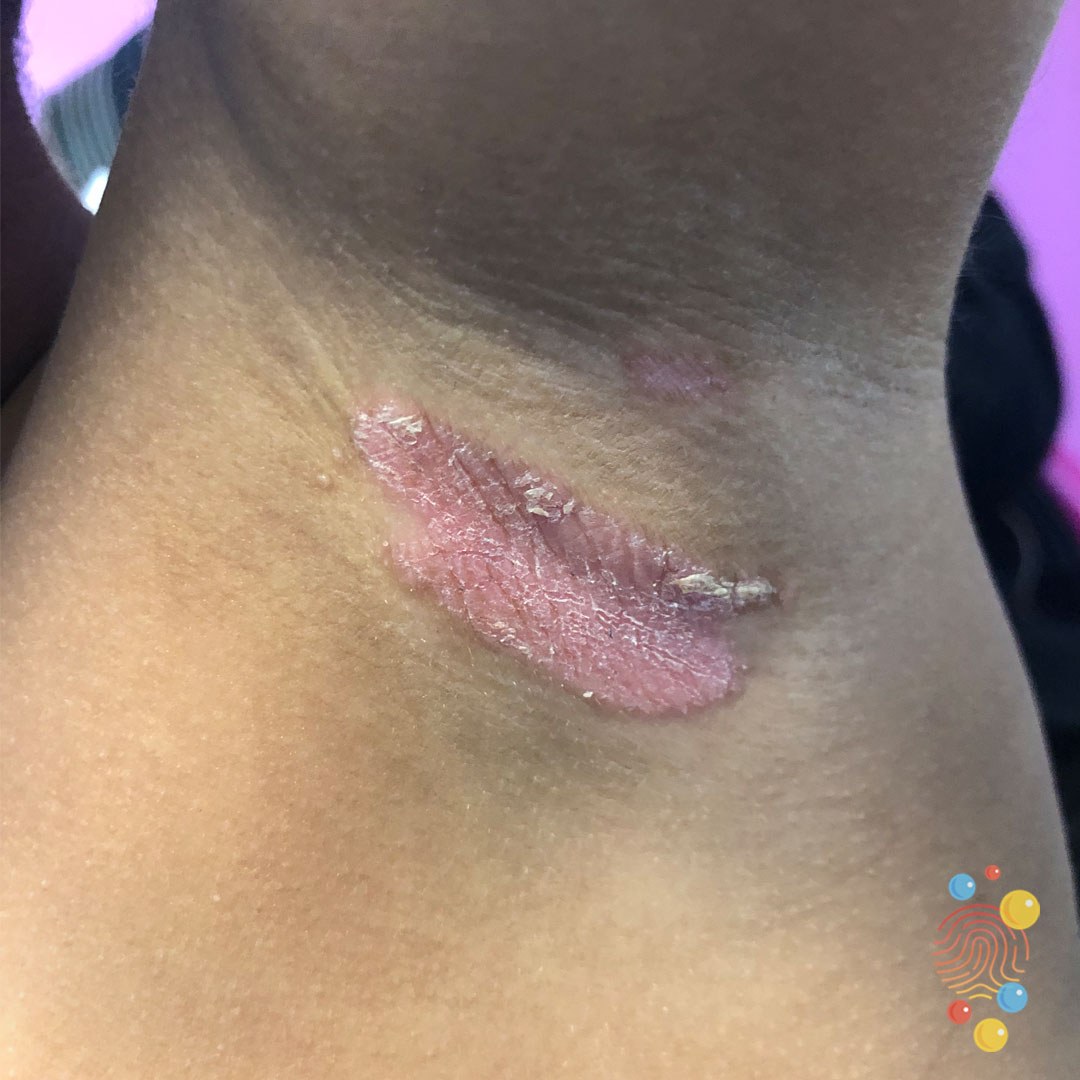
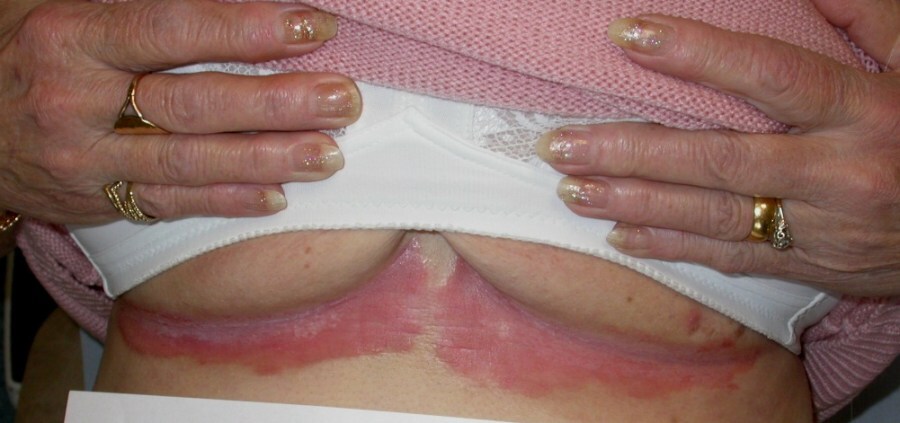
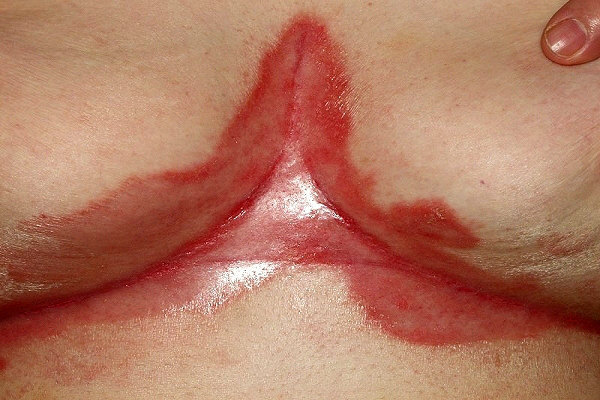
Several sites can be affected including the axillae, under the breasts, umbilicus, groins, gluteal cleft (between the buttocks), around the anus, penis / scrotum and the vulva
-
Morphology
-
Lesions in the flexures are usually symmetrical, very shiny, red and well-demarcated
-
As a result of friction, significant scale if often lacking. If affected areas are, however, asymmetrical and scale is present always consider tinea and send scrapings for mycology
Genital psoriasis
-
The vulva - often appears as smooth, non-scaly and red areas. Scratching this area may cause an infection, produce dryness, and result in thickening of the skin and further itching
-
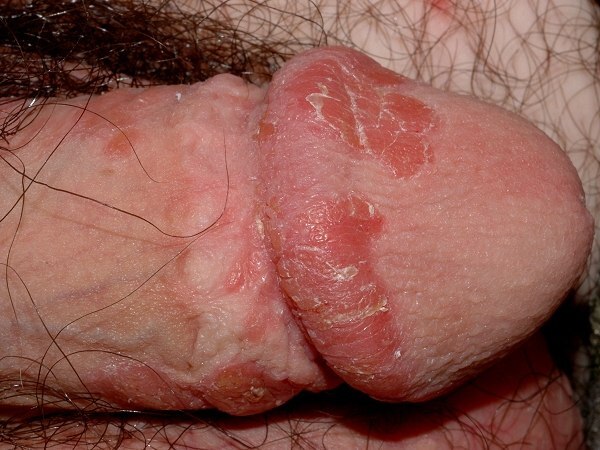
The penis - often appears as many small, red patches on the glans, or shaft. The skin may be scaly or smooth and shiny
Clinical Images
Please refer to notes on image rights at bottom of the page with regards to individual image
ownership.
Management
-
Emollients
-
Topical steroids
-
The skin on flexural sites and the genitalia is relatively thin and so topical steroids no stronger than Eumovate ® cream are recommended
-
In cases of co-existent yeast a combination product such as Trimovate ® cream should be used
-
Treatment with topical steroids should be discontinued once symptoms settle
-
The overuse of topical steroids in body folds may cause striae and can result in long-term aggravation of psoriasis (tachyphylaxis)
- If there are concerns that too much topical steroid is being used it can be worth trying a vitamin-D compound such as Curatoderm ® lotion / ointment or Silkis ® ointment. Another option are the calcineurin inhibitors Elidel ® (pimecrolimus) cream or Protopic ® (tacrolimus) ointment, although both are off-label in psoriasis
-
The skin on the gluteal cleft is thicker than on the other sites and if necessary more potent topical steroids can be used periodically if needed
Disclaimer - the author PCDS cannot accept responsibility for any misleading or incorrect statements, and the management of individual patients remains the direct responsibility of the individual doctor. We do however hope that visitors to this site can contact us regarding comments that are considered misleading or incorrect so that we can continue to improve the site.
Image Rights - The PCDS would like to thank Dermatoweb, DermQuest (Galderma), and others who have contributed images. All named individuals and organisations maintain copyright for the relevant images.