Seborrhoeic eczema (syn. seborrhoeic dermatitis)
LAST UPDATED: Feb 22, 2024
Introduction
Seborrhoeic eczema (syn. seborrhoeic dermatitis) is a common, scaly rash, affecting 3-5% of the population. It involves those areas rich in sebaceous glands such as the face, scalp and the centre of the chest.
This chapter is set out as follows:
Aetiology
-
Although the causes of seborrhoeic eczema are not fully understood, the yeast Malassezia ovale (M. ovale), formerly known as Pityrosporum ovale, is known to play a role
-
It is unclear as to how M. ovale induces inflammation and scaling, although there is a hypothesis that the yeast hydrolyzes sebum to release a mixture of saturated and unsaturated fatty acids. The fatty acids are taken up by the yeast but the unsaturated fatty acids remain and breach the skin's barrier function causing the inflammatory reaction
-
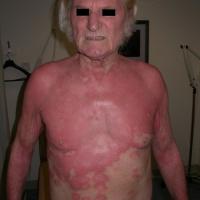
Seborrhoeic eczema is more common and can be much more severe in patients with HIV and in Parkinson's disease
History
-
It is most commonly seen in patients aged 18 to 40 but can occur at any age
-
It is more common in males
-
Itch is variable, and for some is not a predominant feature
-
Symptoms fluctuate and the condition may last for years
Clinical findings
Distribution
- It affects areas rich in sebaceous glands
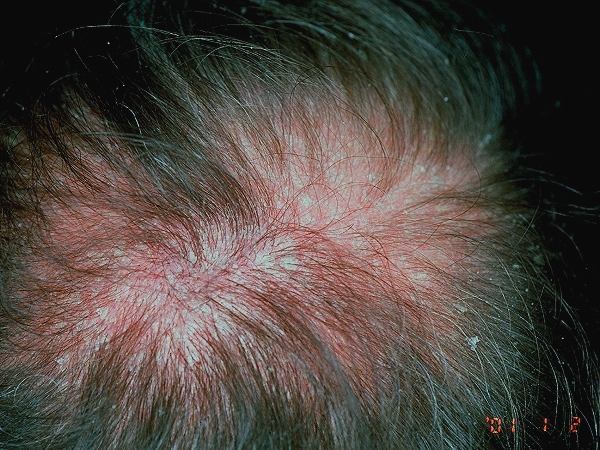
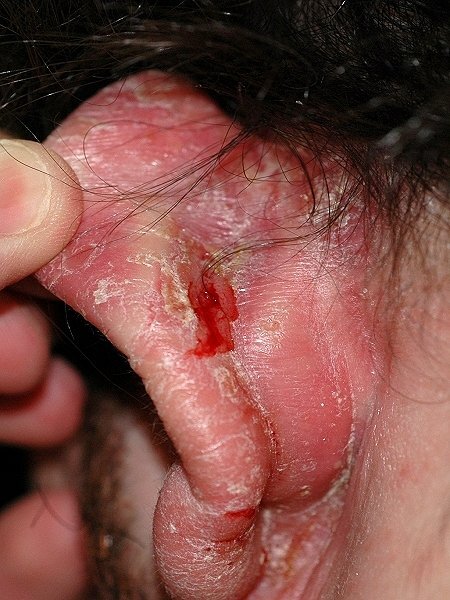
- Scalp and behind the ears. More extensive involvement of the ears with otitis externa may occur
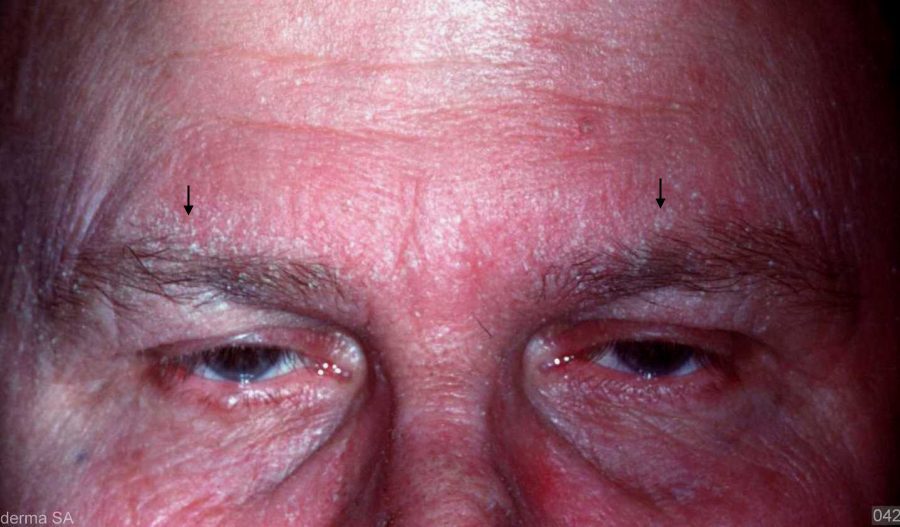
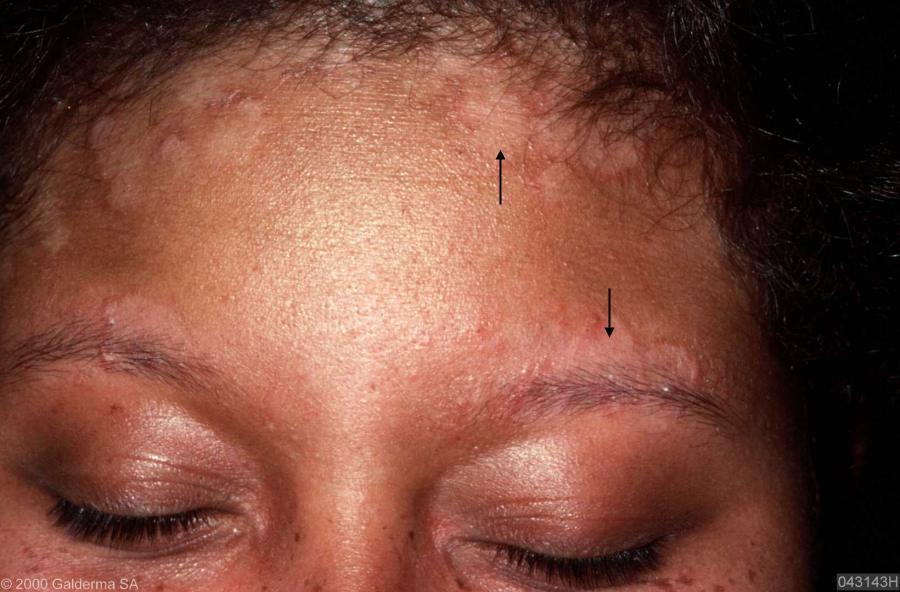
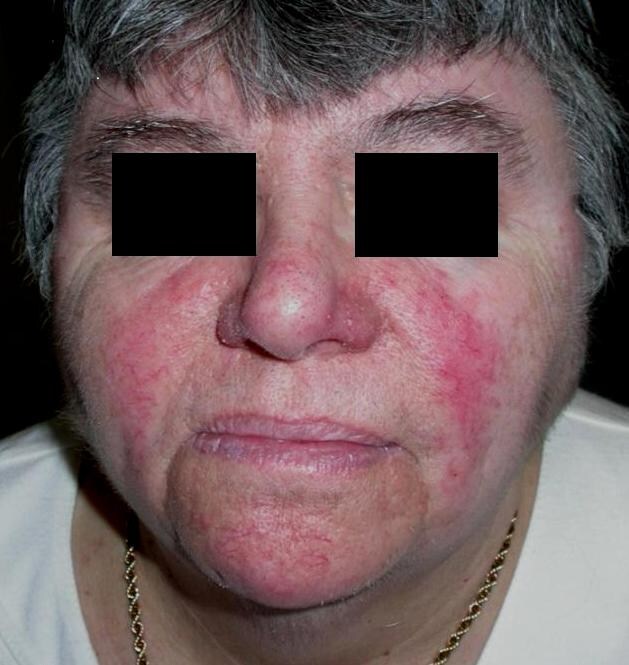
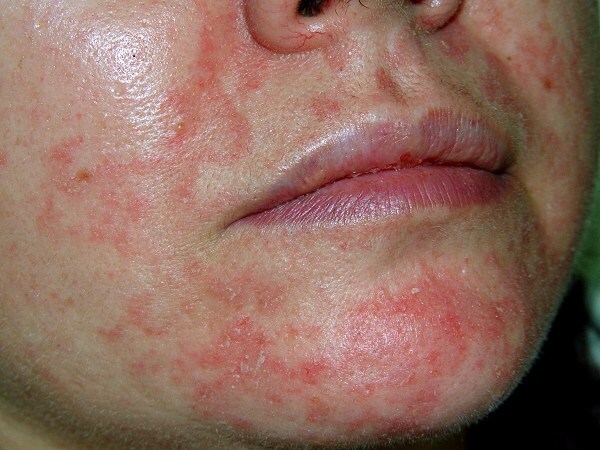
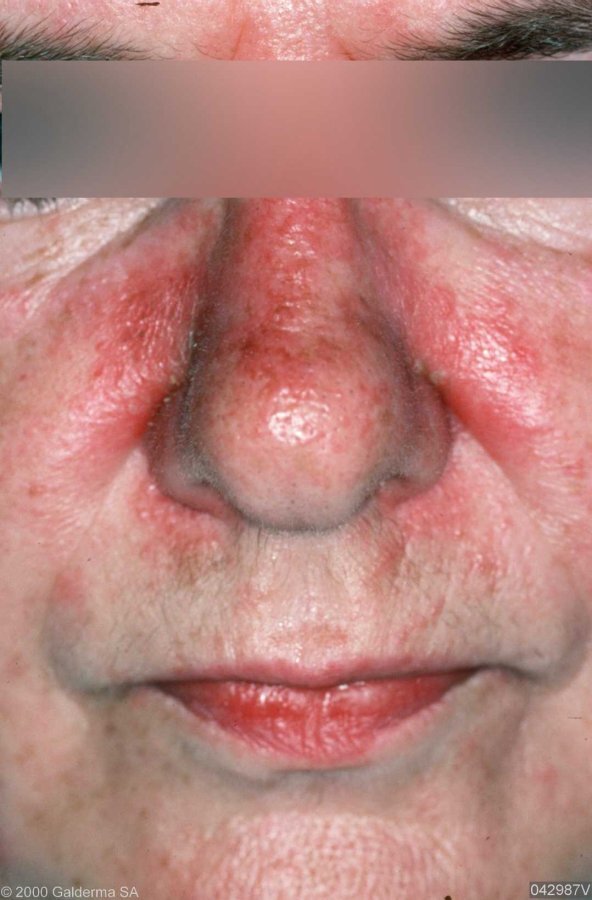
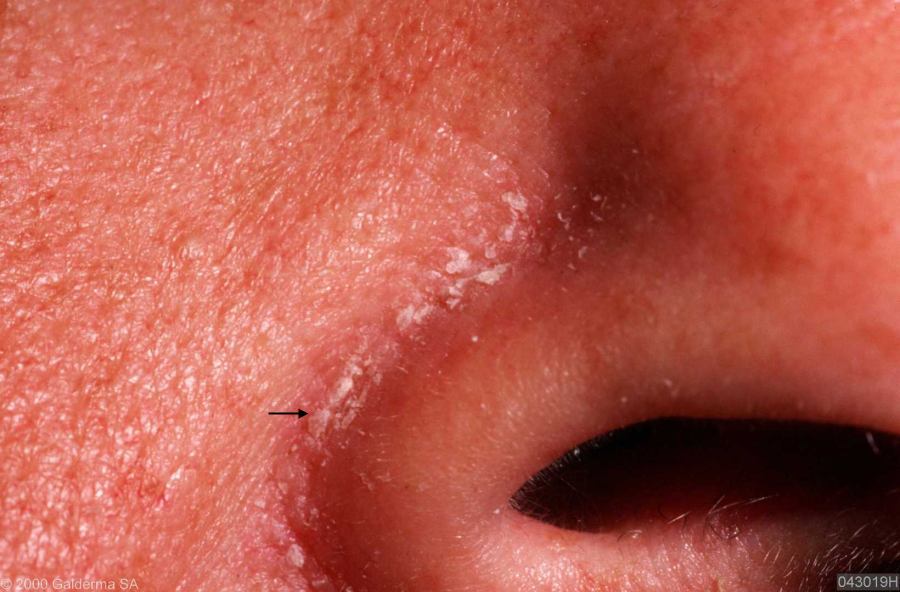
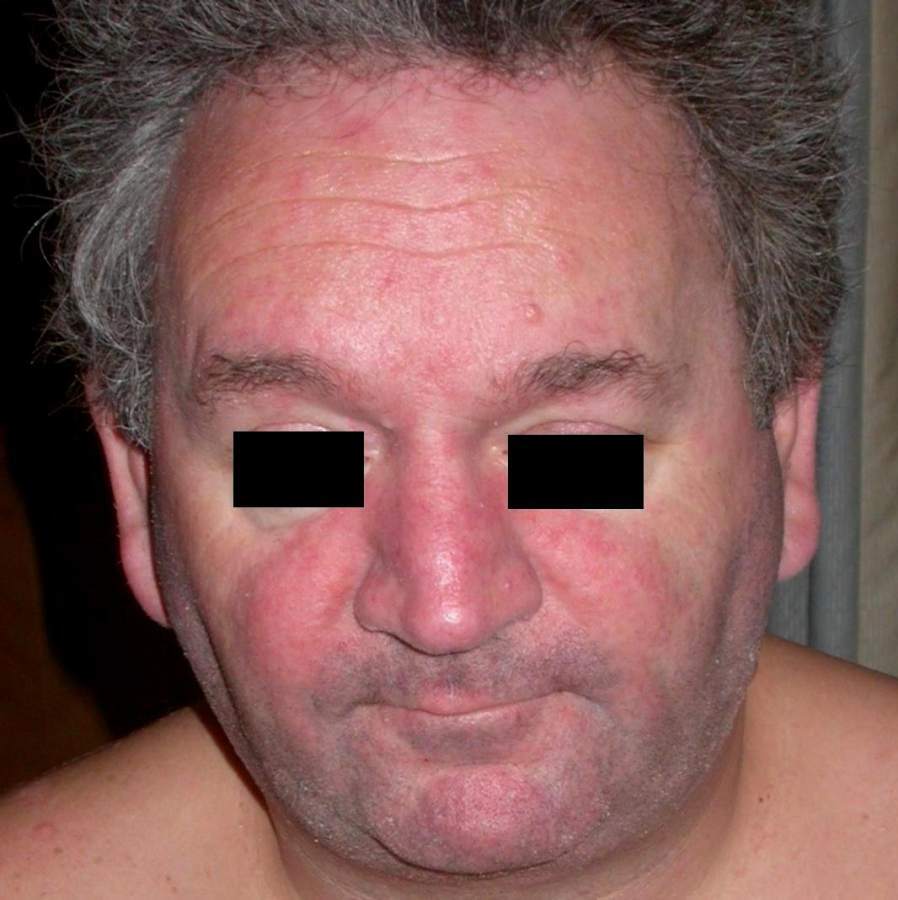
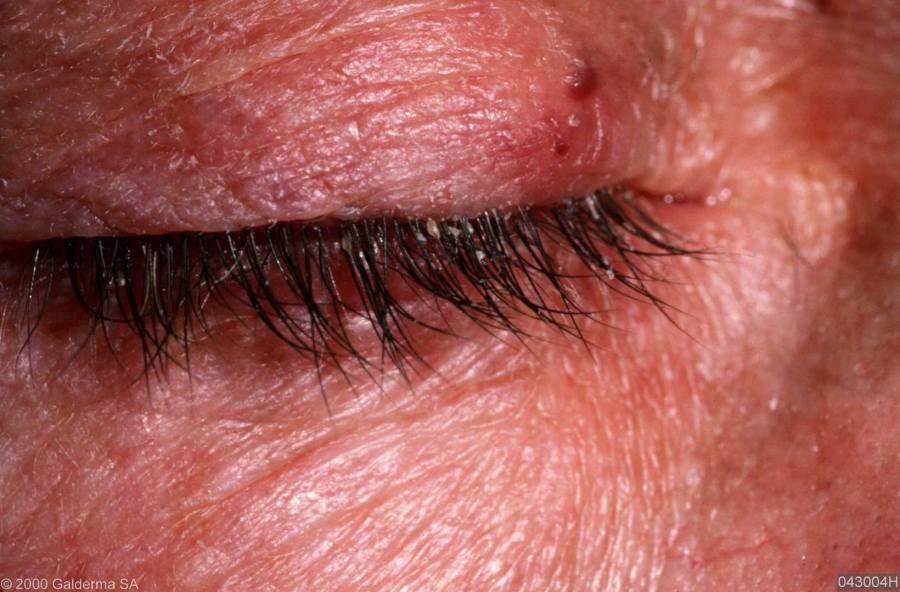
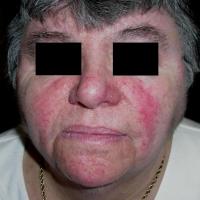
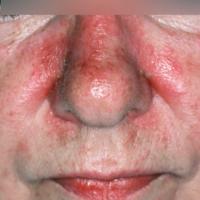
- Face - medial eyebrows (can be associated with chronic blepharitis), glabella and nasolabial folds. Areas under spectacles or hearing aids may also be involved
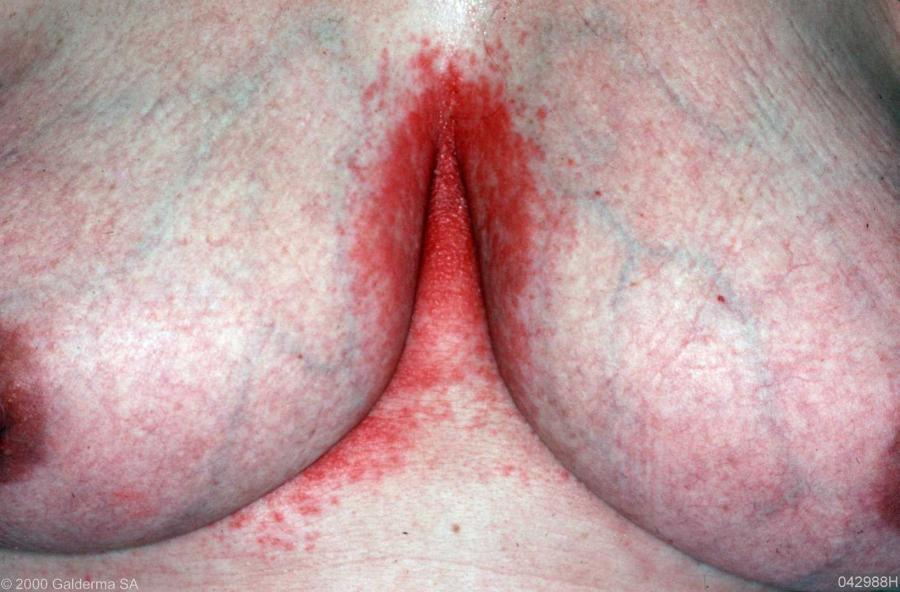
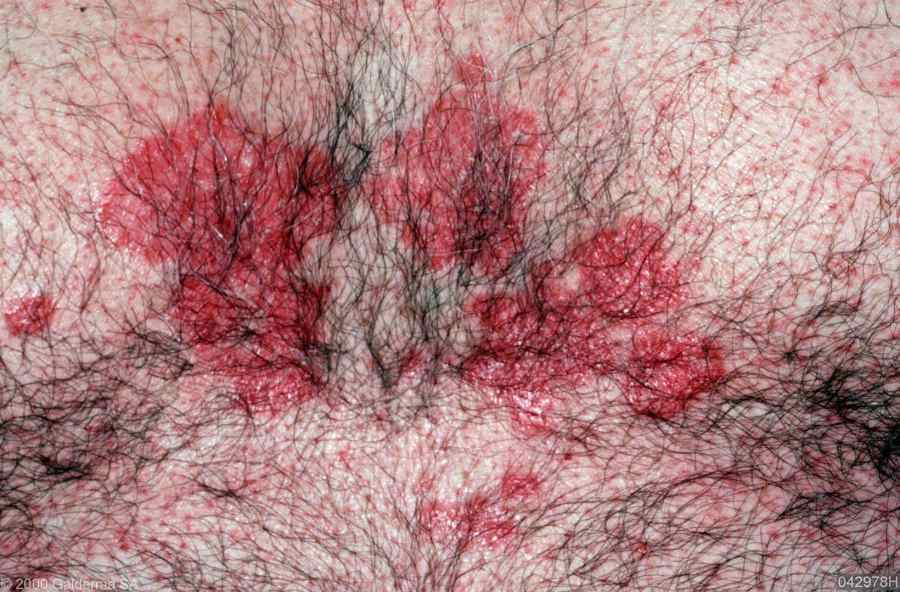
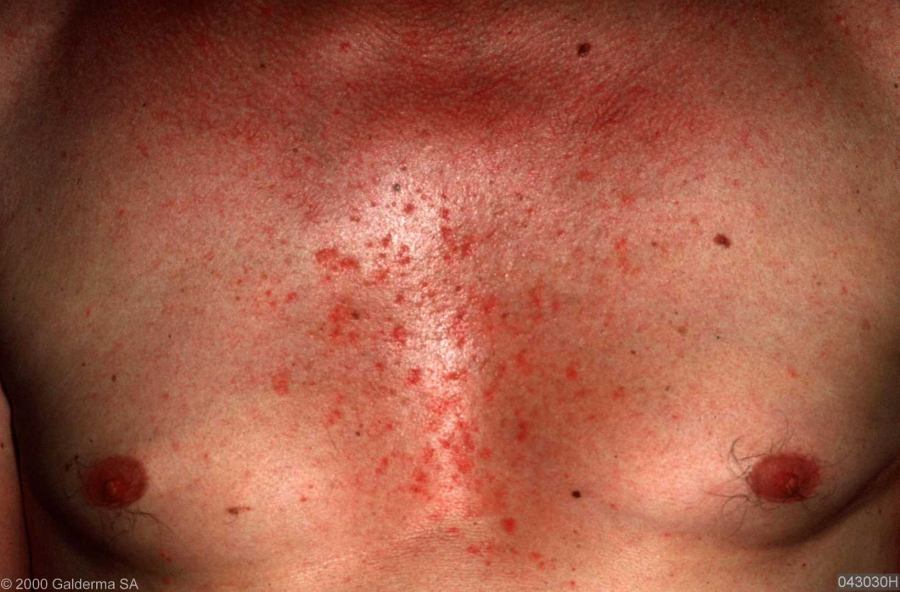
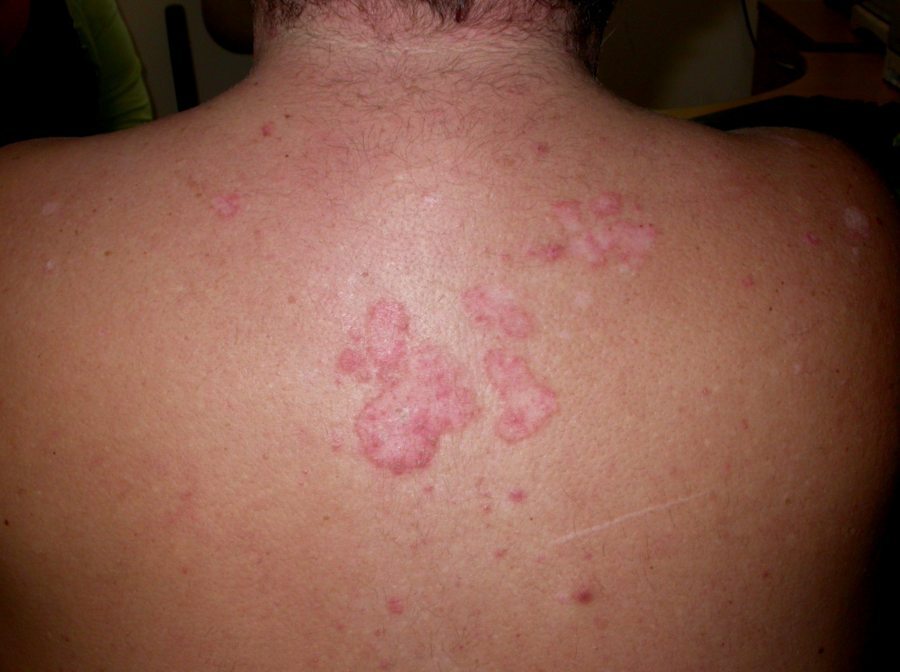
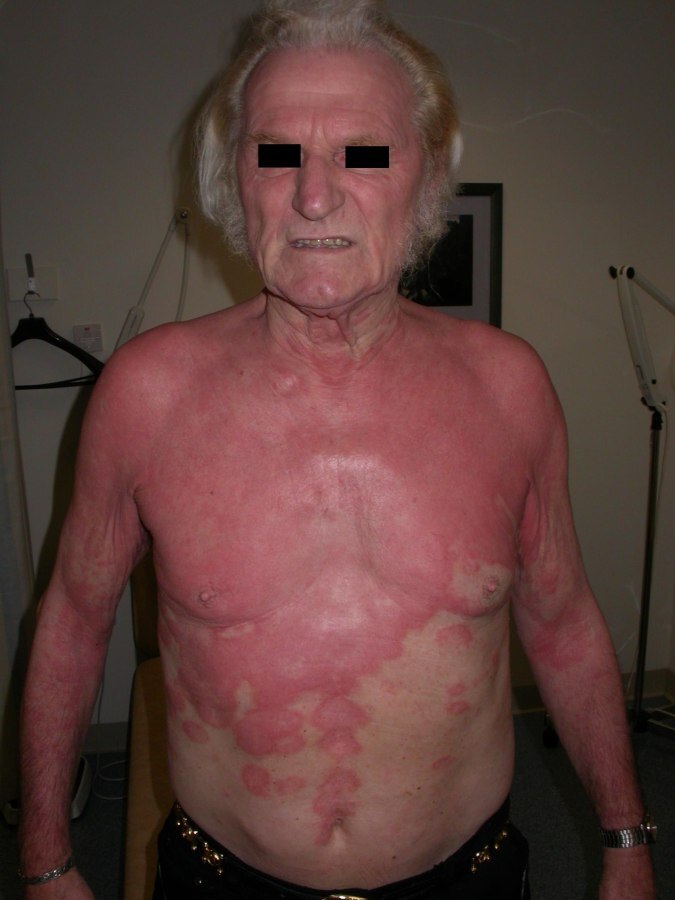
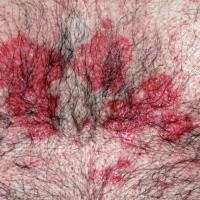
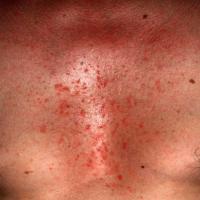
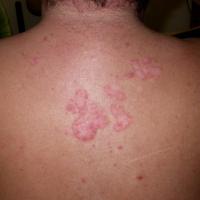
- Upper trunk - presternal and interscapular regions
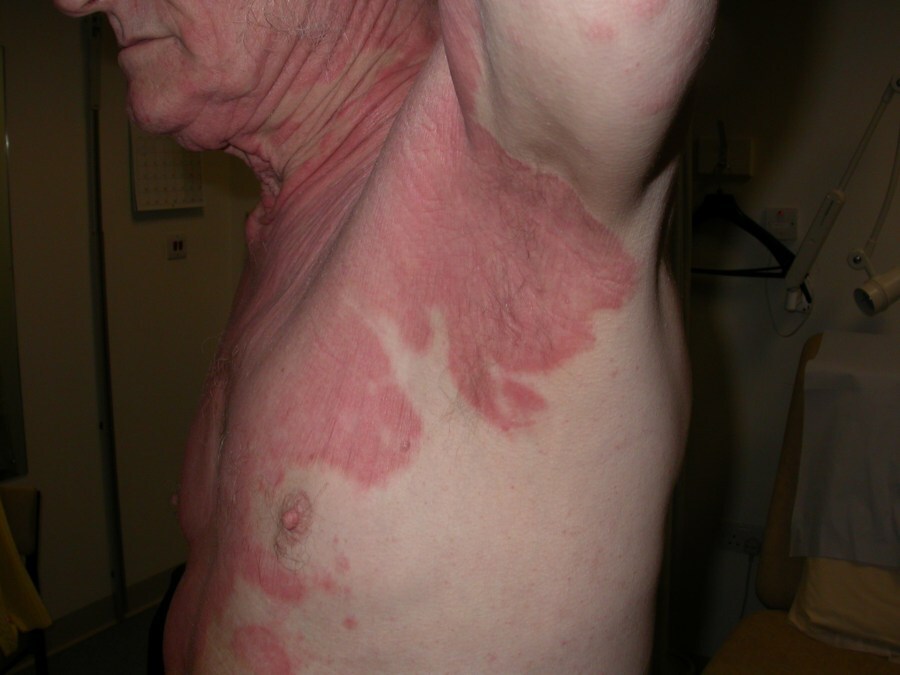
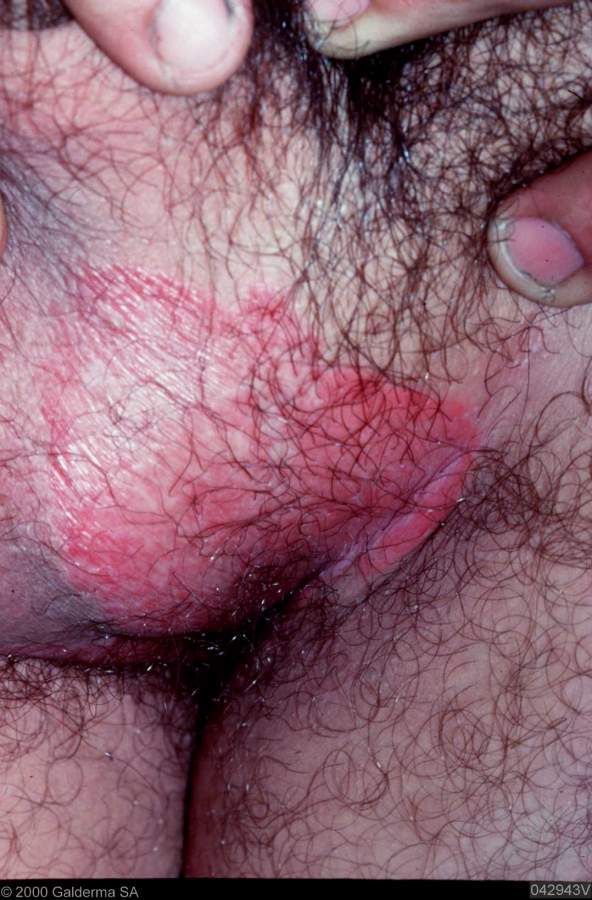
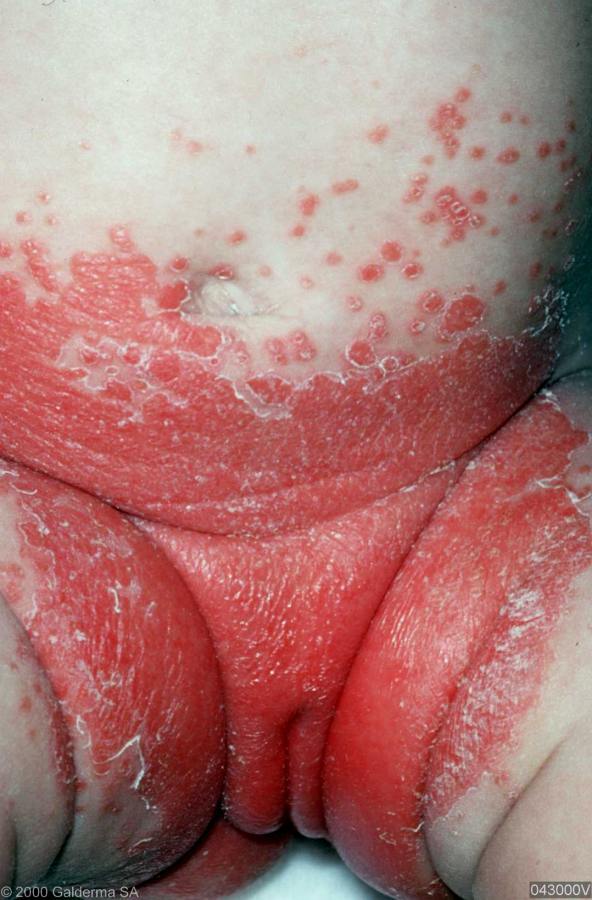
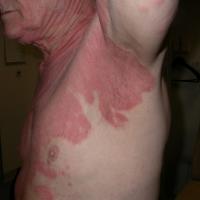
- Flexures - axillae, groins, umbilicus, anogenital and submammary regions
Morphology
- Red, sharply marginated macules / patches covered with greasy-looking yellowish scales
Seborrhoeic eczema or psoriasis?
There are occasions when it can be difficult to distinguish between the two:
-
Face - in the absence of additional signs elsewhere on the body it can be difficult to differentiate facial psoriasis from seborrhoeic eczema. Such patients are sometimes termed as have 'sebo-psoriasis'
-
Infants - some infants develop an erythematous, scaly rash in the first six months of life. This often begins in the napkin area but may also occur on the scalp (cradle cap) and extend to other flexures such as the neck creases and the axillae. Unlike with atopic eczema patients are not unduly distressed. Opinion is split as to whether this actually represents infantile seborrhoeic eczema or psoriasis
-
For more information refer to the chapters on psoriasis and eczema (napkin eczema)
Clinical Images
Please refer to notes on image rights at bottom of the page with regards to individual image
ownership.
1

2
3

4

5

6

7

8

9
10
11
12

13

14
15
16

17

18
Investigations
- Seborrhoeic dermatitis and atypical presentations of eczema are identified HIV indicator conditions (NICE guidance and British HIV Association guidance). Early diagnosis improves treatment outcomes and reduces the risk of transmission to other people. HIV should be tested for in the following cases:
- Seborrhoeic dermatitis does not respond to treatment as one would expect - if there is a tendency for no or minimal response to standard treatments, then think of other underlying causes that make the condition 'recalcitrant'
- Seborrhoeic dermatitis in areas that are atypical, or is more widespread
Management
Management of cutaneous symptoms
Step 1: general measures
-
Refer to the top right of the page for a patient information leaflet available through a QR code or printable PDF
Step 2: the scalp
-
Nizoral ® (ketoconazole 2%) shampoo. Initially use two to four times a week then once every two weeks for maintenance. There are also several effective over the counter preparations available e.g. Dercos shampoo, although these cannot be prescribed by health professionals at this time and must be bought by the patient
-
For itch and erythema - a topical steroid scalp application or mousse
-
For scale and crusts - olive oil for mild crusting. Sebco ® ointment massaged in and left on for two to four hours can be very useful for thicker scale / crust
Step 3: topical treatments for the skin
-
Topical Nizoral ® cream - some patients find this causes too much skin irritation, in which case use either Canestan ® or Daktarin ® cream
-
Topical steroids such as Eumovate ® cream can be added in for flare-ups but should only be used for one to two days at a time on facial skin
-
Try to avoid giving patients combination products such as Daktacort ® or Trimovate ® to treat facial skin as they may lead to the overuse of topical steroids
-
If there are concerns about how much topical steroid is being used on the face consider the off-label use of topical calcineurin inhibitors eg Elidel ® cream (pimecrolimus) or Proptopic ® ointment (tacrolimus)
Step 4: more extensive or recalcitrant symptoms
-
Systemic itraconazole (Sporanox ®) 200 mg OD for 7 days
-
If symptoms relapse frequently consider six to eight week courses of a systemic tetracycline (off-label), which have an anti-inflammatory effect on the skin
-
Consider HIV in patients with more severe symptoms
-
Patients responding inadequately to treatment should be referred to Secondary Care
Management of ocular symptoms
-
Lid hygiene - clean eyelids using cotton wool soaked in cooled boiled water
-
Artificial tears - should be applied liberally through the day if the eyes are dry or sore. If necessary a lubricating ointment, sometimes containing an antibiotic preparation may be used at night
-
As with rosacea, systemic tetracyclines (eg lymeycline 408 mg OD or doxycycline 100 mg OD) given for six to eight weeks at a time can be useful for more troublesome symptoms such as blepharitis. Clarithromycin / erythromycin can be used in patients unable to take tetracyclines
Disclaimer - the author PCDS cannot accept responsibility for any misleading or incorrect statements, and the management of individual patients remains the direct responsibility of the individual doctor. We do however hope that visitors to this site can contact us regarding comments that are considered misleading or incorrect so that we can continue to improve the site.
Image Rights - The PCDS would like to thank Dermatoweb, DermQuest (Galderma), and others who have contributed images. All named individuals and organisations maintain copyright for the relevant images.