Tinea faciei (face) and barbae (beard)
LAST UPDATED: Dec 14, 2021
Introduction
This chapter discusses tinea faciei and tinea barbae and is set out as follows:
Aetiology
-
Refer to the related chapter on Tinea - an overview
History
-
Refer to clinical findings
Clinical findings
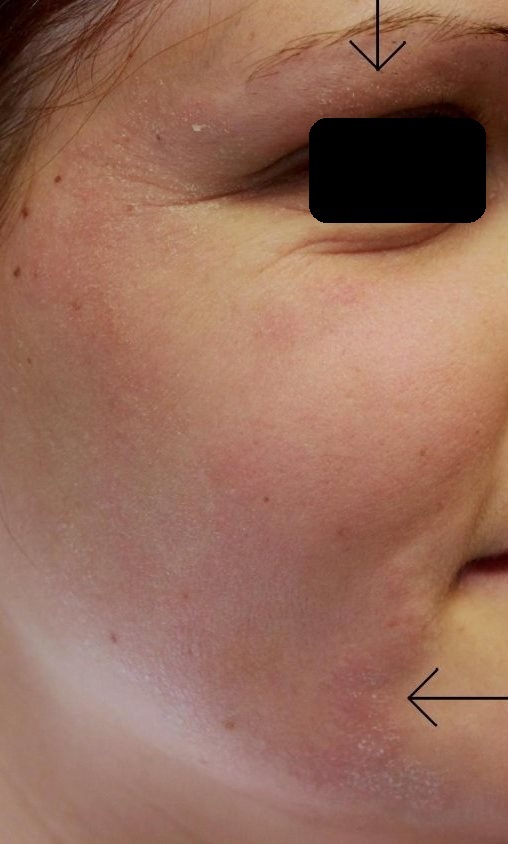
Tinea faciei
-
Fungal infections of the face are not common, but may be overlooked as a possible diagnosis
-
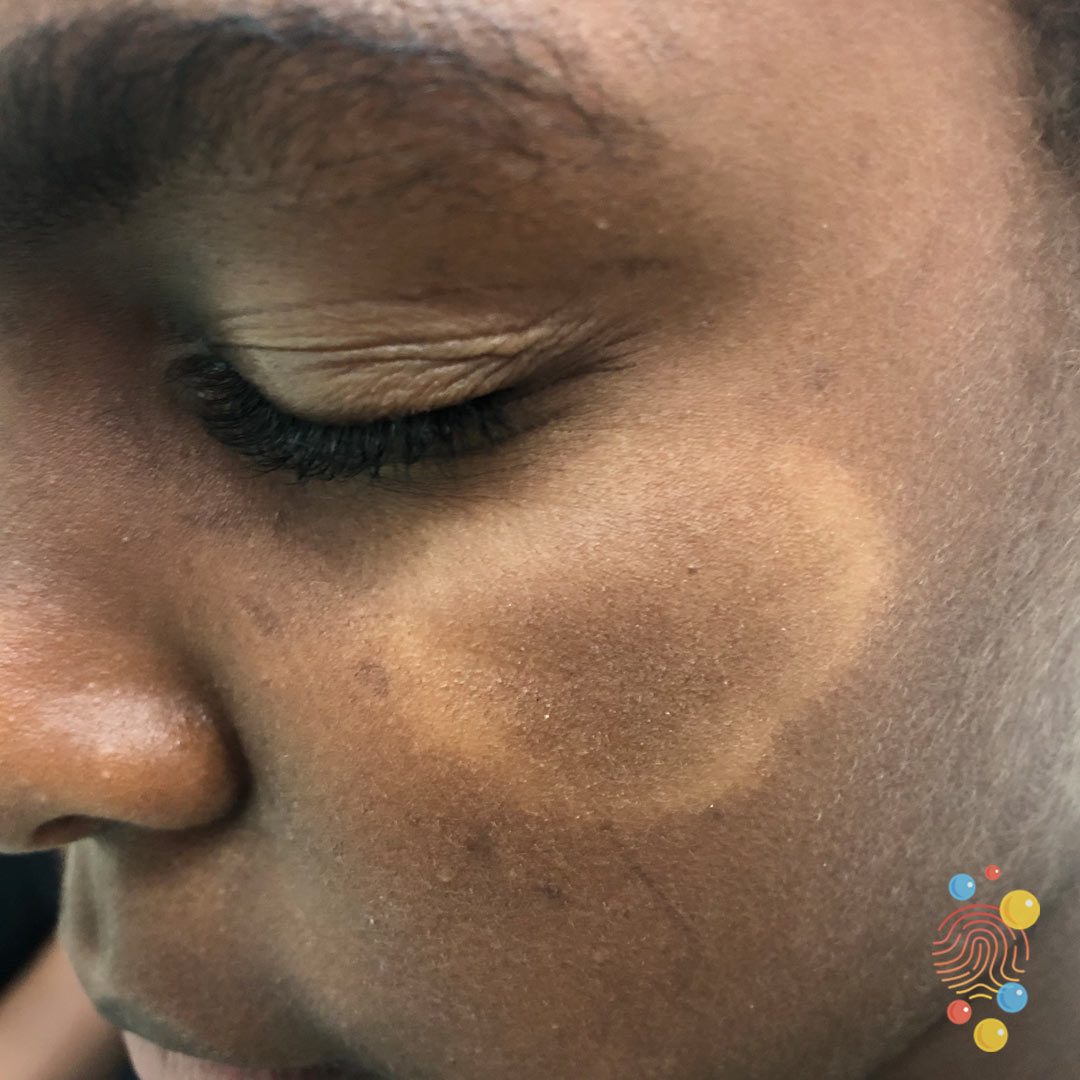
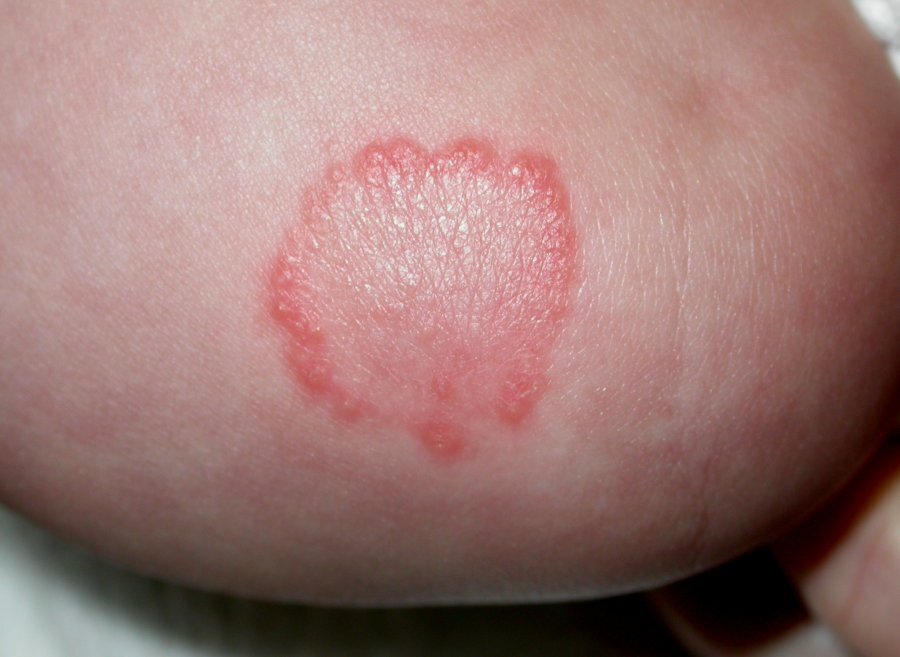
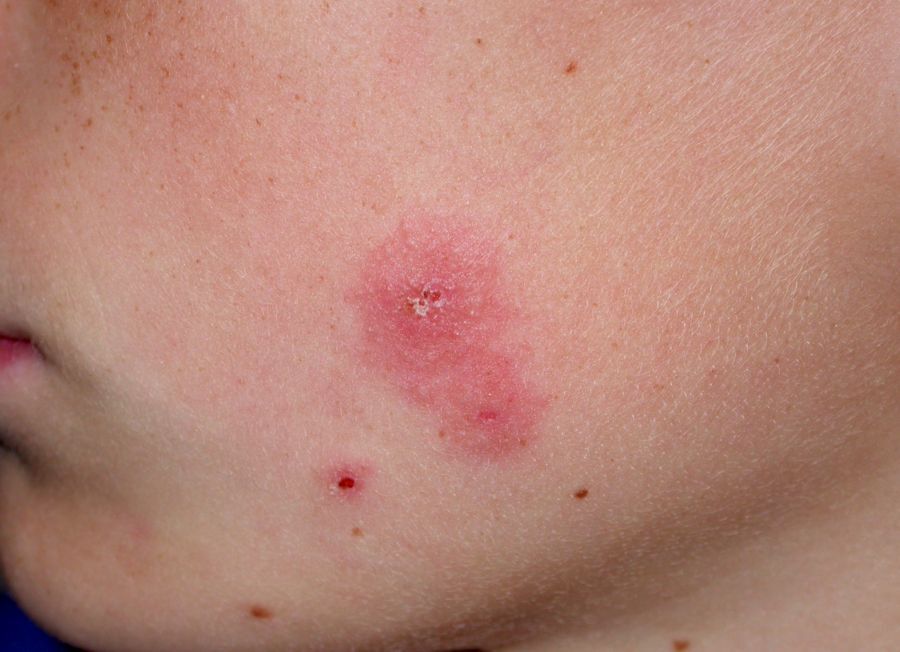
Red annular patches with a leading edge, which is often scaly. Occasionally small pustules may be present. The presence of an asymmetrical rash should raise the index of suspicion for tinea
Tinea barbae
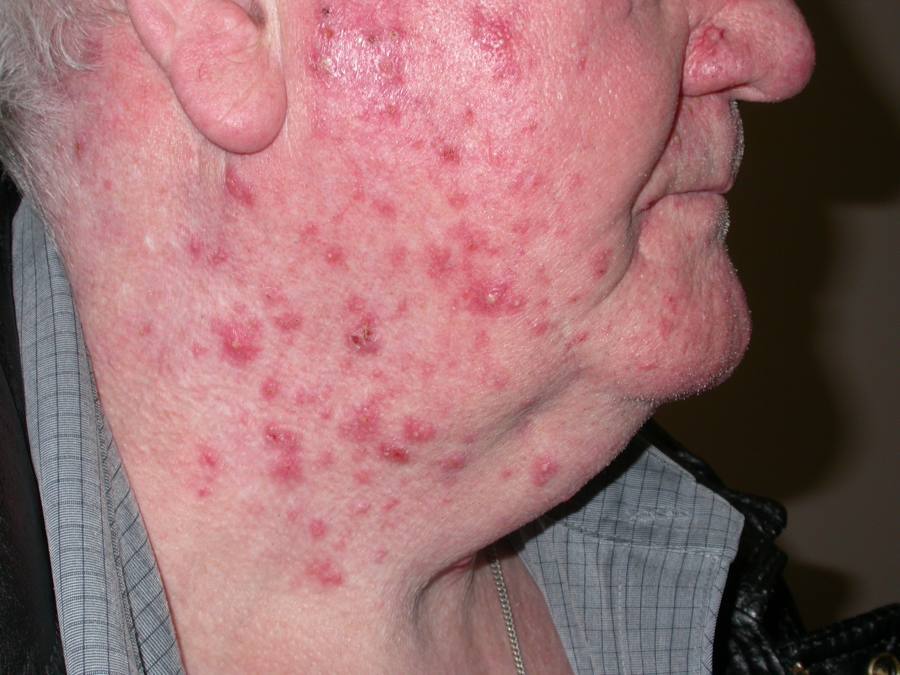
Fungal infections occasionally affect the beard / moustache areas. The clinical features are as follows:
-
Often presents with marked inflammation and aggregated pustules, exudation and crusting. Affected hairs tend to come away quite easily. It is frequently misdiagnosed as a bacterial infection although it may be distinguished from boils secondary to bacteria by the relative lack of pain and the ease with which the hairs come away
-
Milder cases need to be differentiated from bacterial folliculitis, pseudofolliculitis, acne or rosacea
Clinical Images
Please refer to notes on image rights at bottom of the page with regards to individual image
ownership.
Investigations
-
Tinea faciei - adequate scrapings should be taken with the back of a scalpel blade from the advancing edge of the lesion. The scrapings should be sent to microbiology either in a commercial sample pack or in folded black paper held by a paper clip. Adhesive tape (eg sellotape) stripping may be useful if scale is limited
-
Tinea barbae - scrapings and affected hairs should be sent for mycology, false negative results are not uncommon. The presence of Staph. aureus on a swab does not exclude tinea as bacterial colonisation or infection may occur as a secondary event
Management
Tinea faciei
-
Treatment is normally with a topical antifungal agent eg terbinafine (Lamisil ®) cream BD for 2 weeks, or one of the imidazole creams such as miconazole (Daktarin ®) cream BD for 2-4 weeks. If the rash is very extensive or inflammatory (pustules present) treat systemically with eg terbinafine for 2 weeks
Tinea barbae
-
Treatment with a systemic agent eg terbinafine is needed, usually for 2-4 weeks
Disclaimer - the author PCDS cannot accept responsibility for any misleading or incorrect statements, and the management of individual patients remains the direct responsibility of the individual doctor. We do however hope that visitors to this site can contact us regarding comments that are considered misleading or incorrect so that we can continue to improve the site.
Image Rights - The PCDS would like to thank Dermatoweb, DermQuest (Galderma), and others who have contributed images. All named individuals and organisations maintain copyright for the relevant images.