Angioedema (without urticaria)
LAST UPDATED: Dec 21, 2025
Acknowledgements: This chapter has been updated with the kind support of Dr Kash Bhatti
Introduction
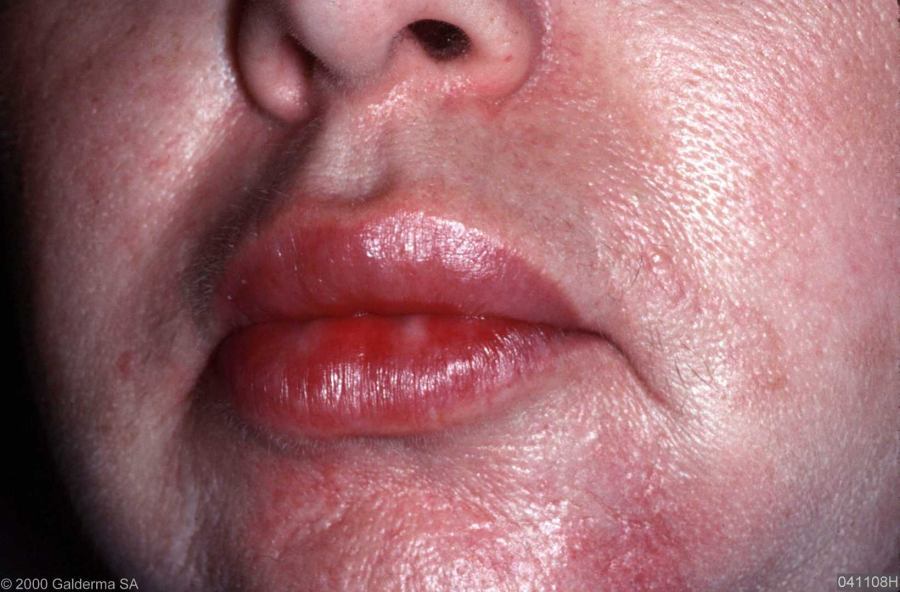
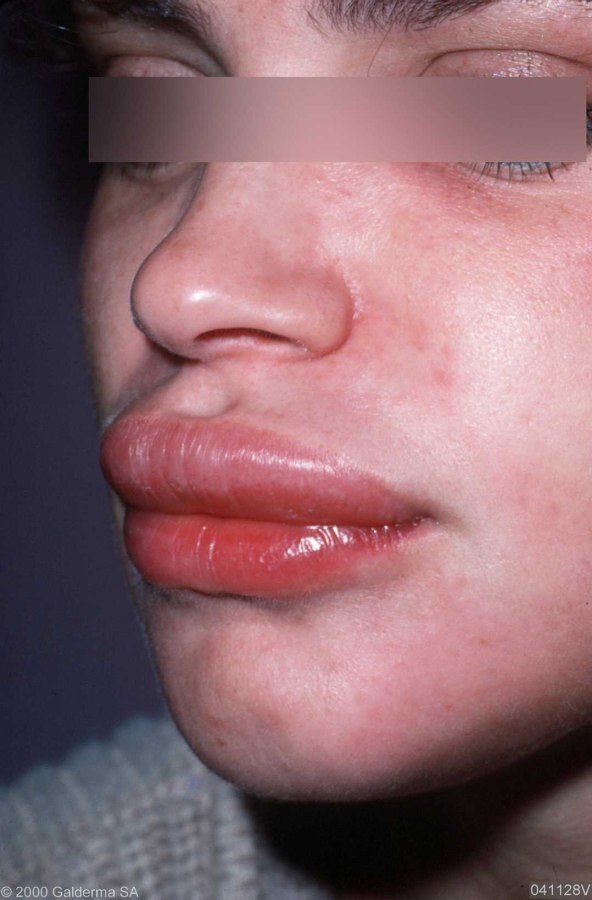
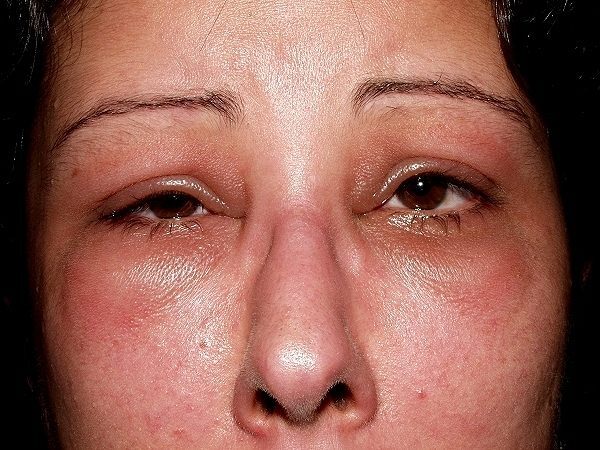
Angioedema (AE) causes transient swellings of deeper dermal, subcutaneous and submucosal tissues, often affecting the face (lips, tongue, uvula, and eyelids), oropharynx and larynx, or other areas such as the extremities and genitalia (especially in men). Angioedema affecting the bowels can cause abdominal pain, for example, mimicking appendicitis. Angioedema is a common finding in patients with urticaria, but when urticaria is absent it is important to look for an underlying cause.
This chapter discusses the management of angioedema in the absence of urticaria and is set out as below. For more information on angioedema occurring with urticaria refer to the related chapters on Acute urticaria and Chronic spontaneous urticaria.
Aetiology
Angioedema (AE) arising in the absence of urticaria is divided into two main groups, depending on whether the underlying chemical mediator is histamine (histaminergic angioedema) or bradykinin (bradykinergic angioedema). There is a rare group of idiopathic angioedema, and miscellaneous causes of acute angioedema.
Histaminergic angioedema
• Usually exists with urticaria, but up to 20% of cases of chronic spontaneous urticaria have angioedema alone
• Responsive to second-generation antihistamines and short courses of oral prednisolone
• Managed as per Chronic spontaneous urticaria
• A subset of this group is allergic angioedema, which occurs due to venom, contact allergy, or drugs
Bradykinergic angioedema
Responds poorly to oral antihistamines and oral steroids. There are three main types of bradykinergic angioedema:
- Angiotensin-converting enzyme inhibitor-induced angioedema (ACEIAE)
- Hereditary angioedema (HAE)
- Acquired angioedema (AAE)
Angiotensin-converting enzyme inhibitor-induced angioedema (ACEIAE)
- Angioedema tends to start within three months of the drug being introduced (66% of cases), although in some patients the time lag can be a lot longer
- Black African patients tend to develop the most serious adverse reactions, some of which can be life-threatening. Other risk factors for development are concomitant NSAID use, age over 65, and female sex
- Other ACEI should be avoided; very rarely, ARBs can cross-react and cause AE
- Stopping the ACEI will result in improvement and resolution of the AE, but this may take weeks to months
Hereditary angioedema (HAE)
- A rare autosomal disorder, with an incidence of 1 in 50,000
- Suspect in isolated AE if <20 years of age
- Investigate with complement C4 levels and rheumatoid factor (ideally during a flare). If results normal, there is no family history, or other relevant symptoms (see below) then HAE is unlikely, all other patients should be referred to an Immunologist or Allergy service for C1 esterase inhibitor level and function, and other relevant investigations. There are two types: HAE 1 (85% of HAE) and 2 (15%). In both, C1 esterase inhibitor (C1-inh) level and/or function is affected:
- In HAE1, C4 is low; C1-inh levels and function are low
- In HAE2, C1 inh levels are normal or increased, but function is low
- (A third type of HAE exists where C4 levels are normal, and C1-inh level and function are normal)
- 75% of patients with HAE1/2 have a positive family history; 25% are spontaneous mutations
- Clinical features - AE is often preceded by months or years with non-specific prodromal symptoms such as myalgia, unexplained fatigue, and erythema marginatum. AE can present anywhere including with laryngeal oedema, presenting with an acute abdomen, or causing swelling of the extremities
- Along with the biochemical workup, suspect if AE presents with:
- A positive family history (although this may be absent in up to 25% of patients)
- Onset of symptoms in childhood/adolescence
- Recurrent and painful abdominal symptoms or upper airway oedema
- Failure to respond to high-dose antihistamines, steroids, or adrenaline
- Presence of prodromal signs or symptoms before swellings
- Absence of urticaria (wheals)
Acquired angioedema (AAE)
- An uncommon form of bradykinergic angioedema
- Suspect in new AE starting in adult life (>40 years) and without a history of ACEI use
- Investigations will show a low C4 level, and normal or low C1 esterase level and/or function
- The most common underlying cause of AAE are lymphoproliferative disorders
Miscellaneous angioedema
- Idiopathic (non-histaminergic/bradykinergetic) - a diagnosis of exclusion with poor response to high-dose antihistamines and oral steroid
- Part of other disorders such as Contact allergic dermatitis, anaphylaxis and fixed drug eruptions
- Due to the rare Gleich syndrome (eosinophilia and angioedema)
Clinical Images
Please refer to notes on image rights at bottom of the page with regards to individual image
ownership.
Management
- Provide a patient information leaflet
- Patients on ACEI must have their medication stopped - it can take some time for the attacks to stop occurring
- Oestrogen-containing contraceptives should be avoided in patients with bradykinergic AE as oestrogen can enhance bradykinin signaling
- Patient with suspected CI esterase inhibitor deficiency should be referred to an Immunologist or Allergy service
- Treat with second-generation antihistamines as per Chronic spontaneous urticaria
- Short courses of oral steroids may be needed but are only helpful in histaminergic-mediated angioedema (oral steroids can be used as a discriminator for this type of angioedema)
- Patients with severe symptoms such as breathing difficulties / cardiovascular compromise need specific advice including how and when to use an adrenaline auto-injector
Disclaimer - the author PCDS cannot accept responsibility for any misleading or incorrect statements, and the management of individual patients remains the direct responsibility of the individual doctor. We do however hope that visitors to this site can contact us regarding comments that are considered misleading or incorrect so that we can continue to improve the site.
Image Rights - The PCDS would like to thank Dermatoweb, DermQuest (Galderma), and others who have contributed images. All named individuals and organisations maintain copyright for the relevant images.