Urticaria and angioedema - an overview
LAST UPDATED: Dec 06, 2025
Acknowledgements: This chapter has been updated with the kind support of Dr Kash Bhatti
Introduction
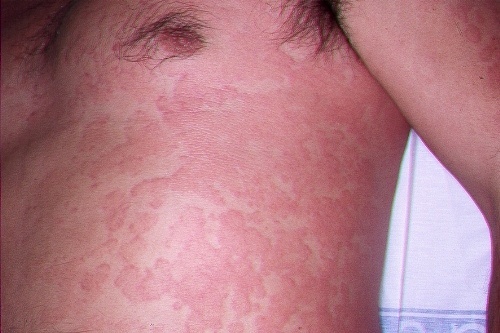
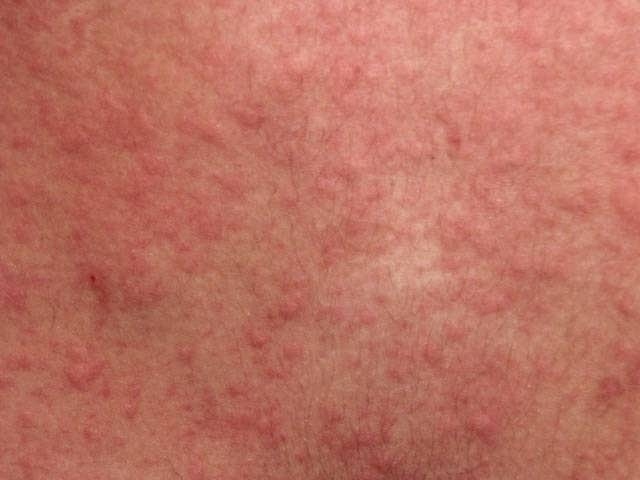
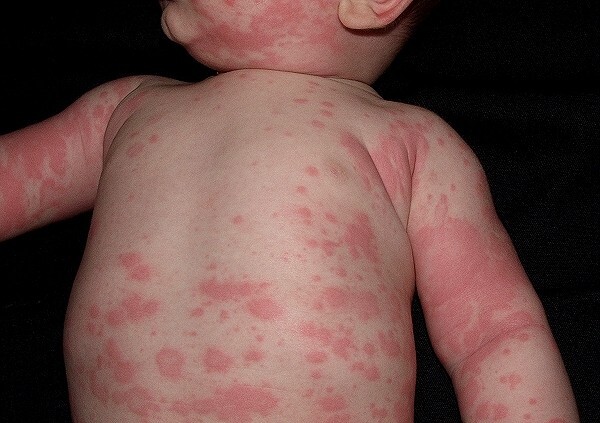
Urticaria is a transient eruption of oedematous swellings of the dermis known as wheals, hives, and ‘nettle rash’. They can be erythematous, though in skin of colour, they may be violaceous or not show any colour change. Wheals are usually associated with itching. Wheals tend to resolve within 1-3 hours although may last for 24 hours.
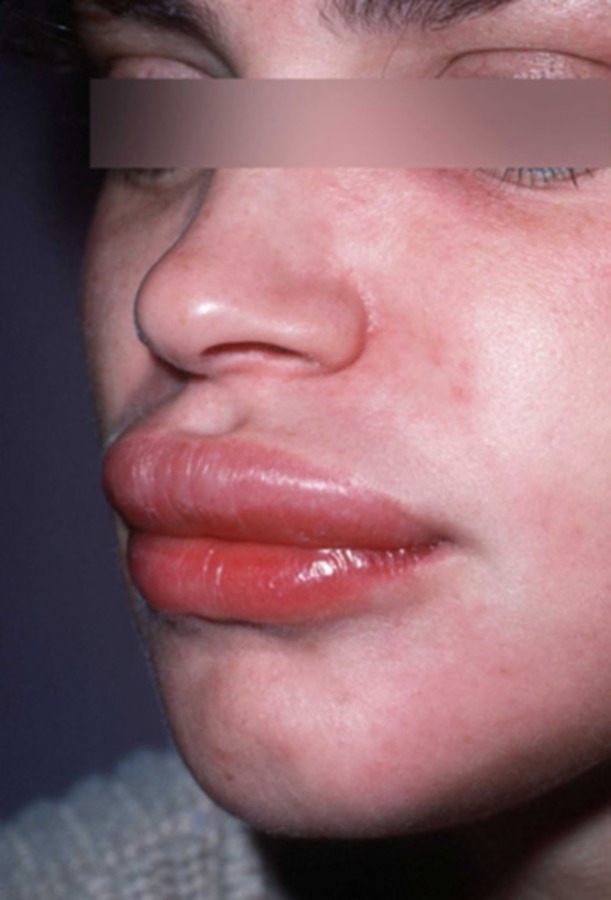
Angioedema, which may or may not be associated with urticaria, causes transient swellings of deeper dermal, subcutaneous and submucosal tissues, often affecting the face (lips, tongue and eyelids), oropharynx, or other areas such as the hands and genitalia. Wheals tend to resolve within 30 minutes to hours, but may last for 24 hours. Angioedema, being a deeper swelling, may last from hours, up to 72 hours.
This chapter provides an introduction to urticaria and angioedema and is set out as follows:
Aetiology
Urticaria and angioedema can be classified as follows:
- Acute urticaria - short lived bouts of urticaria in total lasting less than 6 weeks
- Chronic spontaneous urticaria (formerly known as chronic ordinary urticaria or chronic idiopathic urticaria) - urticaria that lasts for over six weeks, and may persist for months and in some cases years, either daily, or in bouts and spells of episodes
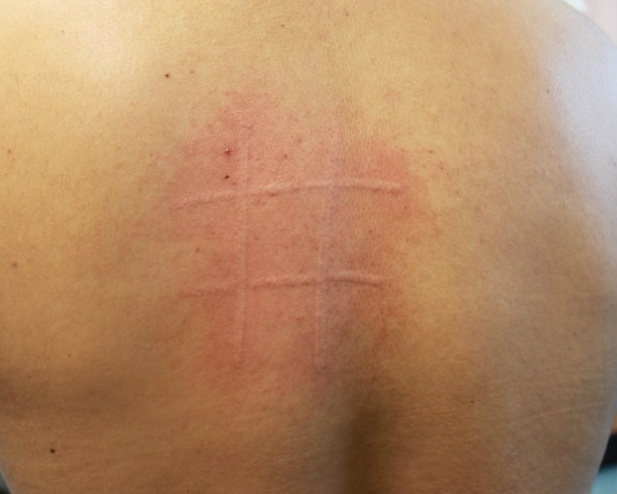
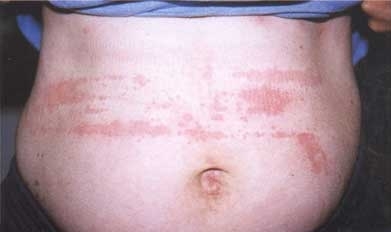
- Chronic inducible urticaria - chronic urticaria that has an attributable cause or trigger and is classified according to the stimulus that provokes wheals to develop. For such a diagnosis to be made the stimulus must be the main cause of symptoms, as patients with chronic spontaneous urticaria can also have features of inducible urticaria
- Angioedema without urticaria - episodes of urticaria marked by angioedema only, rather than wheals with or without angioedema. Can be acute (episodes in total lasting less than 6 weeks) or chronic (episodes persisting beyond 6 weeks), and can be spontaneous, or inducible
Uncommon/rare conditions associated with urticaria:
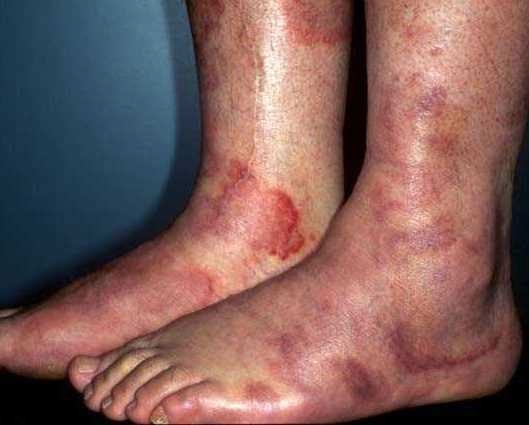
- Urticarial vasculitis - lesions persist for more than 24 hours and may burn as well as itch, they can be painful or tender and may fade to leave a bruise. Can be associated with systemic symptoms and histological features of vasculitis
- Autoinflammatory syndromes - this group includes Schnitzler's syndrome, systemic juvenile idiopathic arthritis (Still's disease) along with its adult form, and the cryopyrin-associated periodic syndromes. These are rare and disabling conditions mediated by increased interleukin-1 secretion. Apart from an urticarial rash, patients suffer from a variety of systemic symptoms including recurrent fever, arthralgia or arthritis, and fatigue. Autoinflammatory syndromes are often associated with a diagnostic delay of many years and do not respond to antihistamines and other treatments for urticaria
For more information refer to the related chapters.
Clinical Images
Please refer to notes on image rights at bottom of the page with regards to individual image
ownership.
Management
The mainstay of treatment are second-generation antihistamines, and avoiding triggers.
- Antihistamines can be used PRN, but if episodes are persistent for a few days, use antihistamines regularly, at up to 4 times maximum daily dosing, e.g. fexofenadine 180mg QDS (this is off-license but supported by national and international guidelines)
- Antihistamines generally take up to four hours for maximal histamine receptor blockade; by this time, most wheals will self-resolve. Therefore, regular use may have more benefit than on-demand use to reduce wheal frequency and intensity
- Warn antihistamines may cause drowsiness. Fexofenadine is the least likely to cause drowsiness, as it does not cross the blood brain barrier, but there are marked differences in response to antihistamines amongst individuals and as such, one antihistamine may cause drowsiness in one person, and not in another. Trial-and-error prescribing may be required unless the patient already knows what suits them
- Do not use first-generation antihistamines regularly, e.g. chlorphenamine or hydroxyzine, due to risks of drowsiness, daytime somnolence, reduce daytime concentration (e.g. at school or at work), CNS & cardiac toxicity, and cholinergic burden, and they are less effective than second-generation antihistamines. These risks are not seen with second-generation antihistamines
There is no role for H2 receptor antagonists e.g. famotidine; H2 receptors are not implicated in urticaria.
Disclaimer - the author PCDS cannot accept responsibility for any misleading or incorrect statements, and the management of individual patients remains the direct responsibility of the individual doctor. We do however hope that visitors to this site can contact us regarding comments that are considered misleading or incorrect so that we can continue to improve the site.
Image Rights - The PCDS would like to thank Dermatoweb, DermQuest (Galderma), and others who have contributed images. All named individuals and organisations maintain copyright for the relevant images.