LAST UPDATED: Jan 31, 2025

https://pcds.org.uk/patient-info-leaflets/urticaria-and-angioedema
Urticaria is a common condition affecting up to 1 in 5 people at some point in their lives. It causes itchy red or white bumps on the skin that are also known as hives. Angioedema causes swelling of the soft areas of skin especially around the eyes, the lips, and sometimes inside the mouth. Urticaria can be acute (short-lived) or chronic (persistent).
Most people with urticaria feel well. Urticaria presents with itchy skin lesions with a wheal and flare – the central raised round or ring-shaped white area (wheal) is surrounded by red skin (flare), which looks like a nettle-sting rash. Wheals are commonly 1-2 cm in diameter but can join together to form much larger ones. There may be just a few wheals, or sometimes many develop over various parts of the body. As a wheal fades the surrounding flare remains for a while, making the affected area of skin look red and blotchy. In skin of colour the lesions may be lighter or darker than the surrounding skin. The wheals tend to come and go over a few hours. The rash may clear completely, only to return a few hours or days later.
Some types of urticaria look different - see the section below about inducible urticaria.
Angioedema causes swelling of the skin usually affecting soft areas of skin, such as the eyelids, lips or inside the mouth, and the genitalia, but may occur anywhere. The swellings of angioedema take longer to clear than lesions of urticaria, sometimes up to three days. Although angioedema can be dramatic, it is usually not life-threatening.
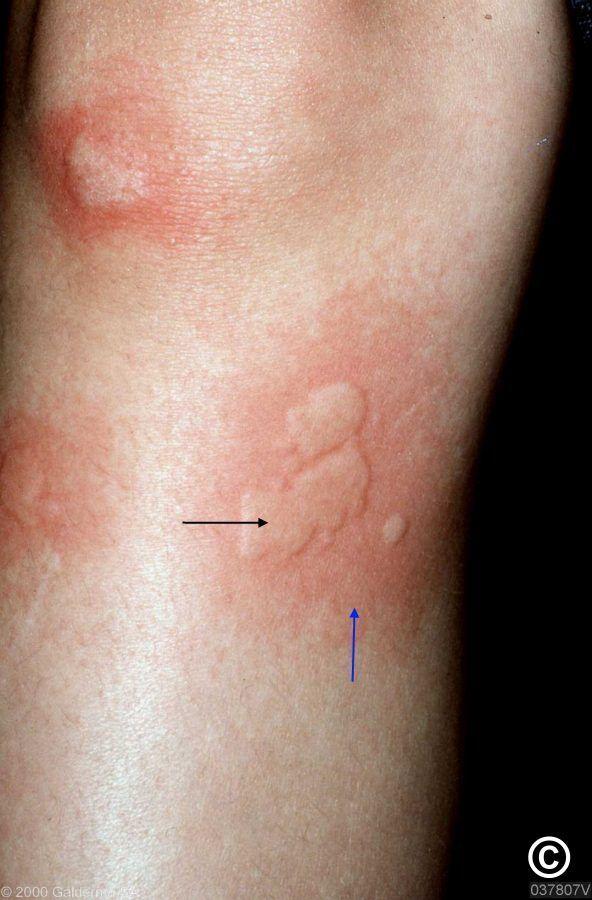
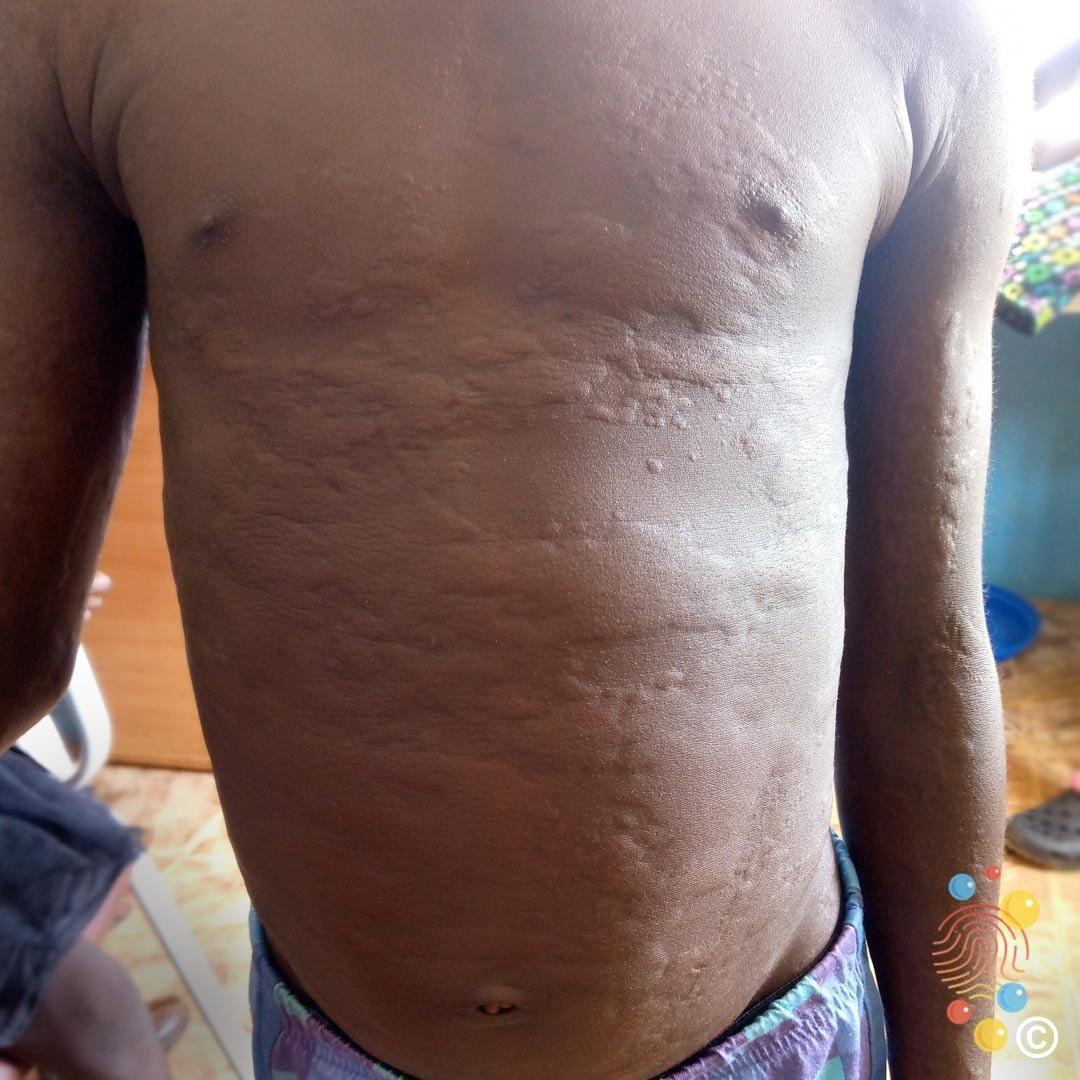
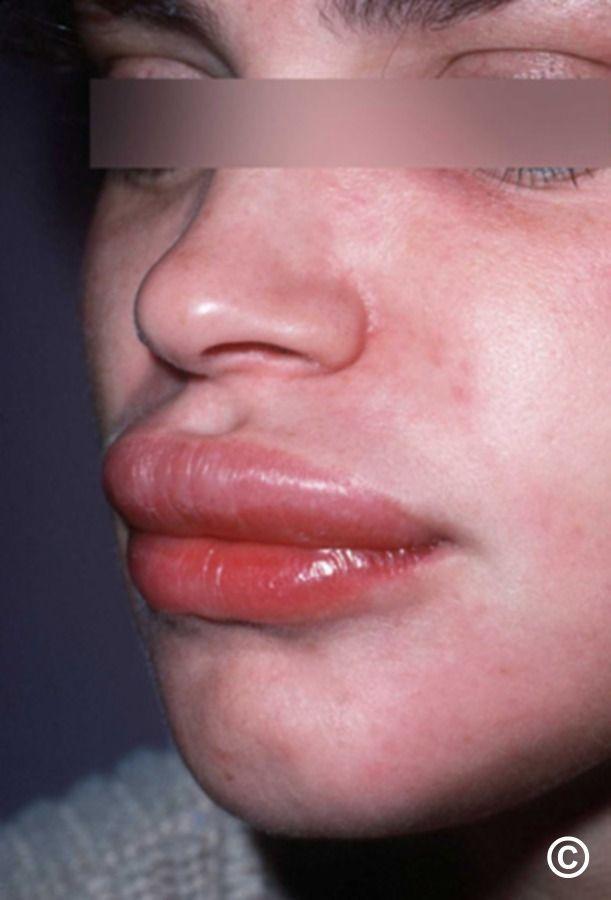
Urticaria is caused by the release of a substance called histamine and other chemicals from cells in the skin called mast cells. These chemicals cause small amounts of fluid to leak from blood vessels just under the skin surface; this fluid pools to form wheals. The chemicals also cause the blood vessels to open wide (dilate), which causes the red flare around the wheals.
In some people the trigger causing the release of chemicals can be identified, however, in many people no cause is found.
Urticaria can be acute (a short episode lasting less than 6 weeks) or intermittent where episodes come and go. In some cases, the trigger may be a food or drug allergy, in which case the urticaria (with or without angioedema) will usually appear soon after eating the food or taking the medication. For young babies, in whom urticaria is rare, cow’s milk allergy is the commonest cause. As children grow up, they may react to different foods, including eggs, nuts, fruits, or shellfish. Bee and wasp stings can cause acute urticaria. However, a specific reason for urticaria is often not found.
Urticaria going on more than six weeks is known as chronic urticaria. The most common cause of chronic urticaria is called chronic spontaneous urticaria, in which the wheals come and go without any apparent cause. This is not a food allergy. Chronic spontaneous urticaria may have an underlying autoimmune process, in which the patient’s own antibodies trigger a release of histamine from the mast cells in the skin.
The other main type of chronic urticaria is known as inducible urticaria, in which the lesions of urticaria usually only appear in response to a specific trigger. Examples of inducible urticaria (e.g. dermographism) are as below.
Angioedema usually occurs with urticaria. In the absence of urticaria, angioedema can be caused by drugs, or a genetic fault that you inherit from your parents - this is a rare, lifelong condition that usually starts in childhood called hereditary angioedema. In many cases it's not clear what causes angioedema.
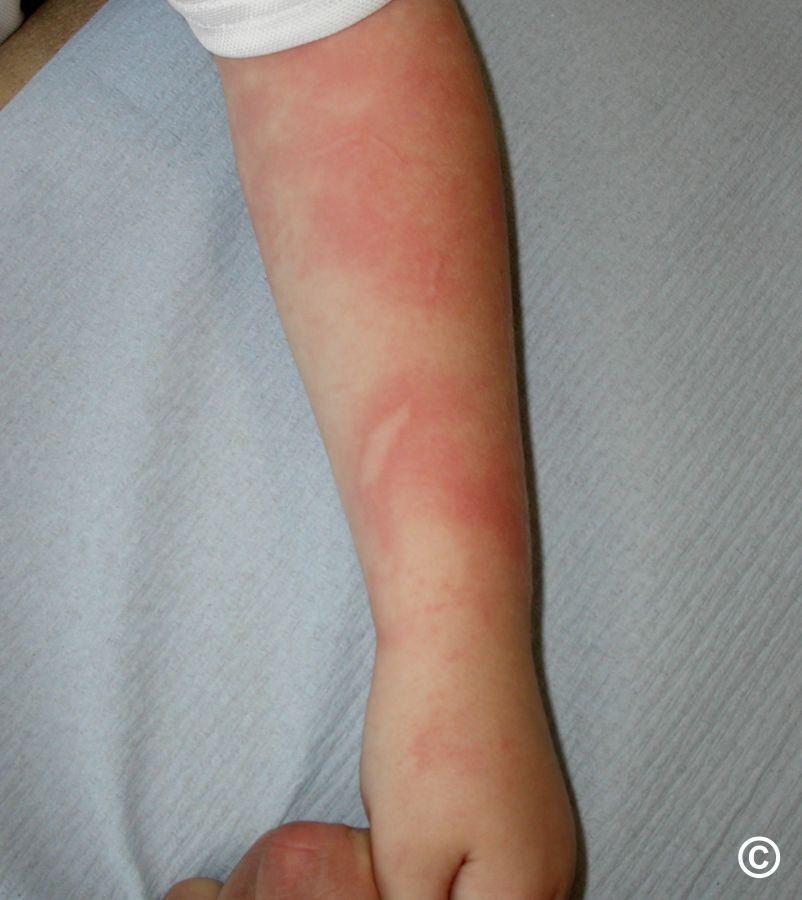
Dermographism - wheals are triggered by rubbing or scratching the skin, and generally last for less than an hour.
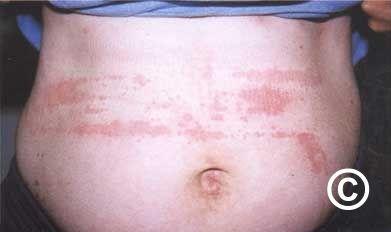
Delayed pressure urticaria - wheals develop where pressure has been applied to the skin, for example from tight clothes or from gripping tools. Usually the swelling develops several hours later. It can be painful and last longer than 24 hours. Both dermographism and delayed pressure urticaria can occur with other types of urticaria.
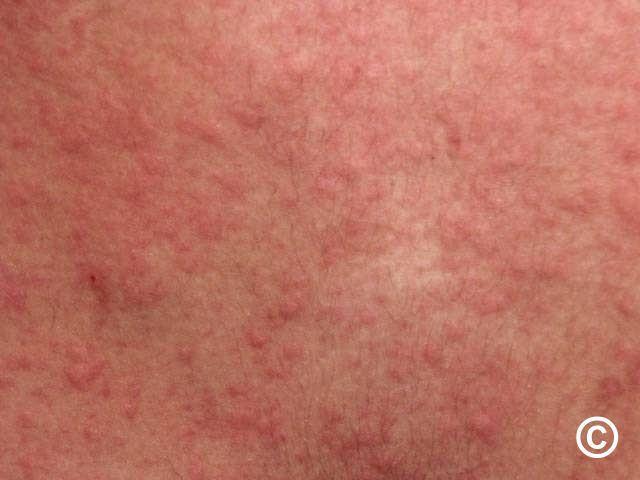
Cholinergic urticaria - is triggered by sweating as a result of exertion, heat, emotional stress, or eating spicy food. Within minutes, small itchy red bumps appear, usually on the upper part of the body, but they may be widespread. The rash fades in less than an hour.
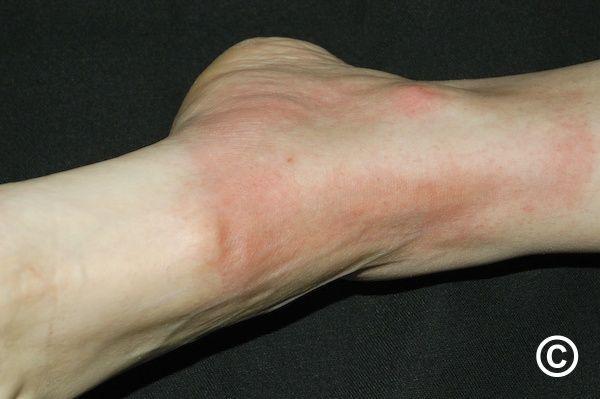
Solar urticaria - painful red lesions appear immediately after exposure to sunlight, lasting for less than one hour.
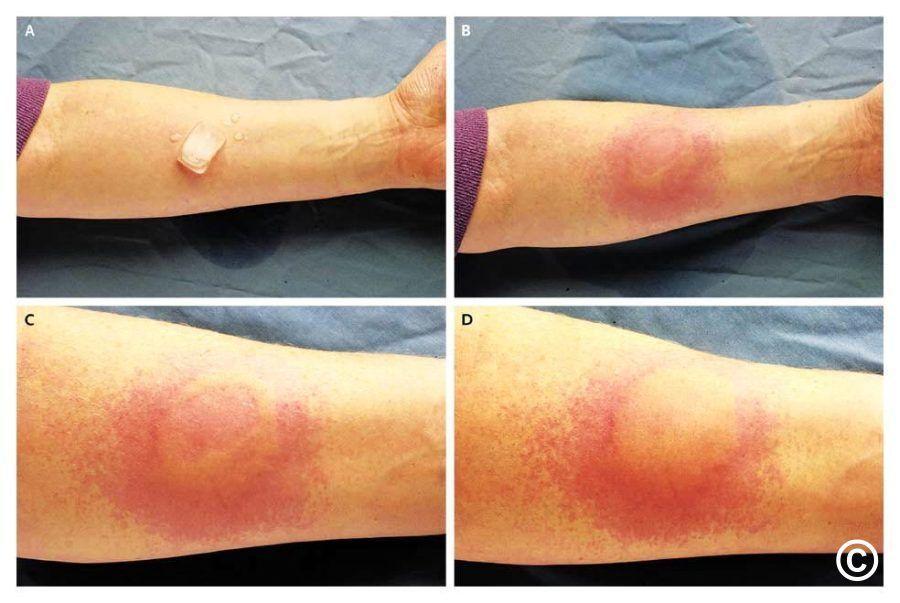
Cold urticaria (side image)- is triggered by exposure to cold, including rain, wind, and cold water. People with cold urticaria must avoid swimming in cold water (this can be life-threatening), and must inform medical staff before undergoing operations so they can be kept warm during the procedure.
Aquagenic urticaria - is caused by contact with warm or cold water, usually on the upper part of the body. The wheals tend to be smaller than in other types of urticaria. Unlike cold urticaria, this is not life-threatening.
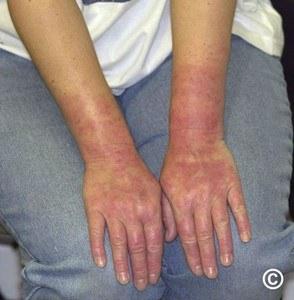
Contact urticaria - various chemicals, foods, plants, animals, and animal products, can cause wheals within minutes at the site of contact. Reactions can occasionally be severe, for example in people allergic to rubber/latex (right) and peanuts.
Treatment with antihistamines for urticaria and angioedema
Antihistamine tablets reduce the itchy rash in most people. They work by blocking the effect of histamine but may not relieve urticaria completely. It is important to use non-sedating antihistamines (less likely to make you feel drowsy) as opposed to sedating antihistamines (make you feel drowsy).
Antihistamines can be used as and when needed, however, if urticaria occurs frequently, antihistamines should be taken regularly every day.
It is recommended that adults take one antihistamine a day, however, it has become common practice to increase the daily dose up to a maximum of four non-sedating antihistames a day if needed to control the urticaria (eg two in the morning and two in the evening).
Antihistamines can be purchased without a prescription; however, you will need to take advice from a health professional for children who are likely to need a smaller dose.
If you are pregnant, you must not take an antihistamine without first seeking advice from your health professional.
Antihistamines can be taken for as long as the urticaria persists.
If you are worried about your urticaria and/or angioedema, or it is not improving significantly with the recommendations highlighted above, you will need to make an appointment at your GP surgery. You will need to have a blood test to make sure there is no simple underlying cause for your urticaria such as an overactive thyroid gland.
Refer to this link for detailed advice on specific treatments for urticaria.
Urticaria and angioedema can have a significant psychological impact and may affect many areas of daily life including work and personal relationships. If the urticaria is affecting your mental health, you should discuss this with a health professional.
The following people will require referral to a specialist, usually a dermatologist:
Referral is not needed if urticaria comes and goes in people who are well and do not have any life-threatening symptoms, and people with chronic (long-term) urticaria, whose symptoms are well-controlled with an appropriate dose of antihistamine.
The appointment may be face-to-face (the person attends the clinic), or a video call (teledermatology).
If you, a family member, or friend have an undiagnosed skin condition; or you want to learn more about how to treat skin conditions, please view our short video on how to get the best from this website.
Disclaimer - the author PCDS cannot accept responsibility for any misleading or incorrect statements, and the management of individual patients remains the direct responsibility of the individual doctor. We do however hope that visitors to this site can contact us regarding comments that are considered misleading or incorrect so that we can continue to improve the site.
Image Rights - The PCDS would like to thank Dermatoweb, DermQuest (Galderma), and others who have contributed images. All named individuals and organisations maintain copyright for the relevant images.
The following pharmaceutical companies have had no involvement in the content of this website or in our conference programmes