Folliculitis and boils (furuncles / carbuncles)
LAST UPDATED: Jul 06, 2025
Introduction
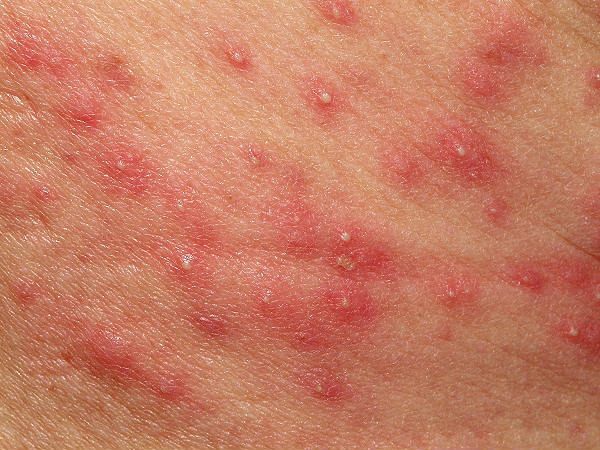
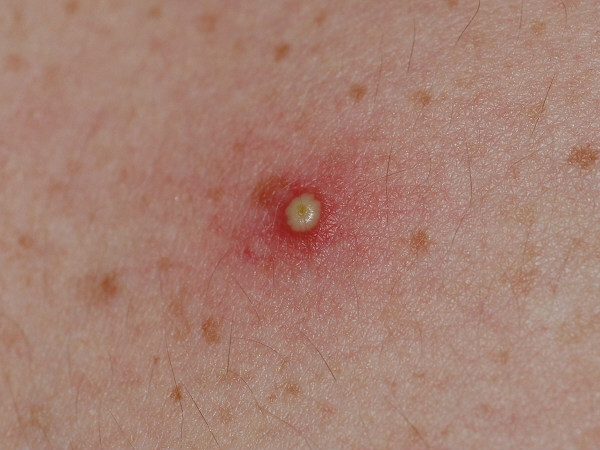
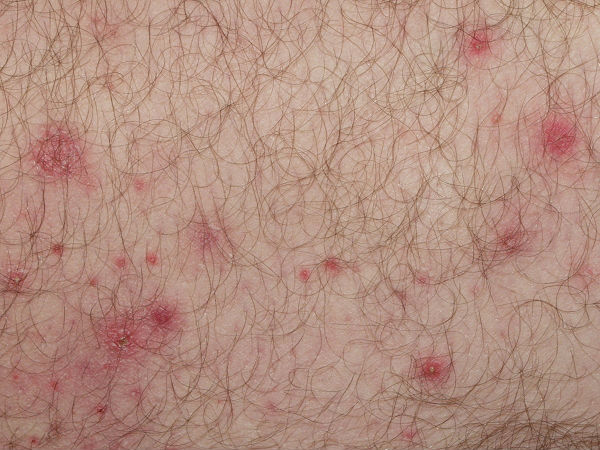
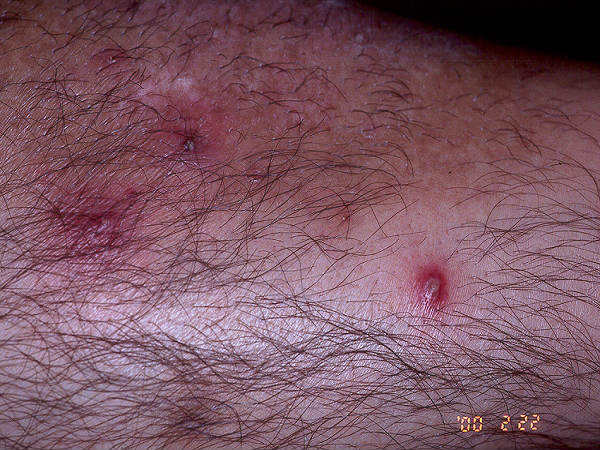
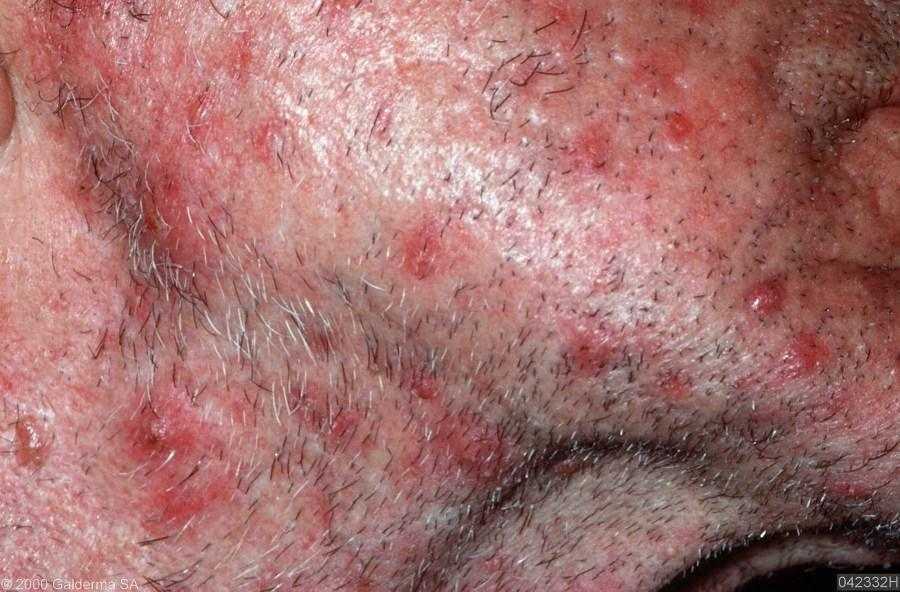
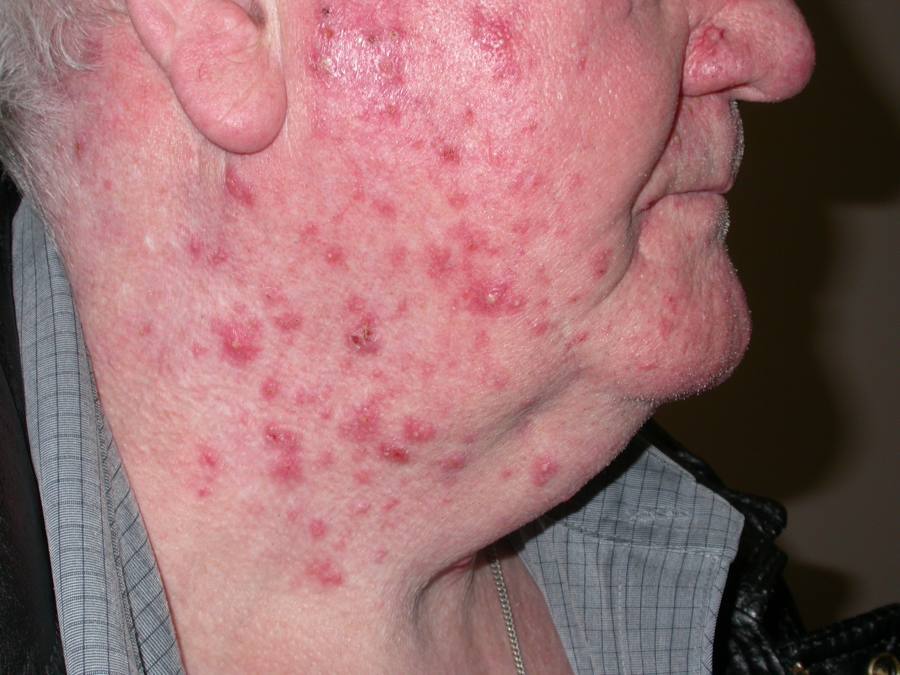
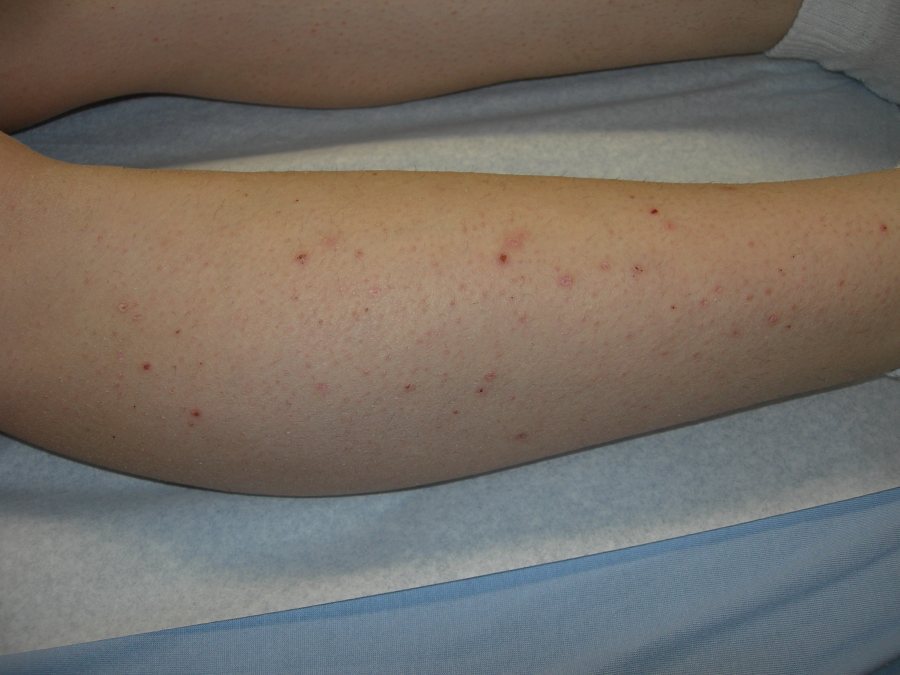
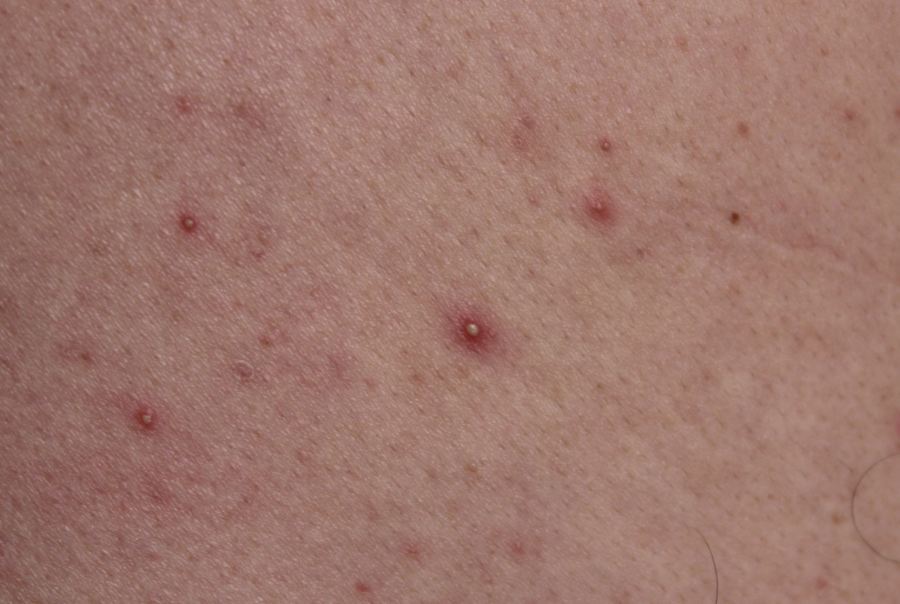
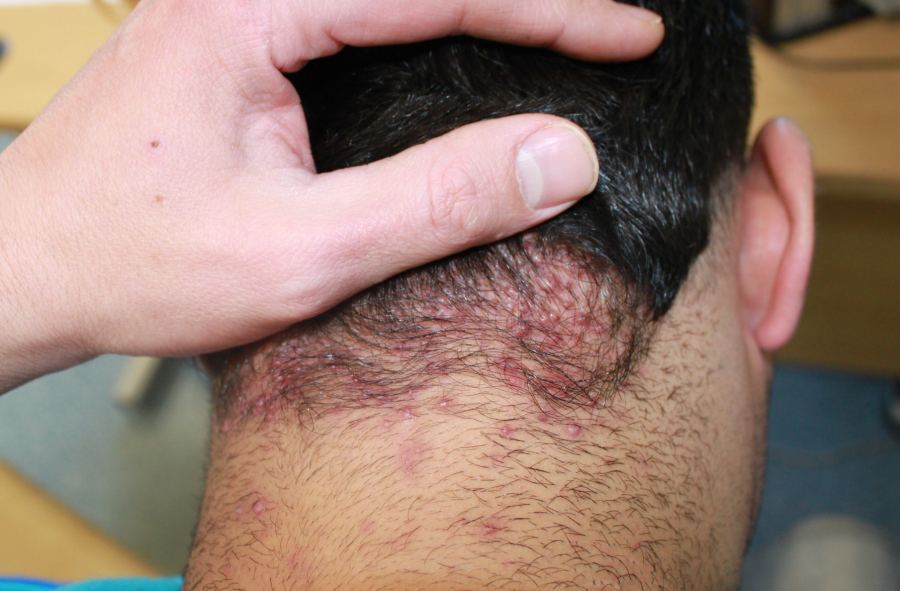
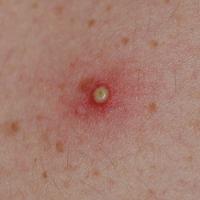
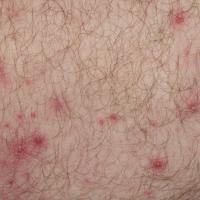
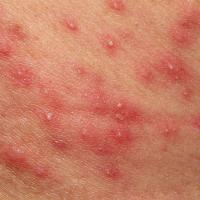
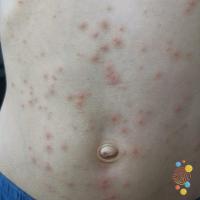
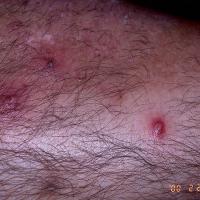
Folliculitis is the name given to a group of skin conditions in which there are inflamed hair follicles. The result is a tender red spot, often with a surface pustule. Folliculitis may be superficial or deep, and can affect any hair-bearing area of skin.
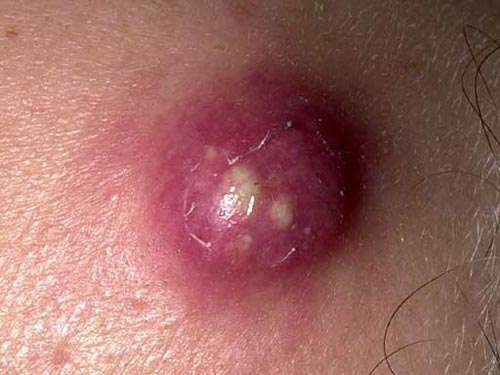
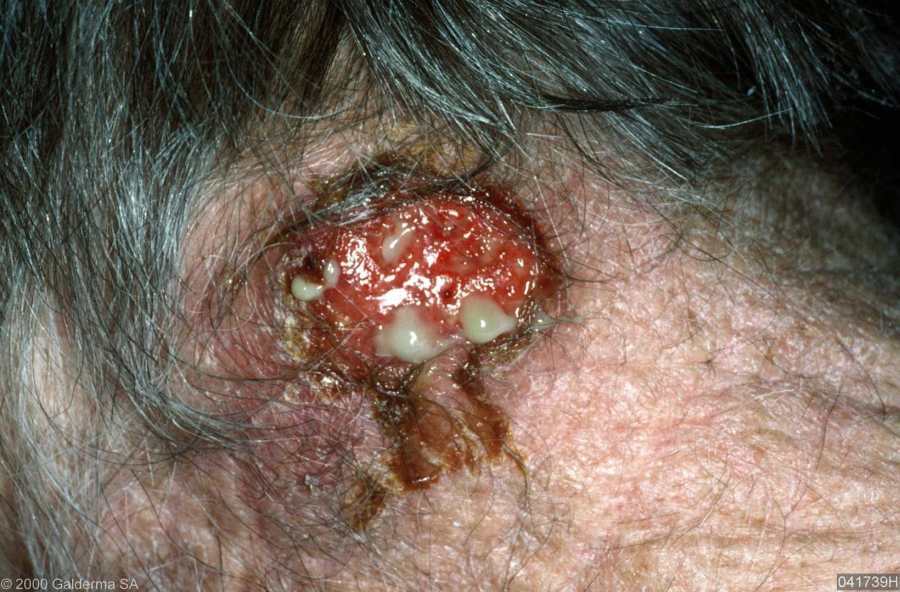
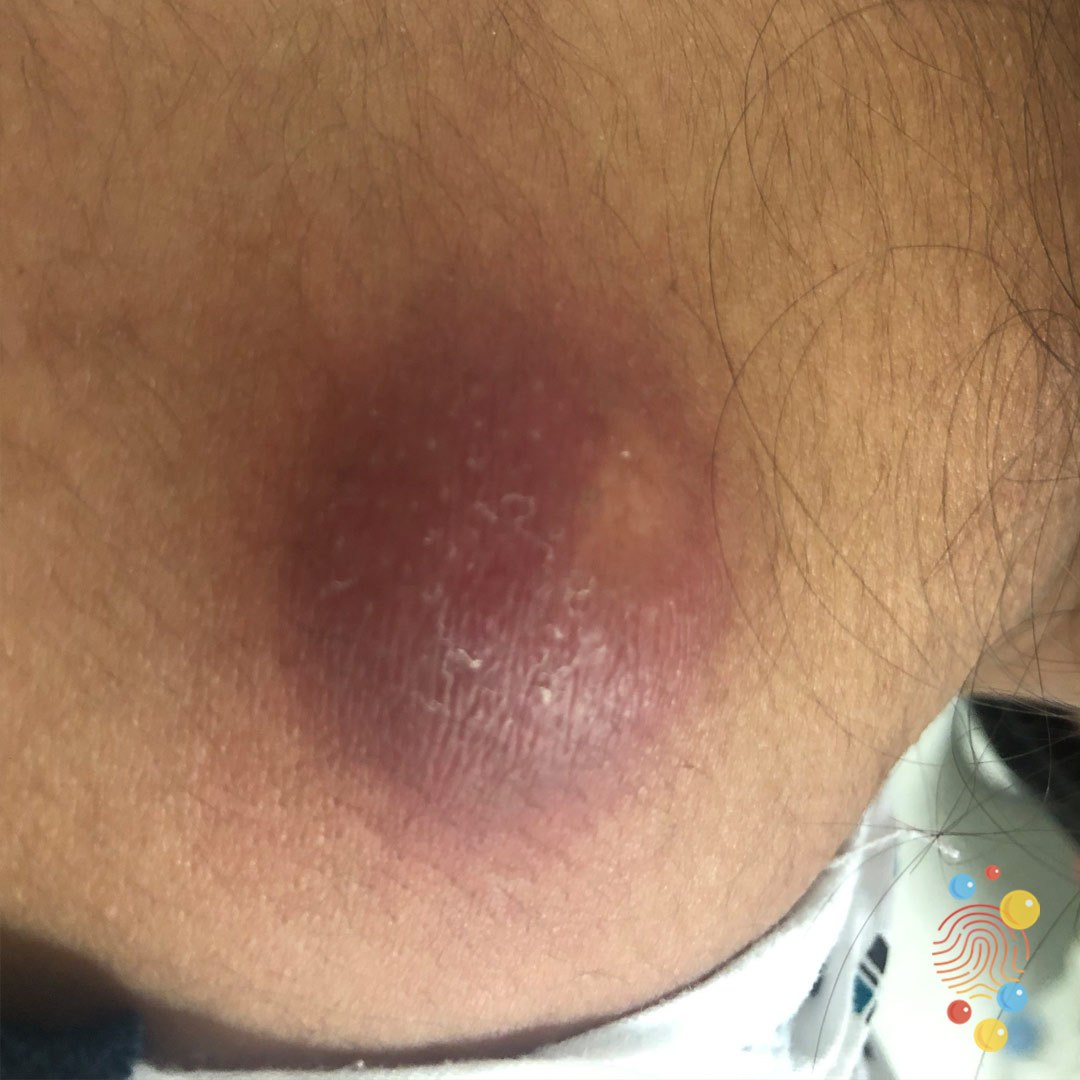
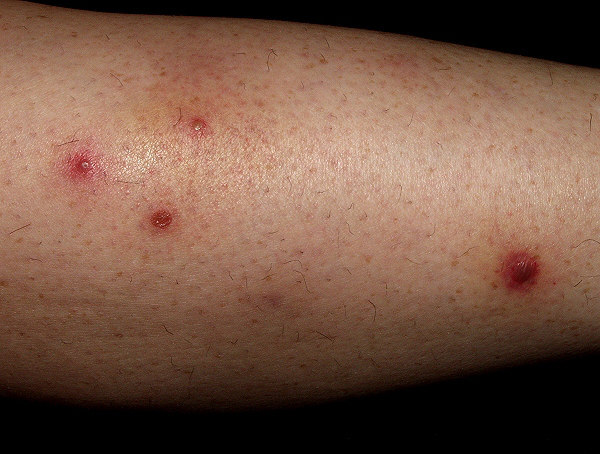
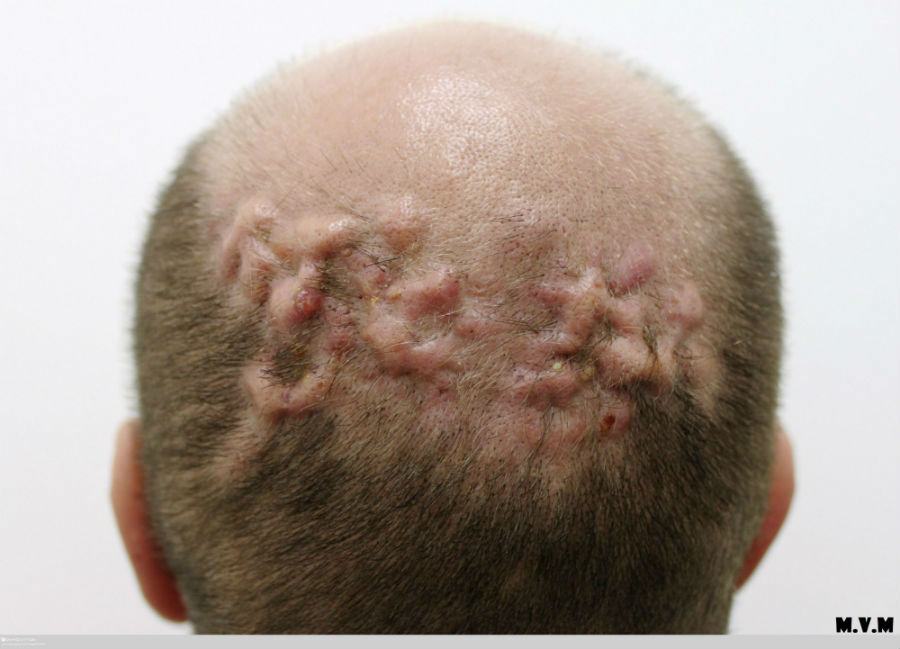
A furuncle (syn. boil) is a deeper, and more pronounced infection of the hair follicle in which purulent material extends through the dermis into the subcutaneous tissue, where a small abscess forms. A carbuncle is a coalescence of several inflamed follicles into a single inflammatory mass with purulent drainage from multiple follicles.
This chapter is set out as follows:
Aetiology
Folliculitis can be due to infection, occlusion, or irritation of the hair follicles and as part of the clinical presentation of a number of other skin conditions. When assessing folliculitis it is important to consider the following:
- Is the folliculitis superficial or deep?
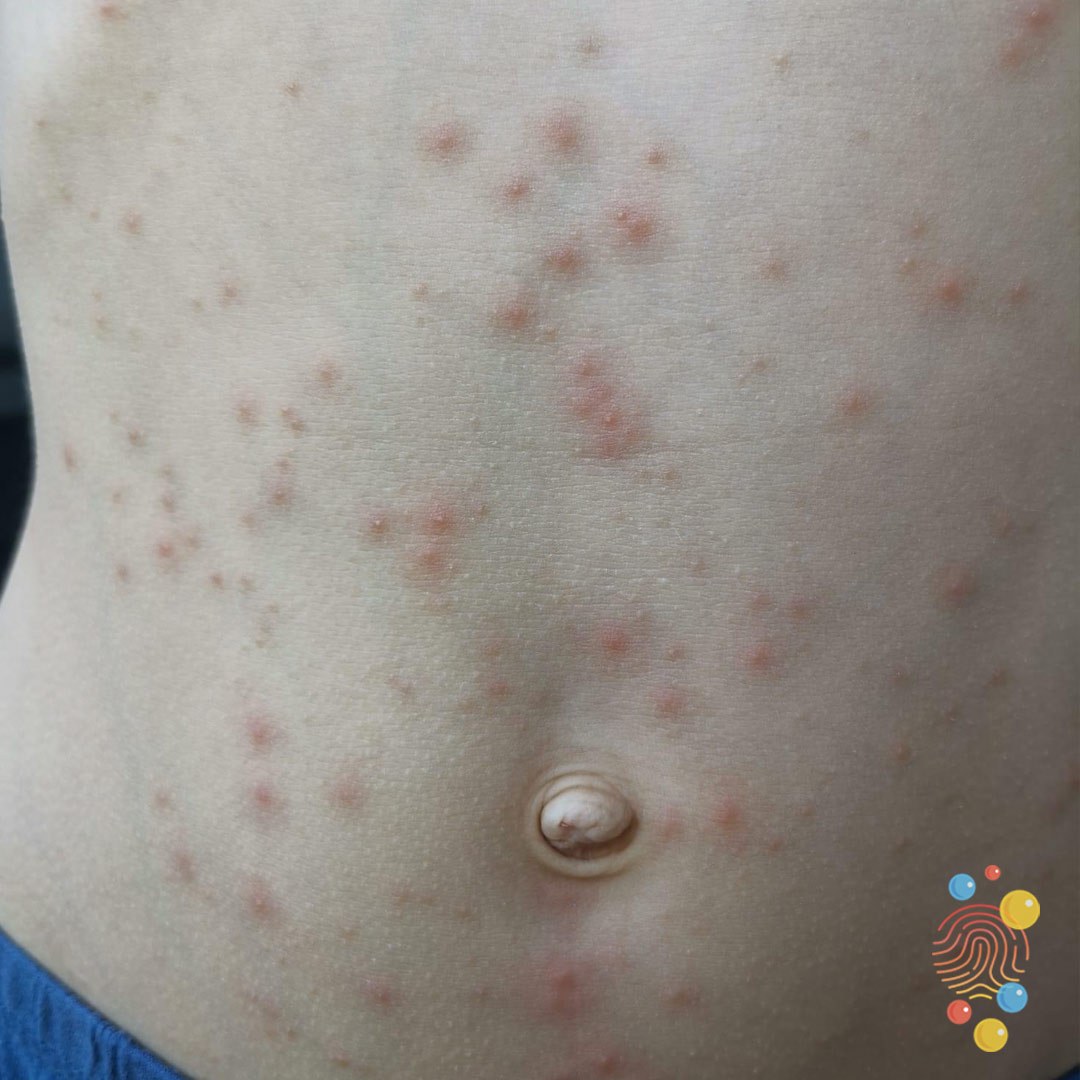
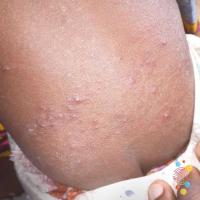
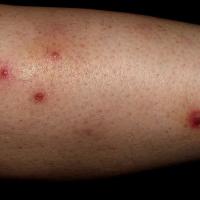
- Superficial - many cases of folliculitis are very mild, superficial, self-limiting and of little clinical importance. Patients with superficial folliculitis usually present with multiple small papules and pustules on an erythematous base that are pierced by a central hair, although the hair may not always be visualised
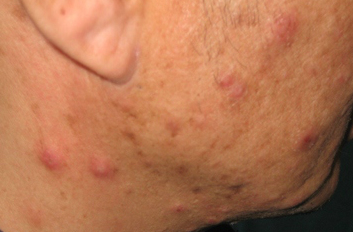
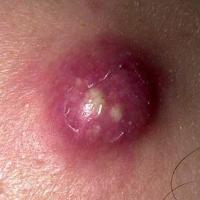
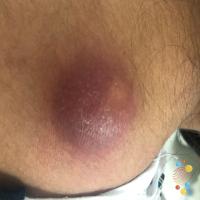
- Deep - deeper lesions manifest as painful, erythematous, often fluctuant, nodules and may have suppurative drainage. Persistent or recurrent lesions may result in scarring and permanent hair loss. When deep-seated folliculitis occurs on the beard areas of the face it is referred to as sycosis barbae, when it occurs elsewhere it is referred to as a furuncle or carbuncle
- Is there a primary infective aetiology?
- Superficial folliculitis may or may not be associated with infection. If infection is present it can be a primary or secondary feature
- Deep folliculitis tends to be infective
- The most common infection is staphylococcus aureus, although other organisms can be involved (refer to investigations)
- A swab of one or more pustules (the pus needs to be expressed), sent for C&S, may be helpful. Occasionally other tests are required, eg mycology if tinea is suspected
- Are there any aggravating factors?
- Pseudofolliculitis can result from shaving and other forms of hair removal
- Occlusion folliculitis can result from the use of emollients and topical steroids in the treatment of a number of skin conditions, eg eczema. A form of occlusion can occur on the back and bottom, simply resulting from patients sitting down for long periods, and in patients working in hot environments and wearing protective clothing
- Folliculitis may be due to medications such as corticosteroids, androgens and lithium
Clinical findings
Morphology
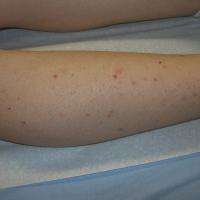
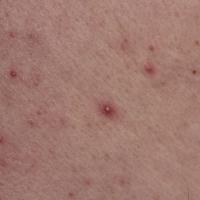
- Folliculitis - pustules on hair-bearing skin
- A furuncle (syn. boil) is a deeper, and more pronounced infection of the hair follicle in which purulent material extends through the dermis into the subcutaneous tissue, where a small abscess forms. A carbuncle is a coalescence of several inflamed follicles into a single inflammatory mass with purulent drainage from multiple follicles
Distribution of folliculitis - see below for detail
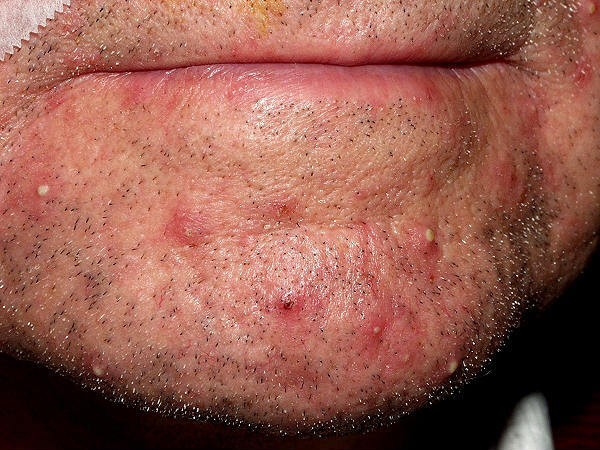
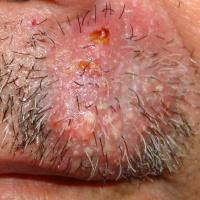
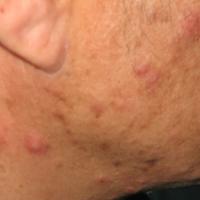
- Beard area - folliculitis barbae, sycosis barbae, pseudofolliculitis, tinea barbae, gram-negative folliculitis
-
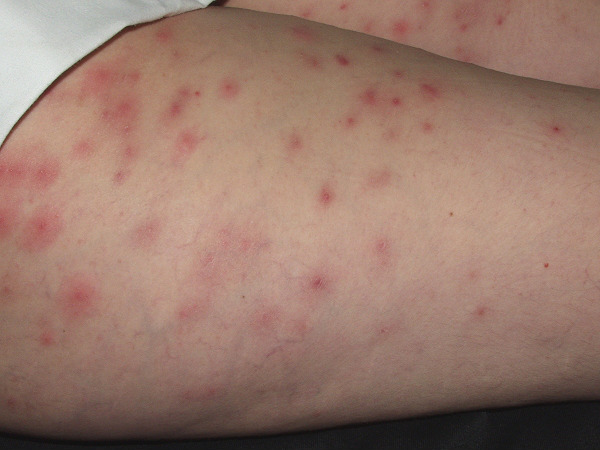
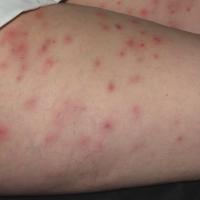
Lower legs - pseudofolliculitis
-
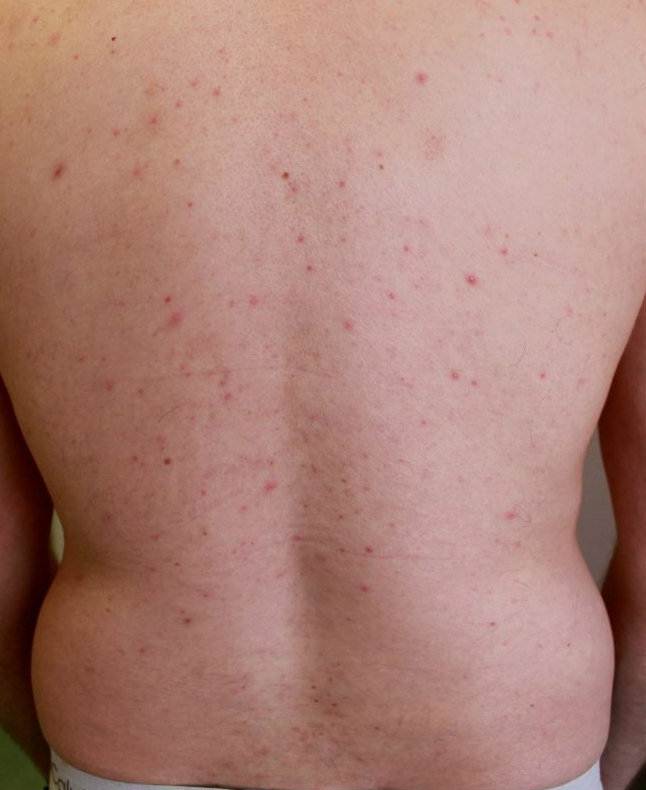
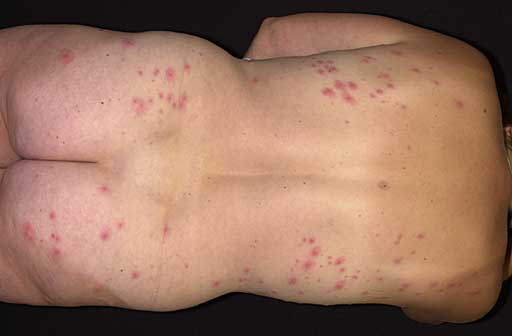
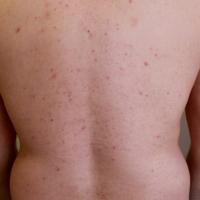
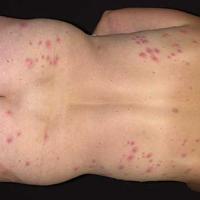
Trunk / buttocks - Malassezia folliculitis, pseudomonas folliculitis, non-infective folliculitis, disseminate and recurrent infundibulofolliculitis
-
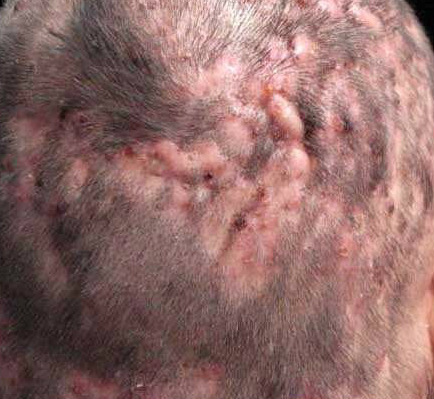
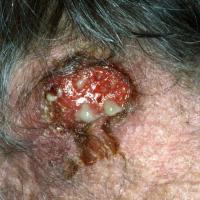
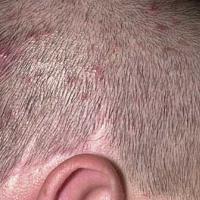
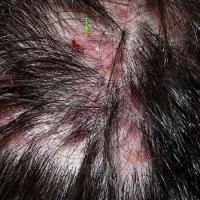
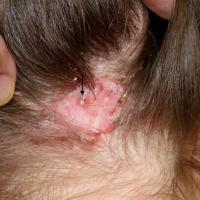
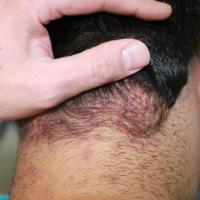
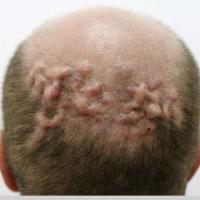
Scalp - scalp folliculitis, folliculitis decalvans, dissecting cellulitis, acne keloidalis nuchae
-
Others eg eosinophilic folliculitis
Beard area
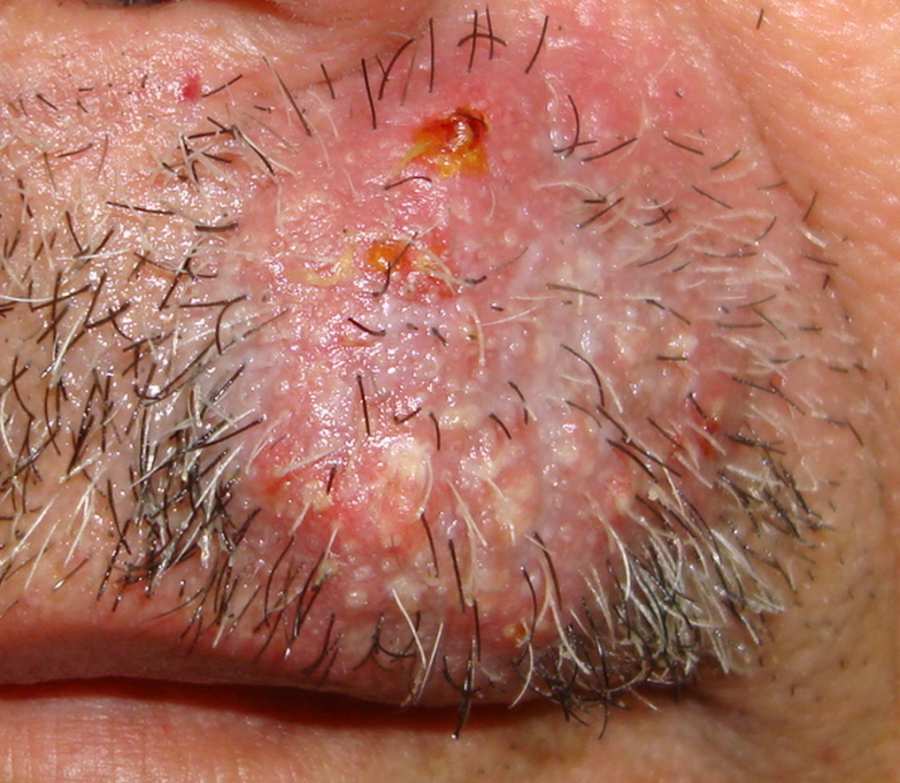
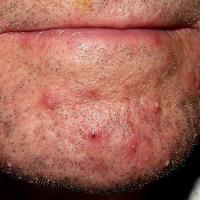
Folliculitis barbae
-
Is a superficial infection of the hair follicle, usually caused by staphylococcus aureus
-
It is often itchy
-
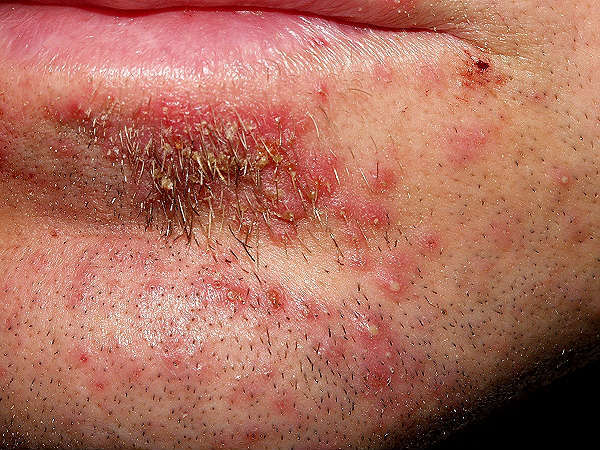
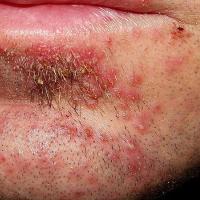
Lesions are seen in the bearded area, often involving the skin under the nose and chin, as erythematous follicular-based papules or pustules that may rupture and leave a yellow crust. The pustule is often pierced by a hair that is easily extracted from the follicle. This form of folliculitis occurs more commonly in carriers of nasal staphylococcus
-
The infection may be spread by shaving
-
Swabs should be positive
Sycosis barbae
-
This is a subacute or chronic infection involving the whole depth of the hair follicle
-
It is most common in the third or fourth decade
-
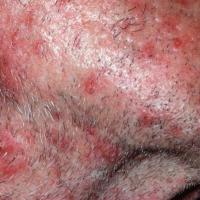
Clinically there are large red swollen areas with pustules and furuncles, some of which discharge pus making the discomfort more intense
-
Some patients have co-existent features of seborrhoeic eczema
-
Folliculitis decalvans is the same condition, affecting the scalp
Pseudofolliculitis
-
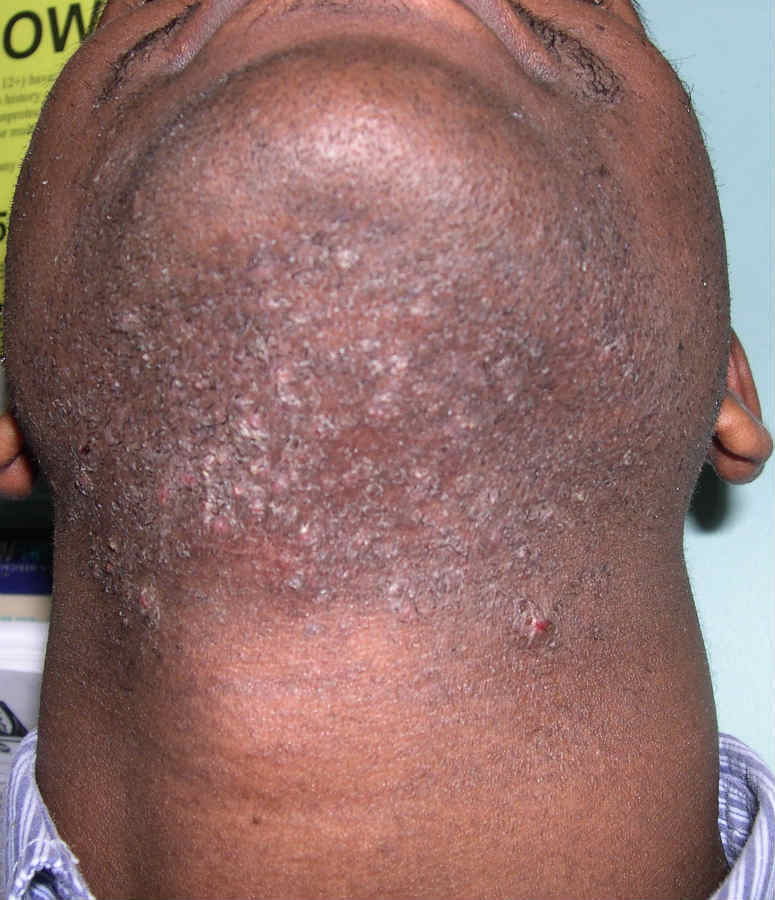
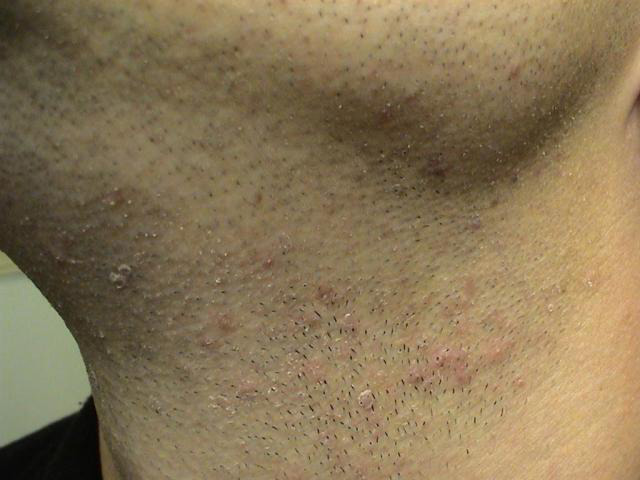
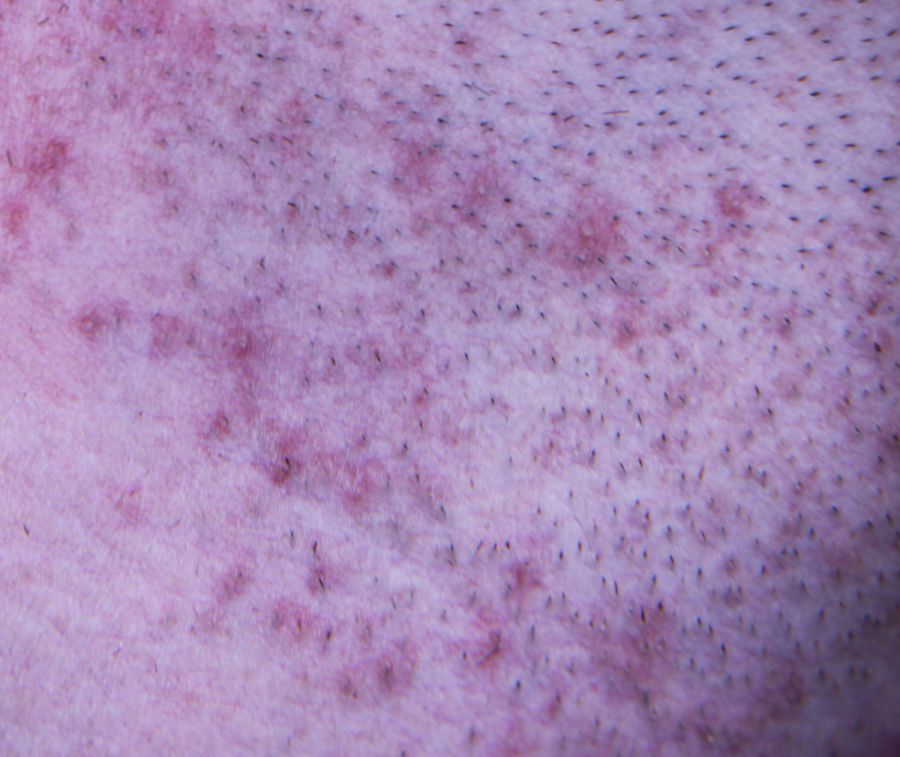
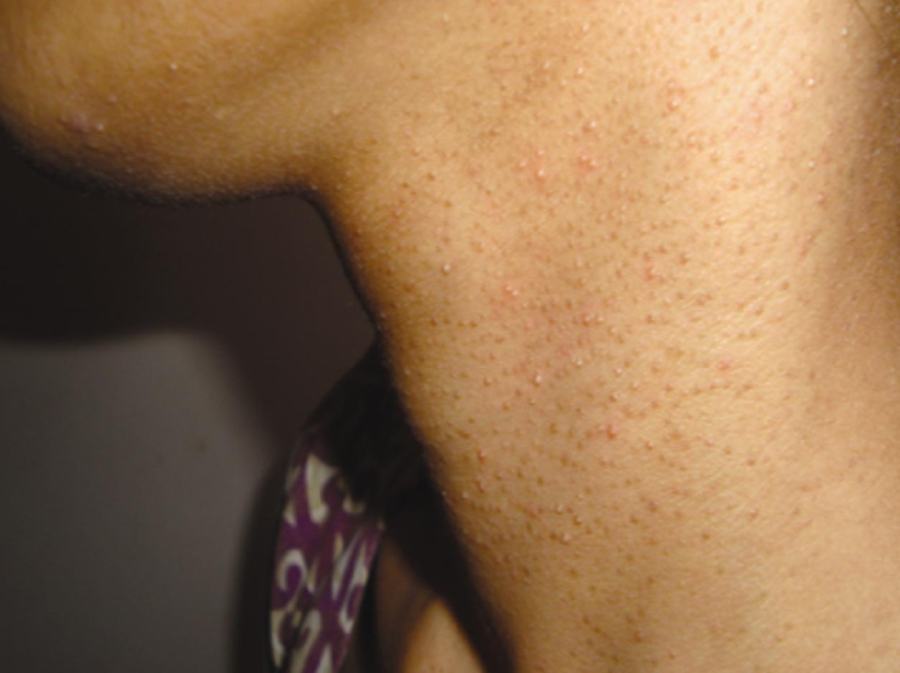
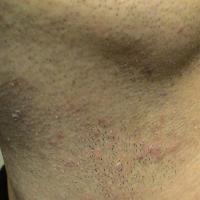
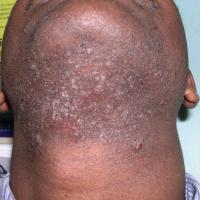
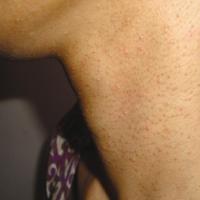
Is an irritant condition secondary to the ways in which hairs regrow after shaving, waxing, electrolysis or plucking. If caused by shaving it can result either from cutting the hairs too short, or shaving the hairs too long. The inflammation results from penetration into the skin of sharp tips of shaved hair, which occurs more frequently in patients with curly hair, and in black skin. If the condition affects the beard area if it is known as pseudofolliculitis barbae
-
It looks similar to a bacterial folliculitis, and can be itchy, but usually the ingrowing hairs causing pseudofolliculitis can be clearly seen with a magnifying glass or dermatoscope. However, if the beard is shaved very closely, the cut hair can retract below the skin surface, and may not be visible
-
Pseudofolliculitis barbae mainly affects the neck and over the jaw, although in black patients it is also frequently seen on cheeks. The papules may be large in black patients: scarring, keloid formation and hyperpigmentation may ensue
-
Swabs taken from the pustules tend to be sterile, although a secondary infection with staphylococcus may occur
Tinea barbae / faciei
-
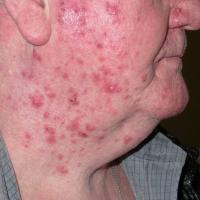
This is a fungal infection of the beard (tinea barbae) or face (tinea faciei), which often presents with marked inflammation and aggregated pustules, exudation and crusting
-
Affected hairs tend to come away quite easily - it is frequently misdiagnosed as a bacterial folliculitis, although it may be distinguished by the relative lack of pain and the ease with which the hairs come away
-
Scrapings and affected hairs should be sent for mycology, false negative results are not uncommon
-
Refer to the related chapter on Tinea faciei (face) and barbae (beard) for more information
Gram-negative folliculitis
-
This is caused by an infection with Pseudomonas aeruginosa or other gram-negative organisms
-
It is quite rare, and usually follows long-term systemic / topical antibiotic treatment
Lower legs
-
As with some cases of folliculitis of the beard, involvement of the lower legs tends to be a pseudofolliculitis caused by hair removal. Secondary infection with staphylococcus may occur
-
The legs are also a relatively common site for occlusion folliculitis eg patients with eczema using emollients and topical steroids
Trunk / buttocks
Malassezia folliculitis (previously termed pityrosporum folliculitis)
- Caused by the Malassezia yeasts, and mainly affects young adults. The same yeast can cause pityriasis versicolor and seborrhoeic eczema
-
Malassezia can be found on the skin of most adults, it only causes folliculitis when conditions are right. Contributory factors include:
-
The yeast tends to overgrow in hot, humid environments. Sweating can also be encouraged by wearing occlusive clothing, sunscreens and greasy emollients, which may occlude the follicles
-
Patients with Down's syndrome appear to be at an increased risk
-
Oily skin, obesity, pregnancy, systemic illness (eg diabetes mellitus, immunodeficiency), broad spectrum oral antibiotics (often prescribed for acne), and prednisolone are also risk factors
-
The rash, which is often itchy, presents with follicular papules and pustules, most commonly on the upper trunk and shoulders
-
Acne vulgaris may be distinguished by the presence of comedones, cysts and scars, and in Malassezia the condition may be associated with dandruff / seborrhoeic eczema
Pseudomonas folliculitis (syn. bathing suit folliculitis)
- A skin infection caused by Pseudomonas aeruginosa, which results from exposure to contained, contaminated water such as Jacuzzis, swimming pools, water slides and bathtubs. It can also occur following the use of diving suits in both seawater and fresh water immersion
-
Distribution - lesions are most prevalent in intertriginous areas or under bathing suits
-
Morphology - lesions begin as pruritic, erythematous macules that progress to papules and pustules, which can be tender
-
The diagnosis of pseudomonas folliculitis can be verified by results of bacterial culture growth from a fresh pustule
-
The rash usually clears spontaneously in 2-10 days, rarely recurs, and heals without scarring, but it may cause desquamation or leave hyperpigmented macules. Persistent cases often respond to oral ciprofloxacin
Non-infective folliculitis
-
Non-infective folliculitis of the trunk and / or buttocks is relatively common, and tends to affect young to middle-aged adults
-
In some cases it may result from a form of occlusion ie in patients sitting down for long periods, or, in patients working in hot environments and wearing protective clothing
-
Such lesions may be persistent, and if non-infective in origin medical treatments tend to be ineffective
Disseminate and recurrent infundibulofolliculitis
-
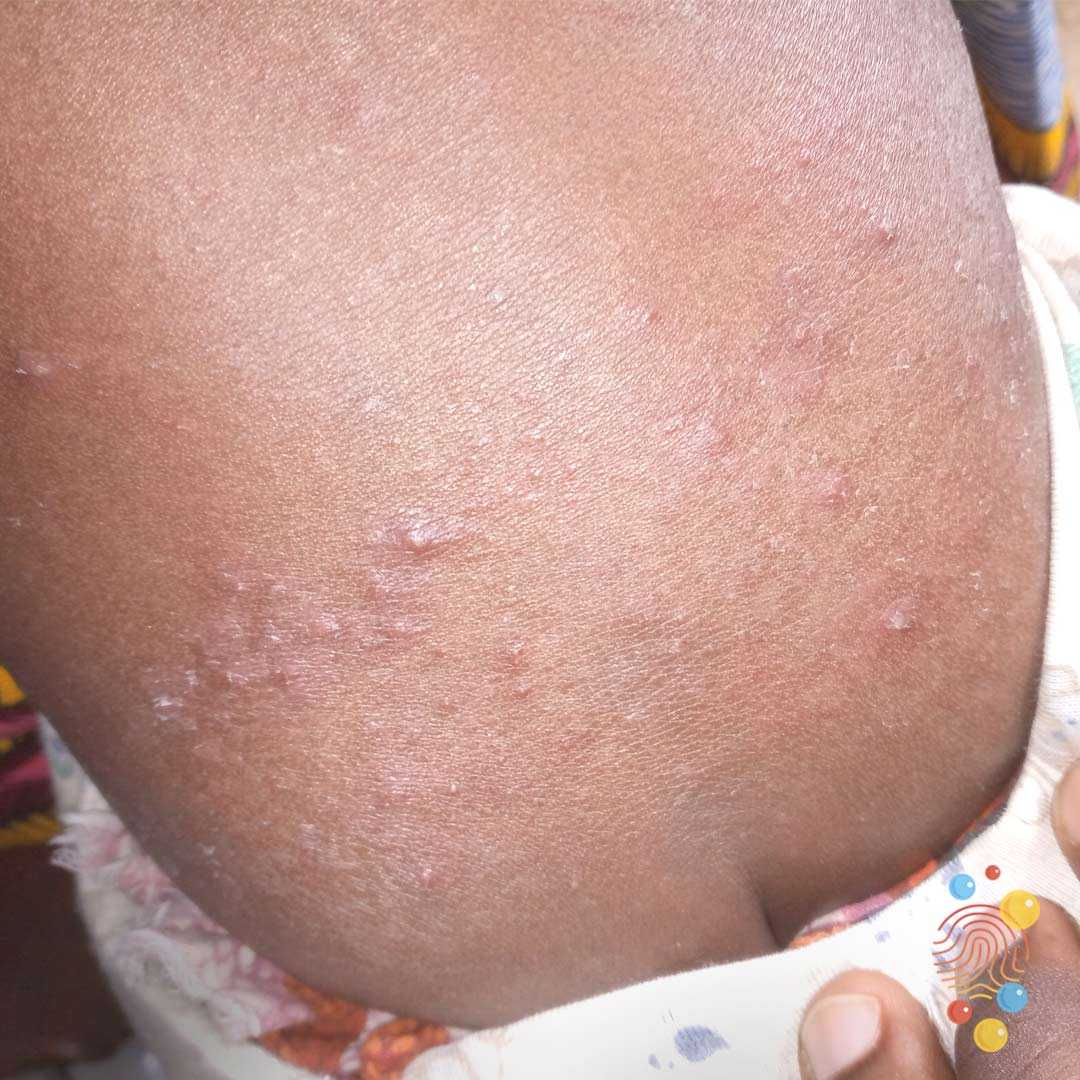
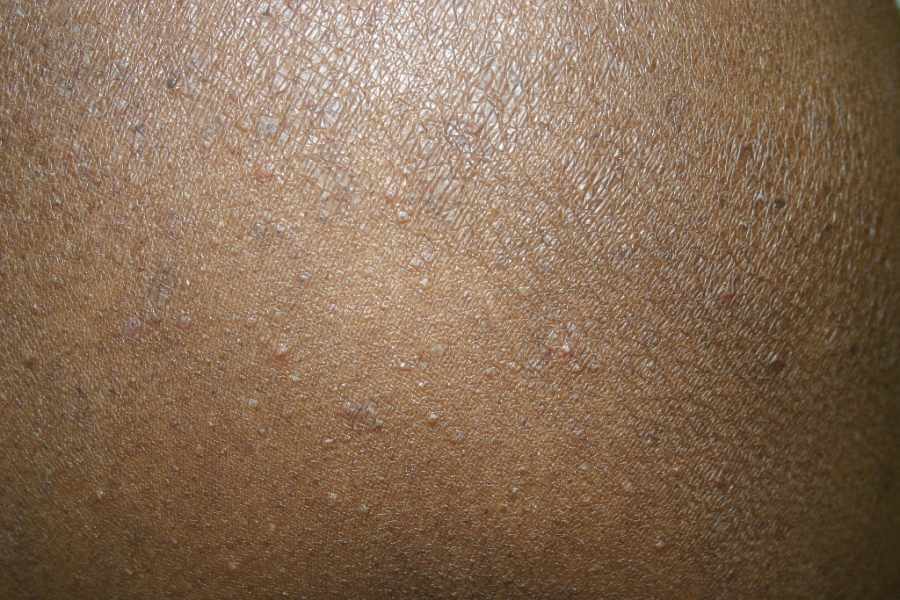
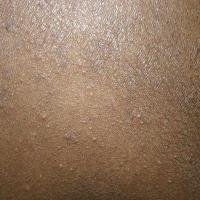
This uncommon condition mainly affects black people
-
Distribution - trunk and limbs, sparing of the flexures
-
Morphology - follicular papules, occasionally pustules. Lesions are sterile
Scalp
Scalp folliculitis
-
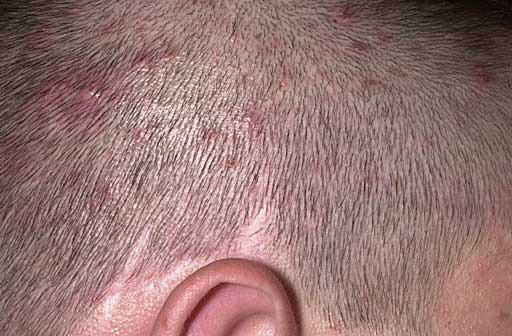
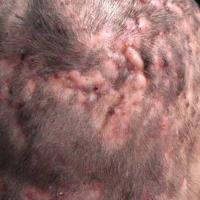
Characterised by small, very itchy pustules on the scalp, often most troublesome on the frontal hairline. There may be only a small number of lesions or they may be very numerous
-
They are hard to leave alone because of the itch and often become sore and crusted
-
Very infrequently, scalp folliculitis is seen in some patients with acne, especially if the patient has hair thinning eg male pattern alopecia
Folliculitis decalvans
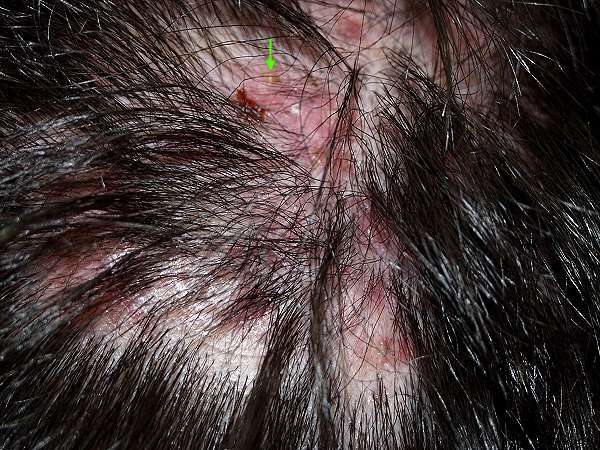
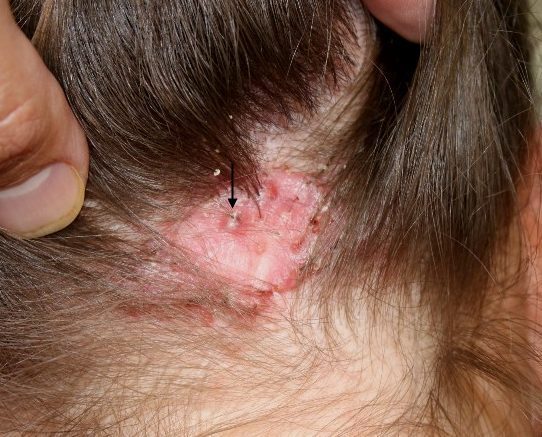
- A rare chronic condition of the scalp characterised by painful, recurrent purulent follicular exudation
-
Confluence of lesions resulting in nodules and plaques may occur. A consequence therefore may be scarring alopecia
-
Refer to the related chapter Folliculitis decalvans for more information
Dissecting cellulitis
- An uncommon, chronic inflammatory condition of the scalp
-
It is more common in black men, but can affect any race
-
Large, tender fluctuant swellings develop, which progress to produce extensive destruction of hair follicles and scarring alopecia
-
Swabs are usually sterile
-
Refer to the related chapter Dissecting cellulitis for more information
Acne keloidalis nuchae (AKN)
- A very chronic, and difficult to treat condition
-
It is characterised by follicular-based papules and pustules that form hypertrophic or keloid-like scars
-
AKN typically occurs on the occipital scalp and posterior neck and develops almost exclusively in young, African-American men
-
Refer to the related chapter Acne keloidalis nuchae for more information
Eosinophilic folliculitis
- This is a specific type of folliculitis that was first reported in Japan but has now been documented worldwide. It is more common in immunosuppressed individuals such as those infected by human immunodeficiency virus (HIV) or those who have cancer
- Distribution - the face is the commonest site at onset, but the rash can affect any part of the body
- Morphology - groups of papulopustules extend peripherally with central clearing, sometimes as part of annular lesions or plaques 3-5 cm in diameter
Other forms of folliculitis
-
Herpes simplex / zoster can cause painful pustules
-
Scabies often provokes folliculitis as well as non-follicular papules, vesicles, pustules and urticated lesions
-
Follicular involvement can also be seen in lesions of discoid lupus erythematosus and a number of other dermatoses
Clinical Images
Please refer to notes on image rights at bottom of the page with regards to individual image
ownership.
1
2
3
4
5
6
7
8
9
10
11
12
13
14

15
16
17
18
19
20
21
22
23
24
25
26
27
28
29
30
31
32
Investigations
-
Skin swabs - a swab of one or more pustules / carbuncles (the pus needs to be expressed), sent for MC&S, can be helpful. Occasionally other tests are required, if tinea is suspected scrapings and affected hairs should be sent for mycology, although false negative results are not uncommon
-
Nasal swabs - should be taken for cases of folliculitis barbae, and sometimes in cases of recurrent folliculitis / carbuncles involving other sites
-
Patients with recurrent carbuncles / furuncles:
-
Require a standard blood screen, especially for FBC and fasting glucose
-
Also consider the Panton-Valentine leukocidin (PVL) strain of staph. aureus, especially if lesions are associated with marked pain, or necrosis - when sending a swab in such patients, ask microbiology to do PVL testing if the swab is positive for staph.aureus. In case of a positive PVL test discuss management with microbiology
-
Eosinophilic folliculitis
-
Look for HIV and other causes of immunosuppression
Management
Management of folliculitis
Step 1: manage causative factors
-
Could systemic medications be responsible, eg corticosteroids?
-
Occlusive factors:
-
Patient receiving topical treatments for other skin conditions, such as eczema, may require their treatment modifying eg to use a lighter emollient regime for a while
-
If related to work, could the environment be modified?
-
Shaving - refer to step 3
-
Infection - for staphylococcal infection refer below, for Malassezia folliculitis refer to step 5
Step 2: treatment of confirmed staphylococcal infection
-
The most common bacterial infection is staphylococcus aureus
-
Mild cases may resolve without treatment, or require topical anti-septic treatment, eg the Dermol ® range or chlorhexidine
-
More deep-seated / persistent lesions require systemic antibiotics - severe / recurrent cases may require antibiotics for 4-6 weeks
-
Recurrent infection - swab nose for nasal carriage, if positive treat with mupirocin nasal ointment (Bactroban ®)
-
Panton-Valentine leukocidin (PVL) positive staph. aureus - patients are best discussed with local dermatologists as high-dose rifampicin and clindamycin are required for 4-6 weeks, as well as decolonisation regimes (eg a Dermol ® preparation for the body and nasal mupirocin / Naseptin ®)
Step 3: is the folliculitis related to shaving and other hair-removal techniques?
-
Provide the relevant patient information leaflets
-
Topical antiseptic treatments (refer to step 2) should be used, even if an infection has not been identified, so as to stop secondary infection from occurring. These can also be used to clean the shaving equipment
-
Shaving techniques
-
The only certain cure is to stop shaving for a period of some three months or longer, however, this in not always possible
-
If shaving is necessary then aim to get a stubble length of 1 mm, so as to avoid both, too close a shave that causes the hair to retract inside the follicle, and, leaving the stubble too long, especially if curly, so that it curls back and pierces the skin
-
An electric razor is preferable, but for those having a wet shave:
-
Use a single blade
-
Shave in the direction of hair growth and avoid stretching the skin tight
-
Shave every second day, rather than daily, if possible
-
Some patients benefit from the use of a mild-moderately potent topical steroid immediately after shaving
Step 4: other treatments for folliculitis
-
Mild topical steroids can be used for local areas of inflammation, although are best avoided if infection is the primary aetiological factor
-
Antibiotics with an anti-inflammatory role, such as systemic tetracycline's, used for spells of 6-12 weeks may be of benefit
-
Isotretinoin, given in a specialist clinic, can be very helpful in cases of gram-negative folliculitis, and is sometimes used along with systemic steroids in dissecting cellulitis
-
Phototherapy may benefit some patients with chronic, non-infective folliculitis
Step 5: Malassezia folliculitis
-
Treatment is with either ketoconazole cream / shampoo, daily until things settle
-
Many patients will relapse and so, in the longer-term, need to use the treatment once or twice weekly as a prophylaxis
-
Occasionally systemic itraconazole is required
Management of boils (carbuncles / furuncles)
- Many will resolve with an appropriate antibiotic eg flucloxacillin or erythromycin / clarithromycin (choice dependent on history of allergy)
- Larger lesions may need to be lanced
- In terms of recurrent / multiple boils refer to the section on investigations
Disclaimer - the author PCDS cannot accept responsibility for any misleading or incorrect statements, and the management of individual patients remains the direct responsibility of the individual doctor. We do however hope that visitors to this site can contact us regarding comments that are considered misleading or incorrect so that we can continue to improve the site.
Image Rights - The PCDS would like to thank Dermatoweb, DermQuest (Galderma), and others who have contributed images. All named individuals and organisations maintain copyright for the relevant images.