Herpes simplex
LAST UPDATED: Jul 18, 2025
Introduction
Herpes simplex is caused by the herpes simplex virus (HSV), also known as herpesvirus hominis. There are two major types: herpes simplex virus type 1 (HSV-1) and type 2 (HSV-2). Both are closely related but differ in epidemiology. HSV-1 is traditionally associated with orofacial infection, while HSV-2 is traditionally associated with genital infection, although there is considerable overlap in disease manifestations.
This chapter provides an overview of HSV infections and is set out as follows:
Aetiology
-
Both HSV-1 and HSV-2 are acquired by direct contact with, or via droplets from, infected secretions entering via the skin or mucous membranes
-
At the point of contact the infection may become evident, although in up to 80% of cases the primary infection is asymptomatic
-
Latency is the establishment and maintenance of latent infection in nerve cell ganglia proximal to the site of infection:
-
In orofacial infection the trigeminal ganglia are most commonly involved
-
In genital infection the sacral nerve root ganglia (S2-S5) are involved
-
Reactivation and replication of latent HSV occurs in the area supplied by the ganglia in which latency was established. It can be induced by various stimuli resulting in overt or covert recurrent infection
-
Dissemination of HSV is uncommon, and predominantly affects immunocompromised patients
History
-
Any age can be affected
-
The eruption may be preceded by a tingling, itching or burning sensation
-
Lesions can be very painful
Clinical findings
HSV has many different presentations, as described below, the severity of which depends on the age, the immune status of the individual, and whether it is a primary or recurrent infection - primary HSV infections are accompanied by systemic signs, longer duration of symptoms, and higher rate of complications. Recurrent episodes are milder and shorter.
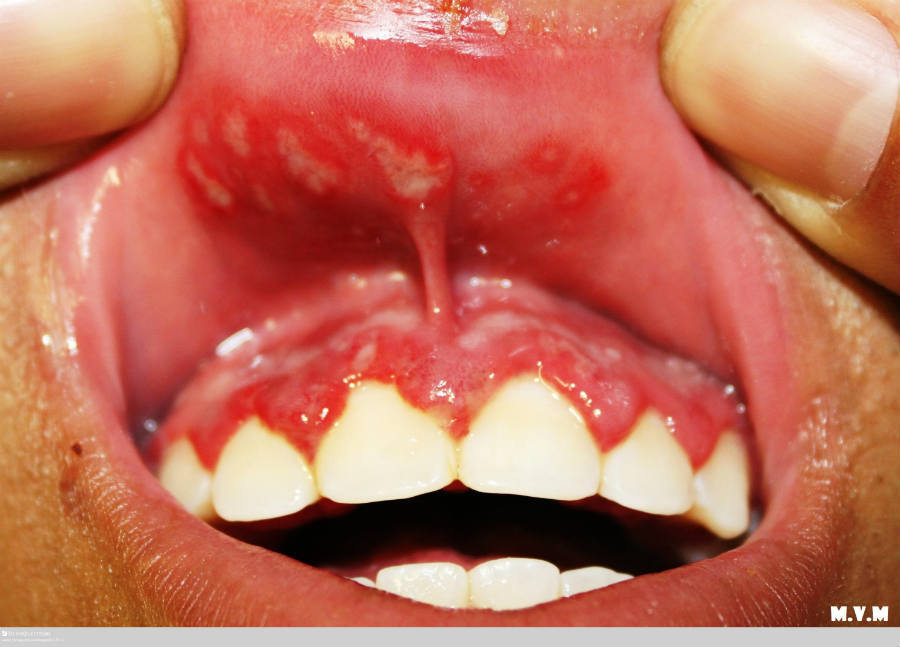
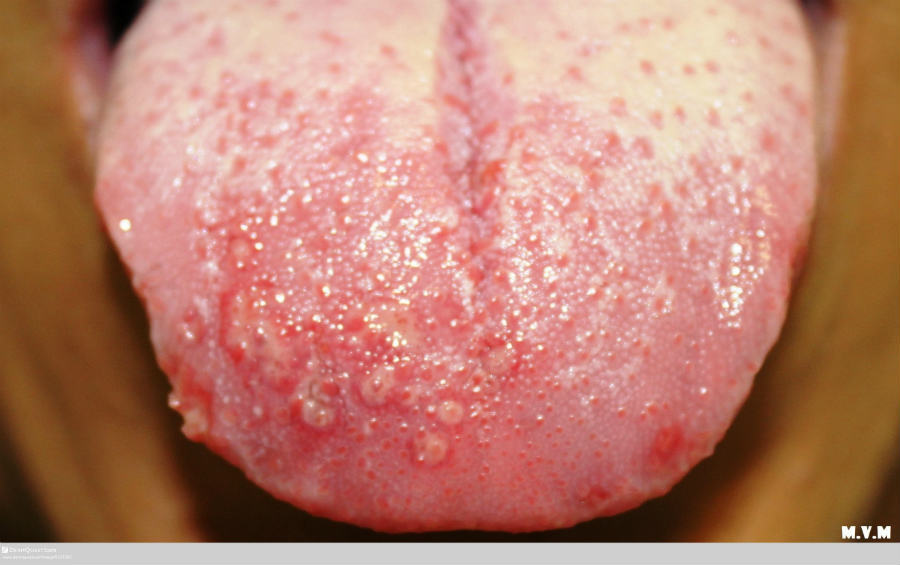
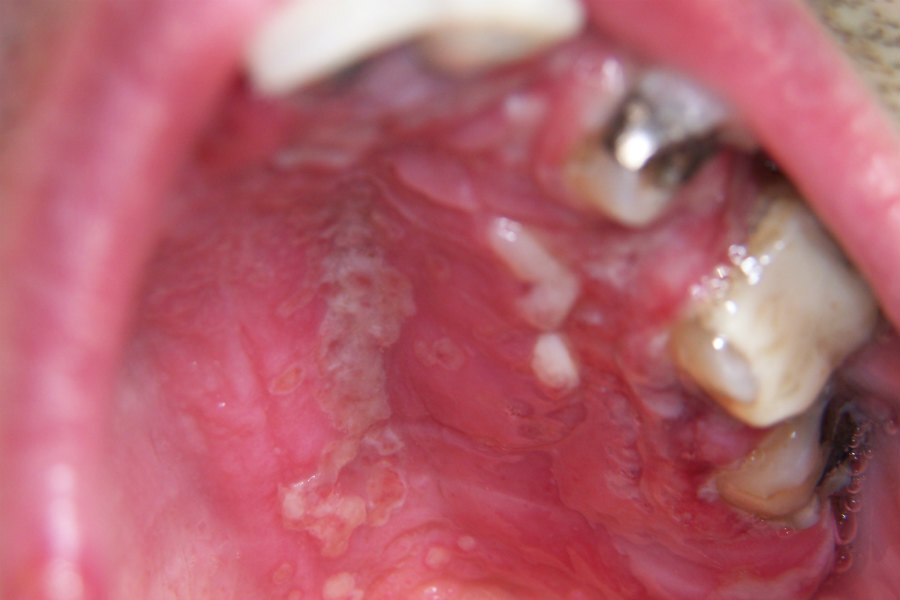
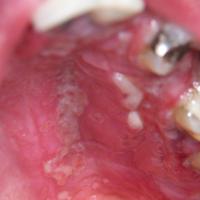
Herpetic gingivostomatitis
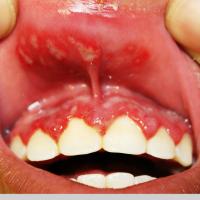
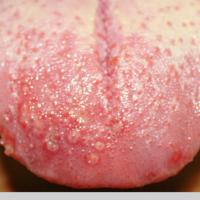
- This is the most common primary presentation of HSV-1 infection, although the sites infected by HSV-1 and HSV-2 are not mutually exclusive
- Most cases arise between the ages of six months to five years
- Clinical features include systemic upset, lymphadenopathy, gingivitis, and painful, white vesicles on the tongue, buccal mucosa, palate, pharynx and lips
- The main symptoms persist for 5-7 days, and are fully resolved within two weeks
- Encephalitis is a rare complication
- Adults may also develop acute gingivostomatitis, but it is less severe and is associated more often with a posterior pharyngitis
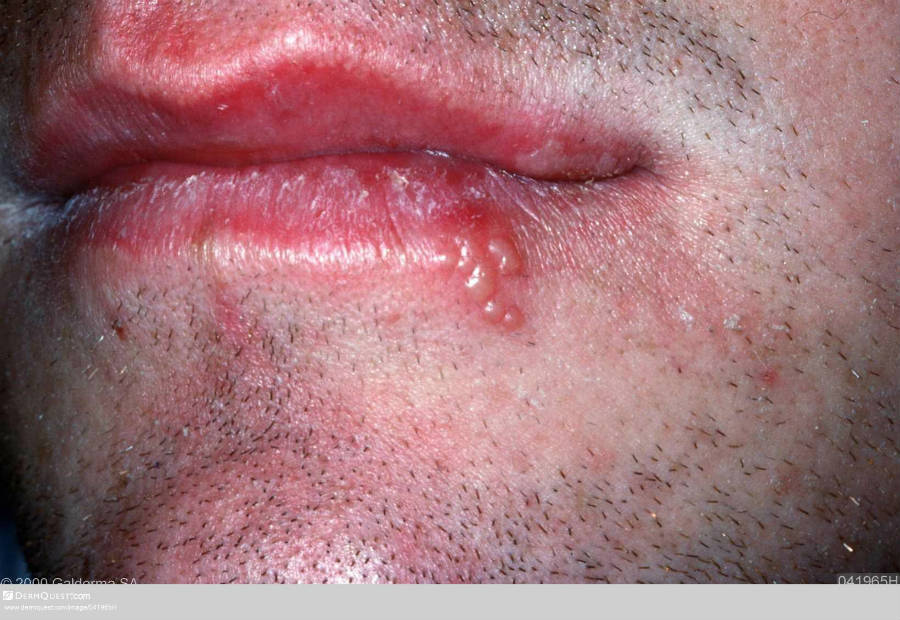
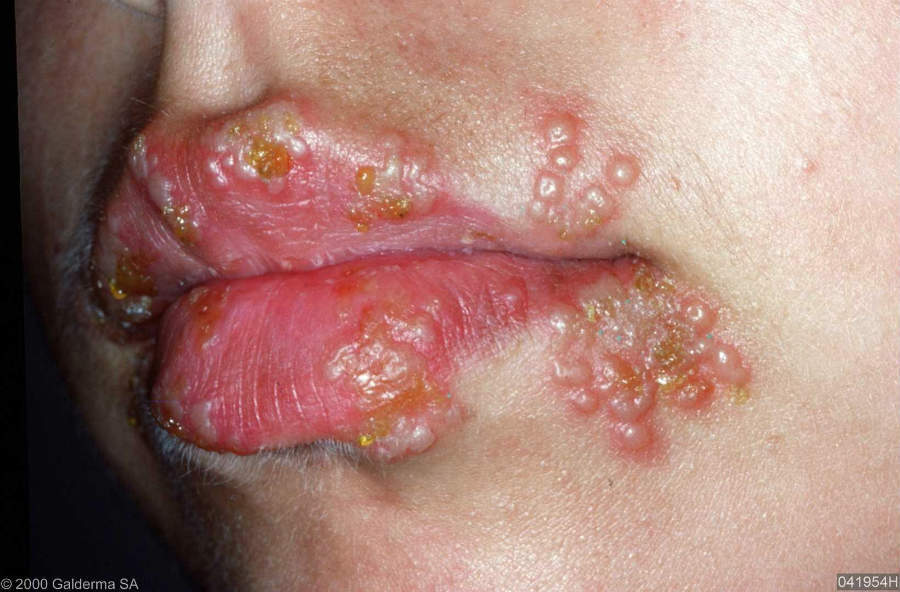
Herpes labialis (syn. cold sore)
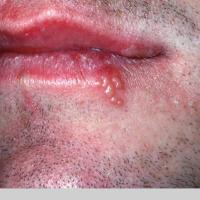
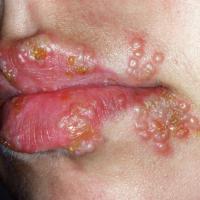
- Recurrent infections of orofacial herpes simplex normally present as cold sores
- Triggers are many, including UV-radiation, minor trauma and stress
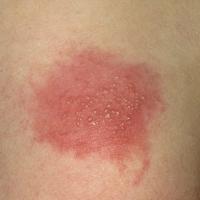
- The clinical presentation of a cold sore is that of grouped vesicles, especially of the lips and perioral skin. The eruption is often preceded by a tingling, itching or burning sensation. Over a few days the vesicles form a crust, and the eruption resolves within 7-10 days
- If recurs at same site consider nasal carriage
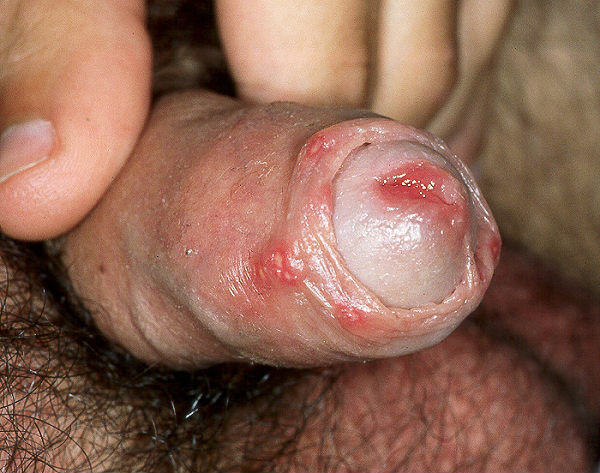
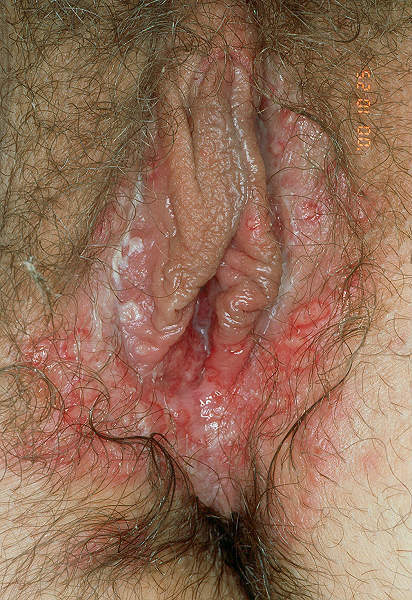
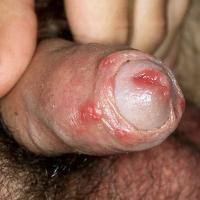
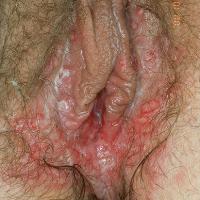
Herpes genitalis
- Can be caused by both HSV-1 and HSV-2, and is usually sexually transmitted
- The clinical features and course of primary genital herpes caused by both HSV-1 and HSV-2 are indistinguishable, but recurrences are more common with HSV-2
- Systemic symptoms may precede the development of painful ulcers in both men and women
- In women, ulcers can affect the external genitalia, as well as the vagina and cervix, which is involved in 70%-90% of cases. Dysuria may be severe and can cause urinary retention
- In men, ulcers are most commonly seen on the glans, prepuce and shaft of the penis. Occasionally they can extend on to the scrotum, thighs, and buttocks. Approximately one-third of men will develop a urethritis
- The perianal area and rectum may be involved with anal intercourse
- Recurrent genital herpes simplex is very common, with up to 95% of patients with HSV-2 suffering one or more further episodes. Recurrent episodes are less severe and shorter in duration, although patients with severe primary genital herpes tend to have more frequent recurrences of longer duration
Other presentations of herpes simplex
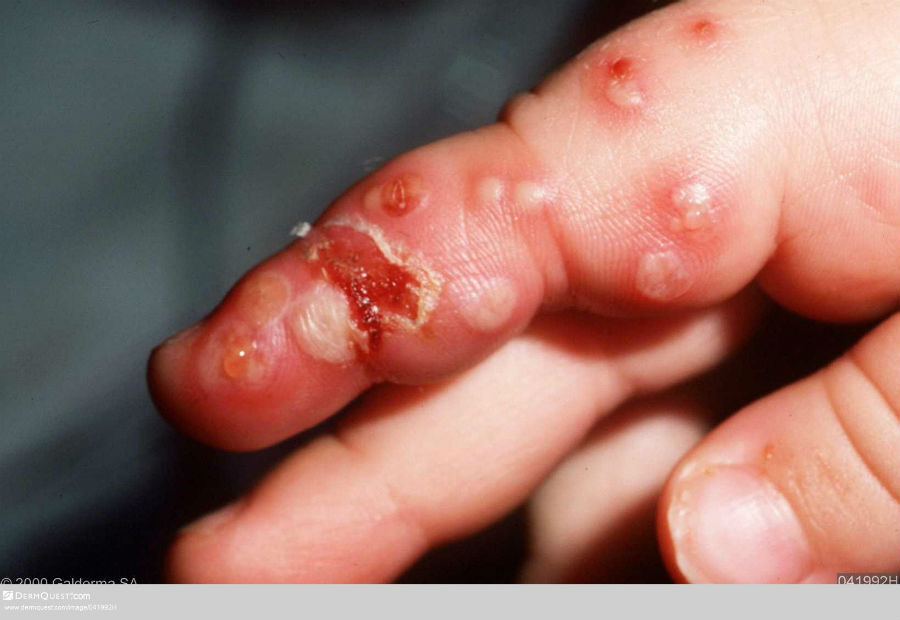
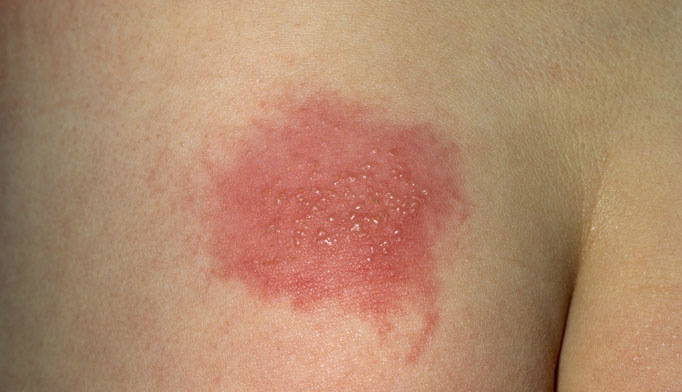
Inoculation herpes simplex
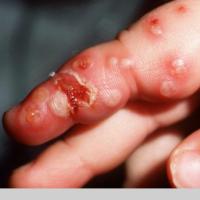
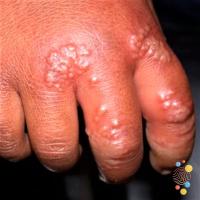
- HSV can enter through an abrasion, to affect any part of the skin
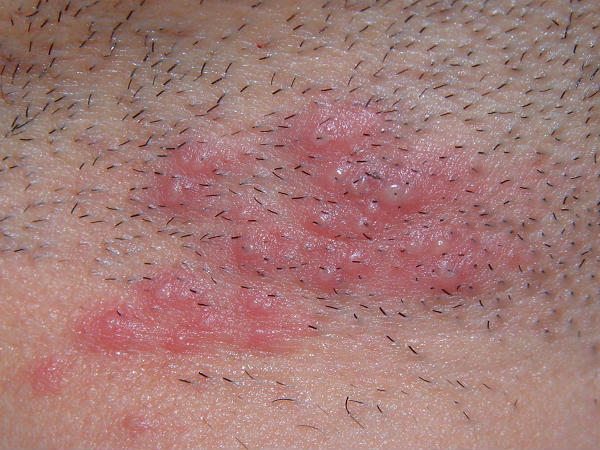
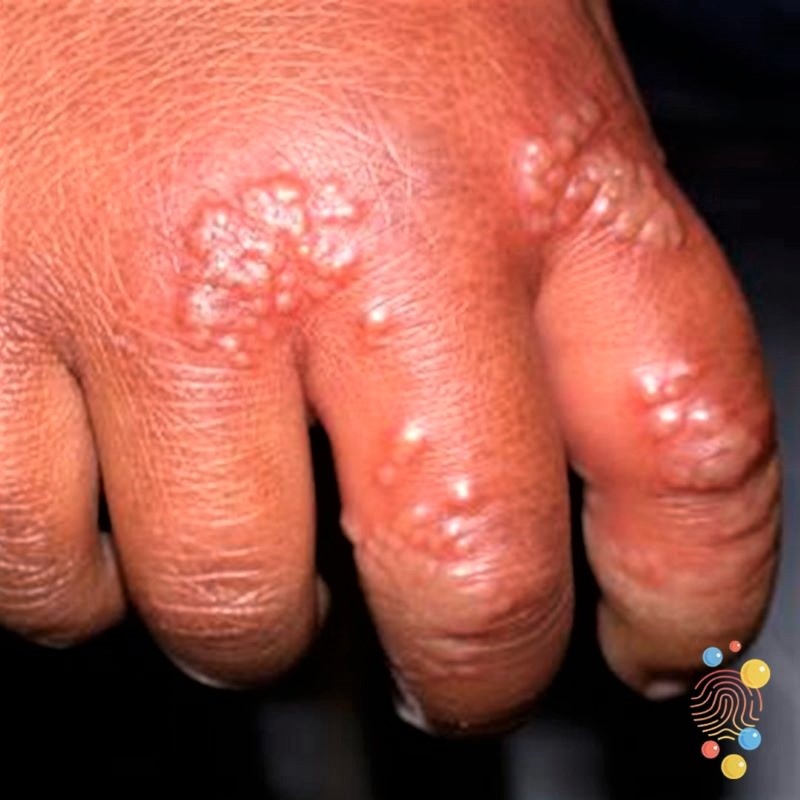
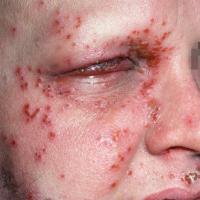
- Lesions arise as vesicles, and sometimes bullae, either grouped as a plaque or scattered. Systemic upset tends to be minimal
- Some well-described sites include the fingertips (a herpetic whitlow), where episodes can be recurrent, and on the face of rugby players, which is referred to as 'scrumpox'
- It is important to note that HSV infection affecting non-mucosal sites is not always caused by inoculation, and it may also be misdiagnosed as shingles
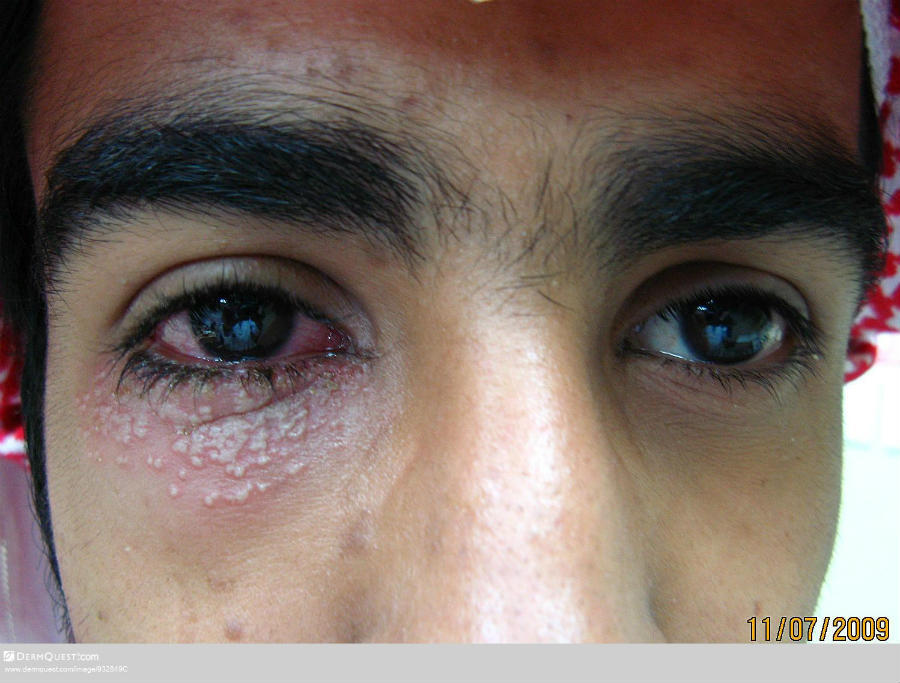
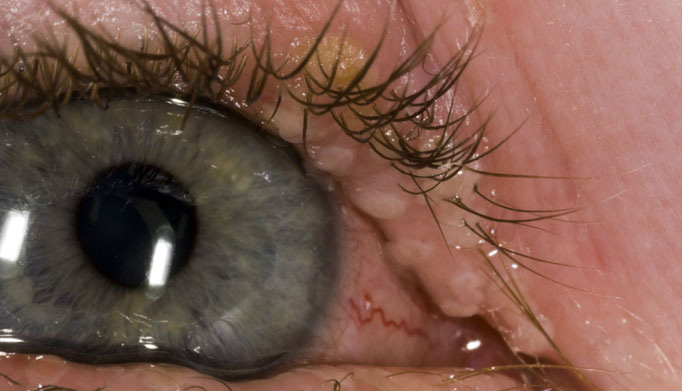
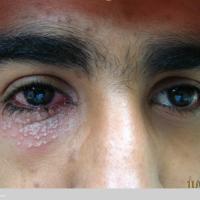
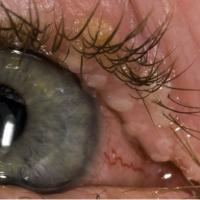
Keratoconjunctivitis
- As with herpes zoster, a primary herpes simplex infection can lead to severe inflammation with the potential for damage to the cornea and blindness in the affected eye
- Suspected cases need urgent ophthalmological care
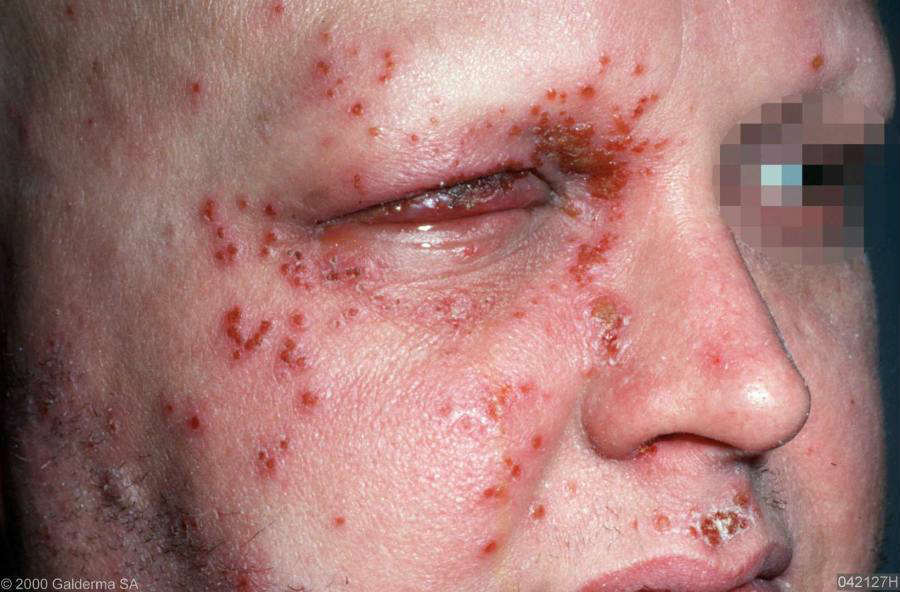
Eczema herpeticum
- Atopic patients are at risk of developing extensive eruptions of herpes simplex known as eczema herpeticum
- The condition presents with clusters of itchy or painful vesicles / punched-out monomorphic erosions, which may coalesce
- Any site can be affected, most commonly the face and neck. Lesions can occur in normal skin or in sites actively or previously affected by atopic eczema or other skin conditions
- New patches form and spread over a period of 7 to 10 days, and can become widespread
- For more information refer to the related chapter Eczema herpeticum
Neonatal herpes simplex
- Genital herpes simplex at the time of delivery makes the risk of neonatal infection very high
- Infection can also arise in the neonatal period
- Symptoms vary from a localised cutaneous infection to disseminated herpes simplex
Disseminated herpes simplex
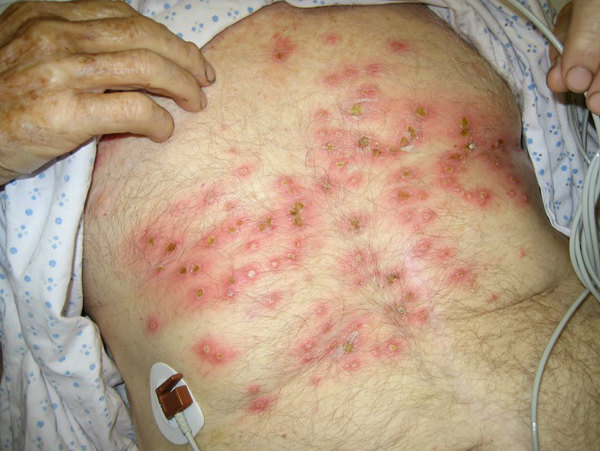
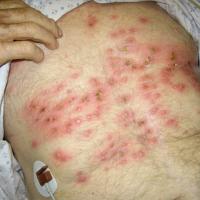
- Those at risk are immunocompromised patients, and neonates not protected by maternally acquired antibodies. It rarely occurs in healthy individuals
- Cutaneous lesions may be clinically indistinguishable from those of herpes zoster
- Systemic infection, such as hepatitis and encephalitis may develop with or without widespread cutaneous lesions. The mortality from disseminated HSV is higher than that from disseminated zoster, so early recognition and treatment is essential
Erythema multiforme (EM)
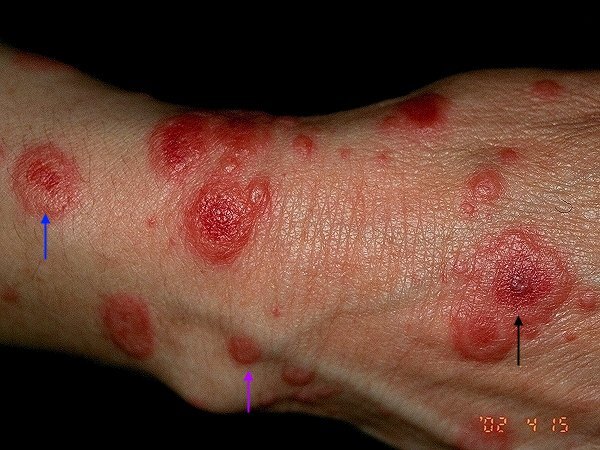
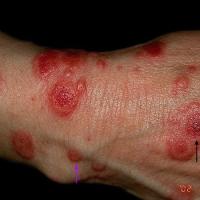
- Is characterised by macular, papular or urticated lesions, as well as the classical 'target lesions' distributed preferentially on the distal extremities. Mucosal surfaces may be involved
- EM is a hypersensitivity reaction usually triggered by infections, most commonly herpes simplex. The infection may present as a cold sore, or may be subclinical
- For more information refer to the related chapter Erythema multiforme
Clinical Images
Please refer to notes on image rights at bottom of the page with regards to individual image
ownership.
1
2
3
4
5
6
7
8
9
10

11
12
13
14
15
16
Investigations
-
The diagnosis is often clinical
-
If necessary a viral swab can be taken
Management
Mild uncomplicated eruptions
Primary herpetic gingivostomatitis and herpes genitalis
-
Consider treatment with oral aciclovir 200 mg five times daily for 5 days. Adjust the dose accordingly in children
-
Alternatively use valaciclovir or famciclovir
-
Treatment will shorten the duration of an attack but does not prevent future attacks
-
In addition, for herpes genitalis, patients and their partners need screening for other sexually transmitted disease
Recurrent infections
- Herpes labialis
- Reduce risk factors eg advise on appropriate UV-protection
- 5% aciclovir cream can be helpful if used as soon as patients are aware that a recurrence is occuring
- For very frequent / distressing attacks consider prophylactic aciclovir 200-400 mg BD (alternatively use valaciclovir or famciclovir)
- Herpes genitalis
- Treat with prophylactic aciclovir 400 mg BD (alternatively use valaciclovir or famciclovir)
Herpes simplex associated with recurrent erythema multiforme
-
Treat with prophylactic aciclovir 400 mg BD (alternatively use valaciclovir or famciclovir), adjust the dose accordingly in children
Life threatening infections
-
It is important to recognise potentially life-threatening systemic infections, which are much more likely in immunocompromised patients and neonates
-
Patients need admitting urgently for treatment with high-dose intravenous antiviral therapy
Other resources
Disclaimer - the author PCDS cannot accept responsibility for any misleading or incorrect statements, and the management of individual patients remains the direct responsibility of the individual doctor. We do however hope that visitors to this site can contact us regarding comments that are considered misleading or incorrect so that we can continue to improve the site.
Image Rights - The PCDS would like to thank Dermatoweb, DermQuest (Galderma), and others who have contributed images. All named individuals and organisations maintain copyright for the relevant images.