Lentigo (syn. lentigine)
LAST UPDATED: Mar 02, 2026
Introduction
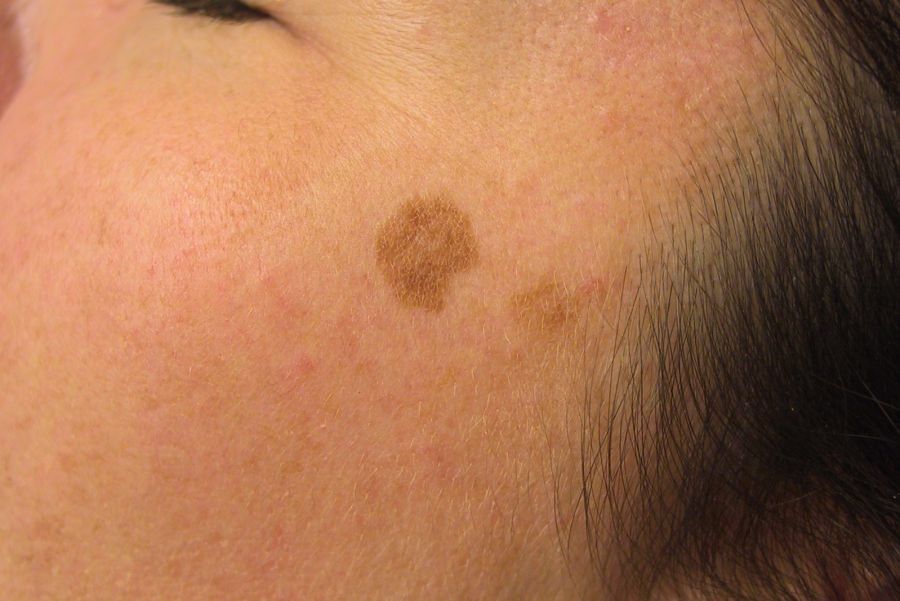
A lentigo (syn. lentigine) is a pigmented flat or slightly raised lesion with a clearly defined edge. Unlike a freckle (syn. ephelis), a lentigo maintains its pigmentation throughout the year.
This chapter is set out as follows:
Aetiology
- Compared to common benign melanocytic naevi, which form nests or clusters of melanocytes, the extra melanocytes in a lentigo are usually spread out linearly along the basal layer at the dermal-epidermal junction
Clinical findings
Simple lentigo (syn. lentigo simplex)
- Large numbers of lentigines are very common, especially in patients with red hair. Lesions tend to arise in childhood and may increase in number in young adults. Rarely, lesions may erupt suddenly or occur in vast numbers. Clinically, lentigo simplex can be difficult to distinguish from acquired melanocytic naevi. The majority of simple lentigines remain static or disappear in adult life
- Distribution - can be found on any area of skin, mucosal surfaces and the conjunctiva
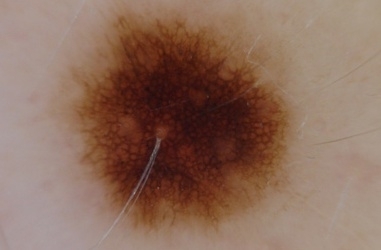
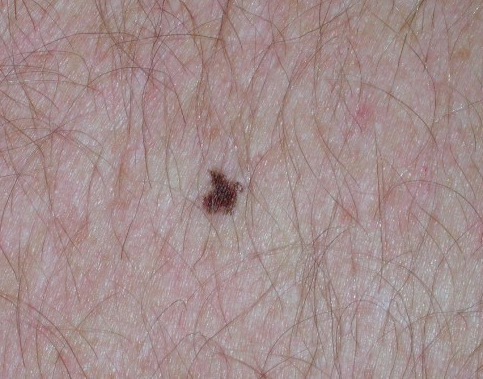
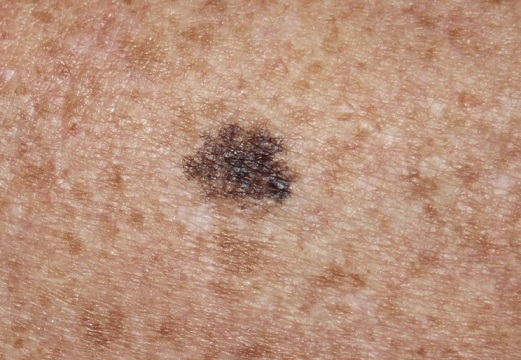
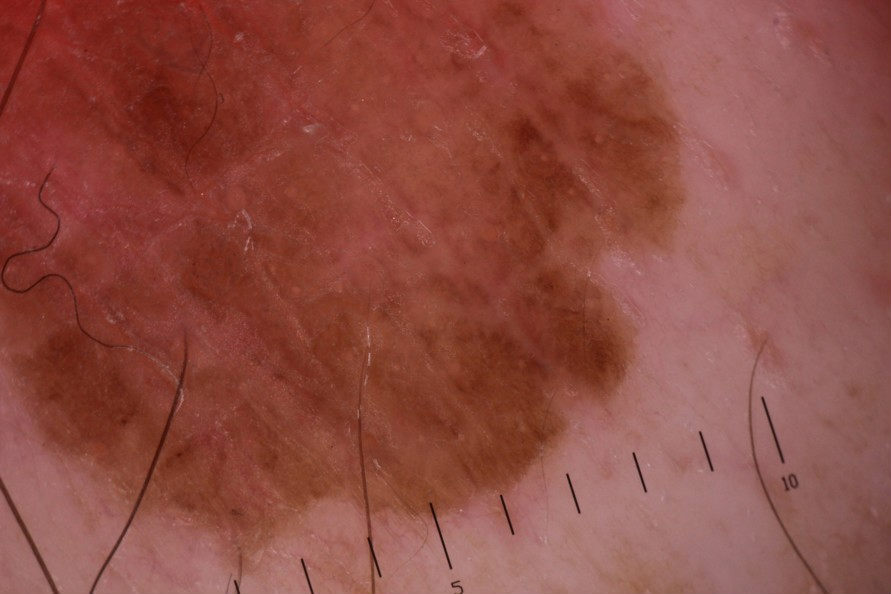
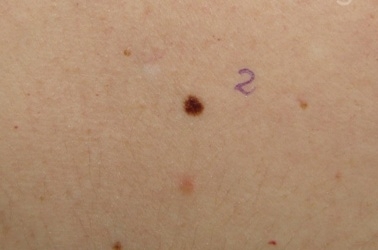
- Morphology - usually appear as small, sharply demarcated macules 3-5 mm in diameter displaying a uniform brown colour
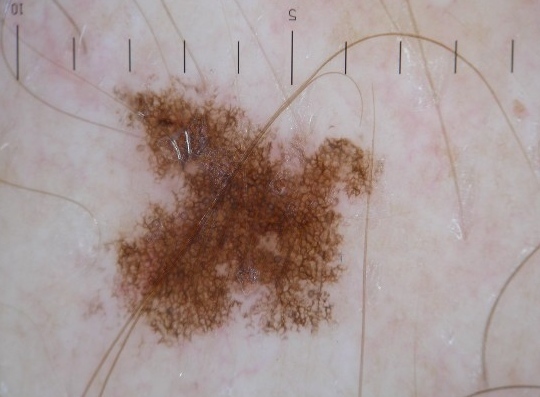
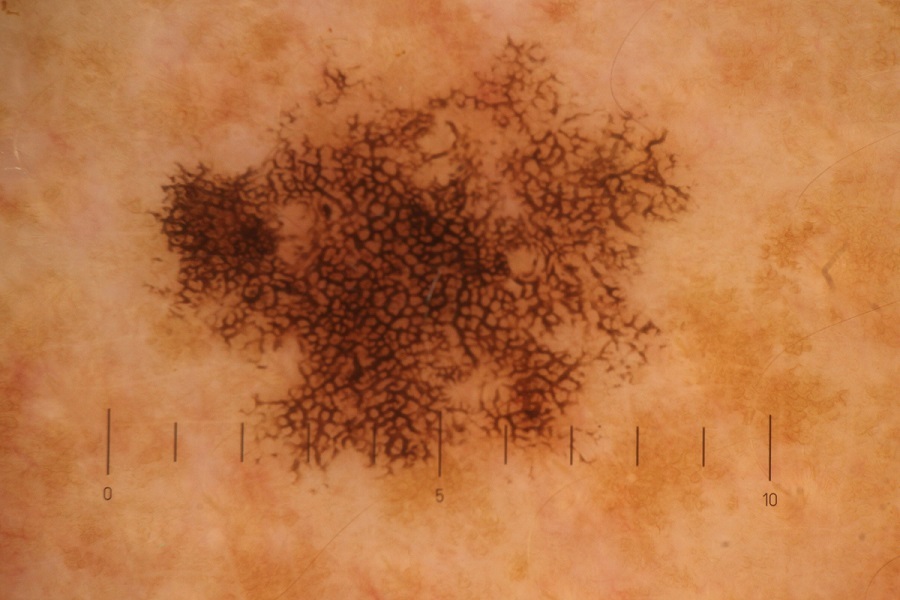
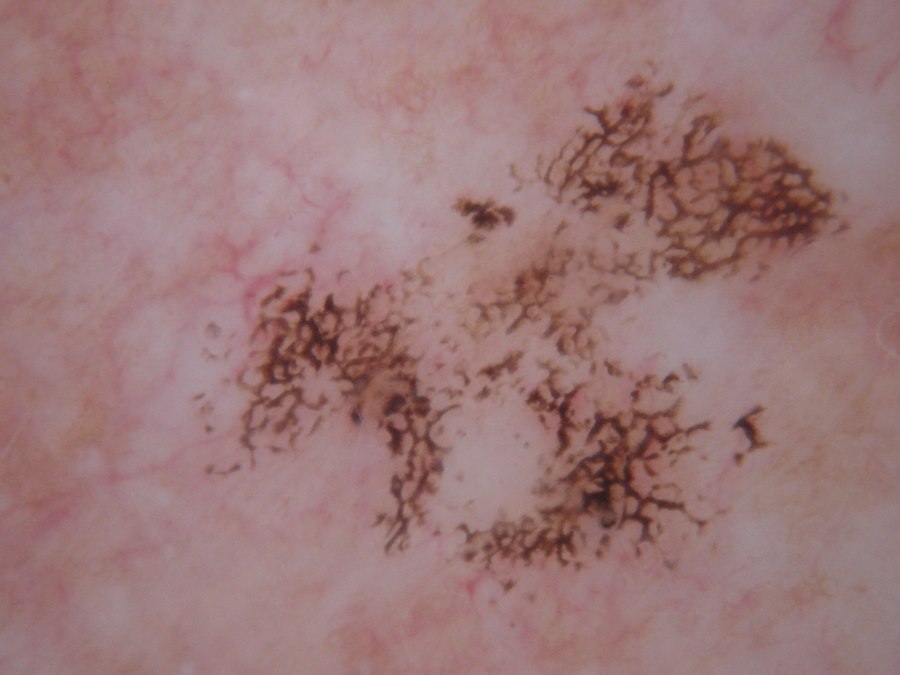
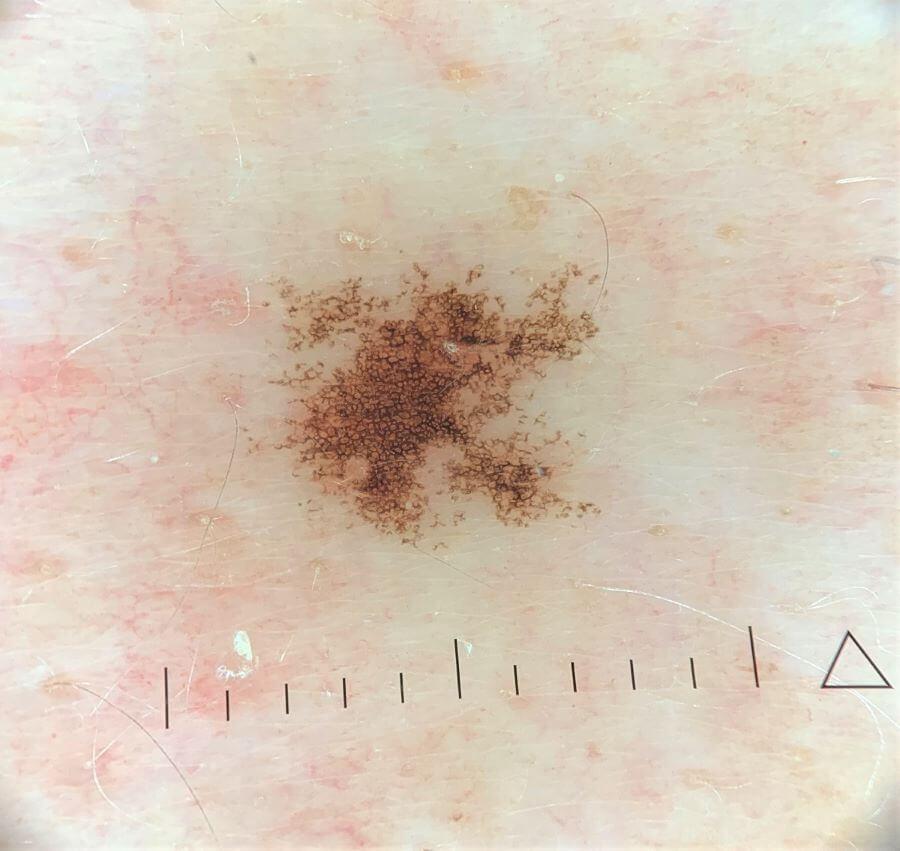
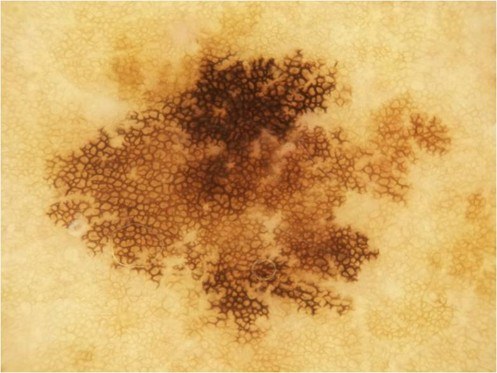
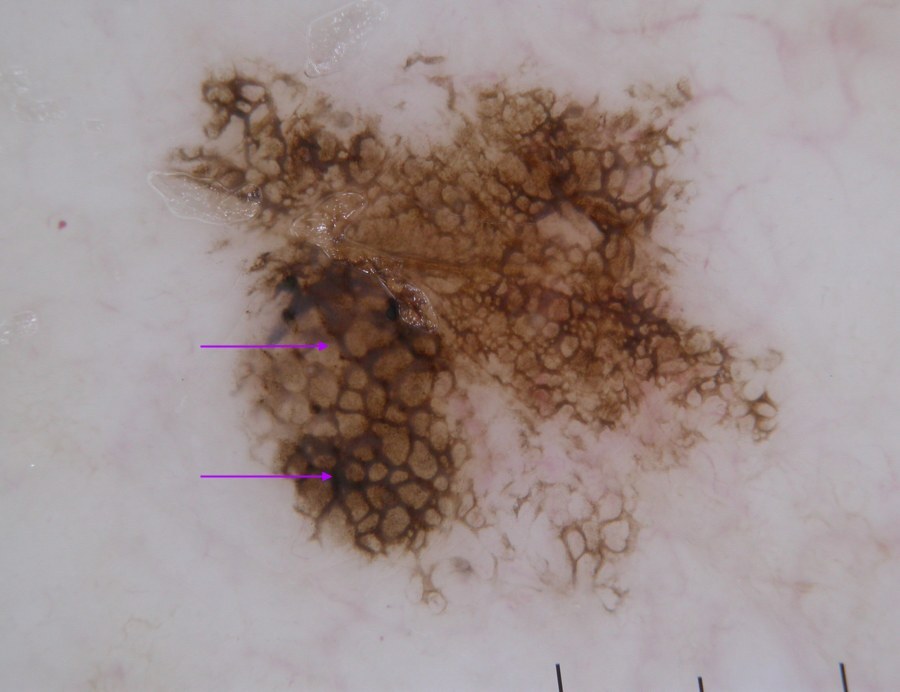
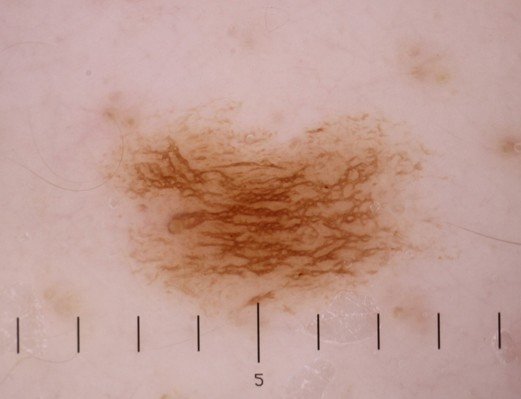
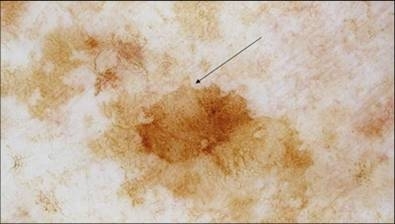
- Dermoscopic features - a symmetrical pattern with a typical pigment network that tends to end abruptly at the periphery, which is in contrast to many acquired melanocytic naevi where the pigment tends to fade towards the edge
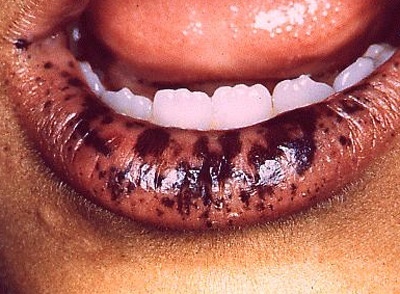
There are a number of rare conditions in which lentigines are associated with systemic pathology. Two such examples are:
- Peutz-Jeghers Syndrome - lesions on lips, buccal mucosa, fingers and toes, in association with intestinal polyps
- Multiple Lentigines Syndrome (syn. LEOPARD syndrome) - this rare disorder is characterised by large numbers of lesions, first starting at birth / early childhood, and is associated with cardiomyopathy, growth retardation, and ocular disorders
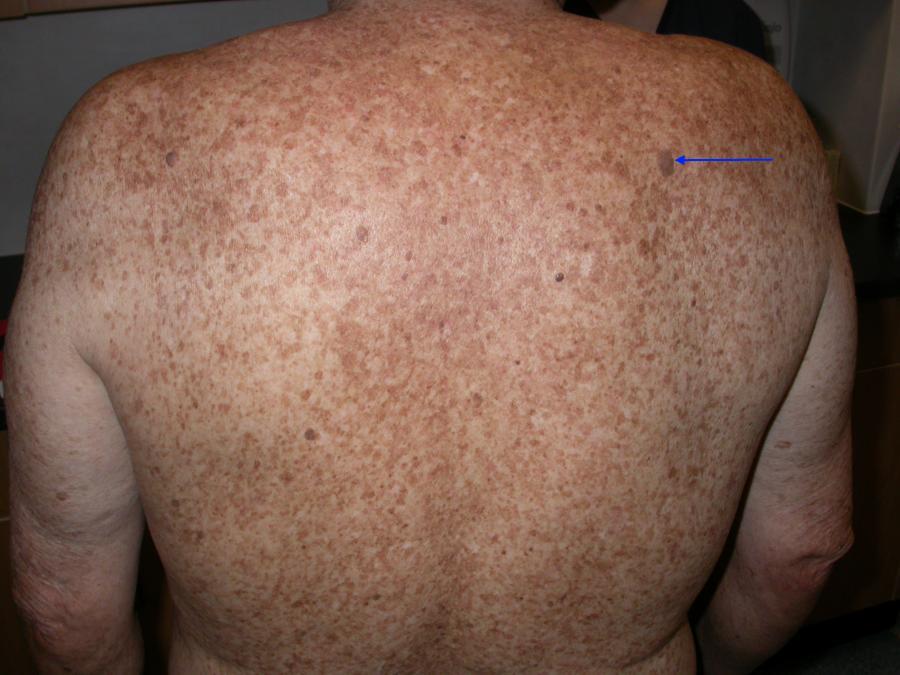
Ink-spot lentigo
- Distribution - the upper trunk is the most common site
- Morphology - a small (often < 5 mm), dense, black macule. The edge may be irregular. There is often background UV-damaged skin
- Dermoscopic features - although the pigment network is thickened, it is monomorphic, ie looks the same throughout the lesion
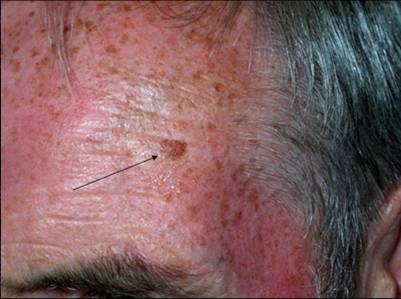
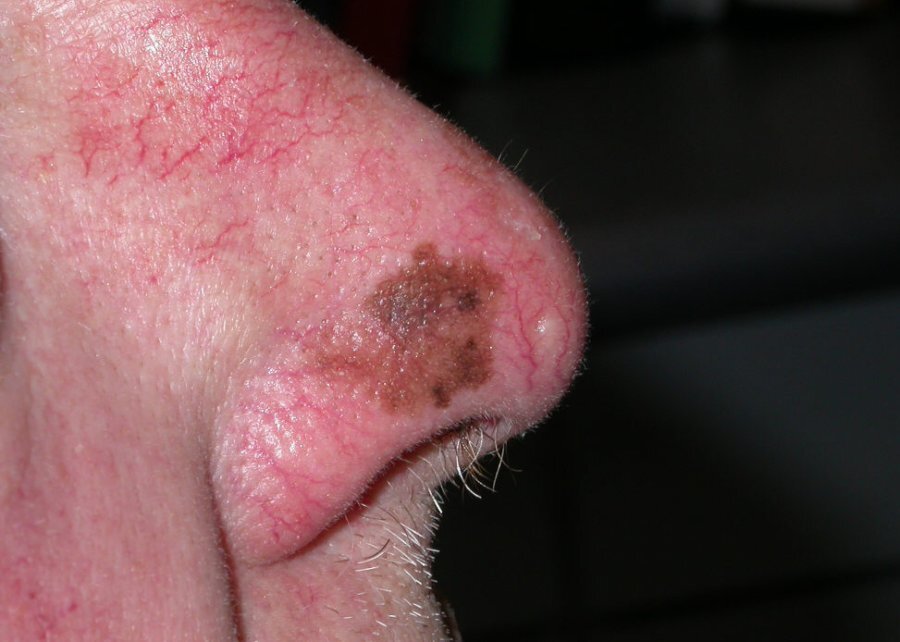
Solar lentigo
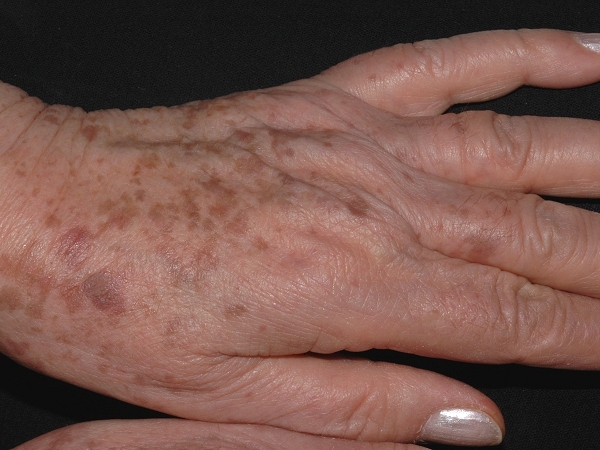
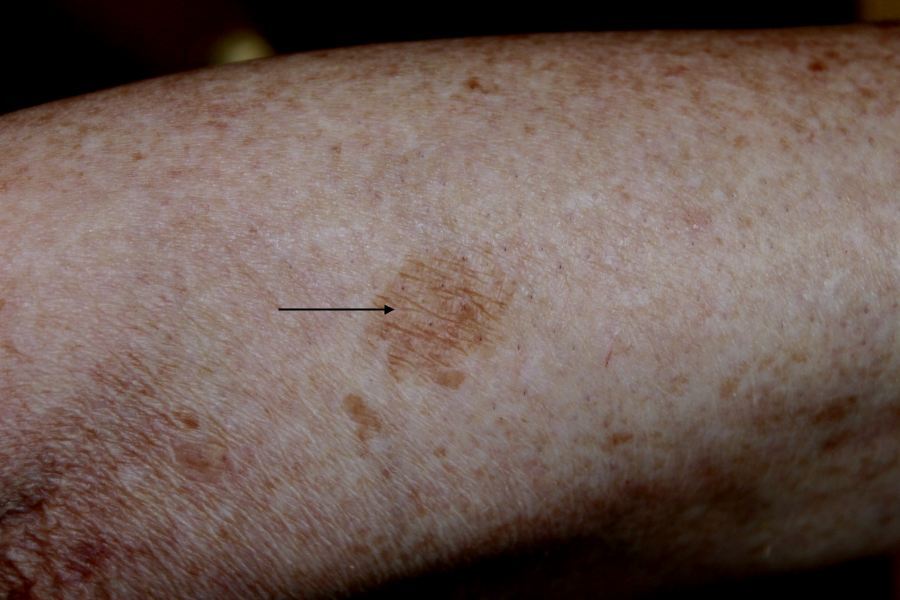
- Commonly known as age spots or liver spots; often multiple
- Distribution - sun-induced lesions; most prominent on the face, forearms, and dorsal aspects of the hands
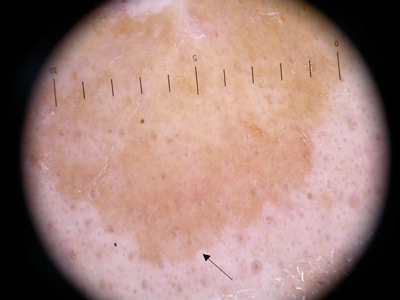
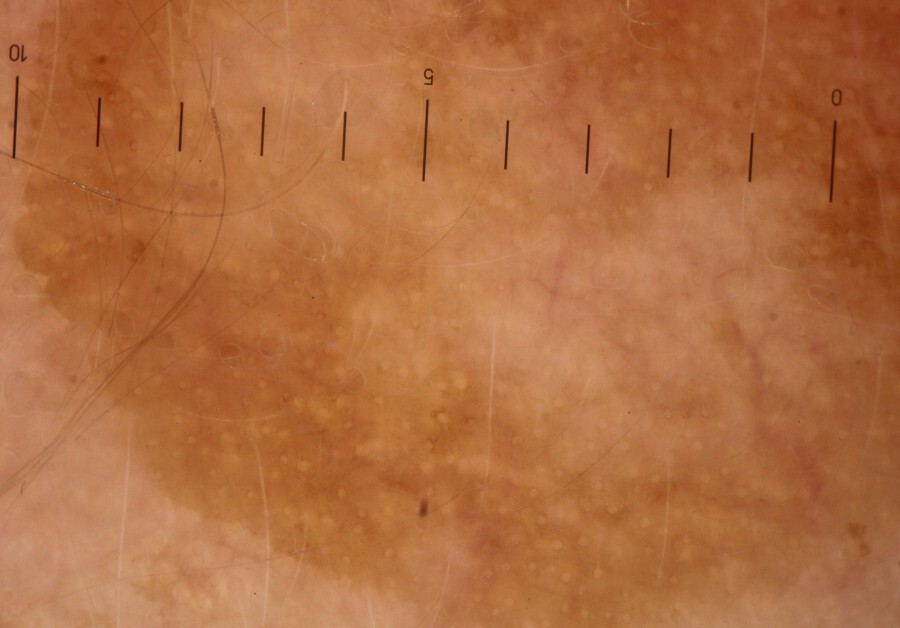
- Morphology - flat, uniformly brown and can be quite large
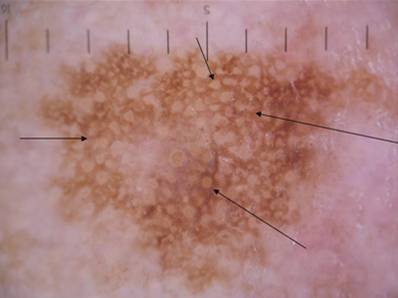
- Dermoscopic features depends on the site:
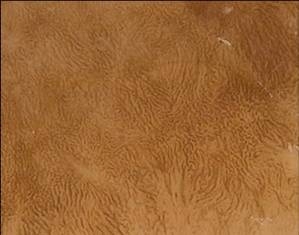
- Trunk and limbs - lesions tend to have a sharply demarcated, 'moth-eaten' border and may have a parallel lines, sometimes curved, with a 'fingerprint' pattern
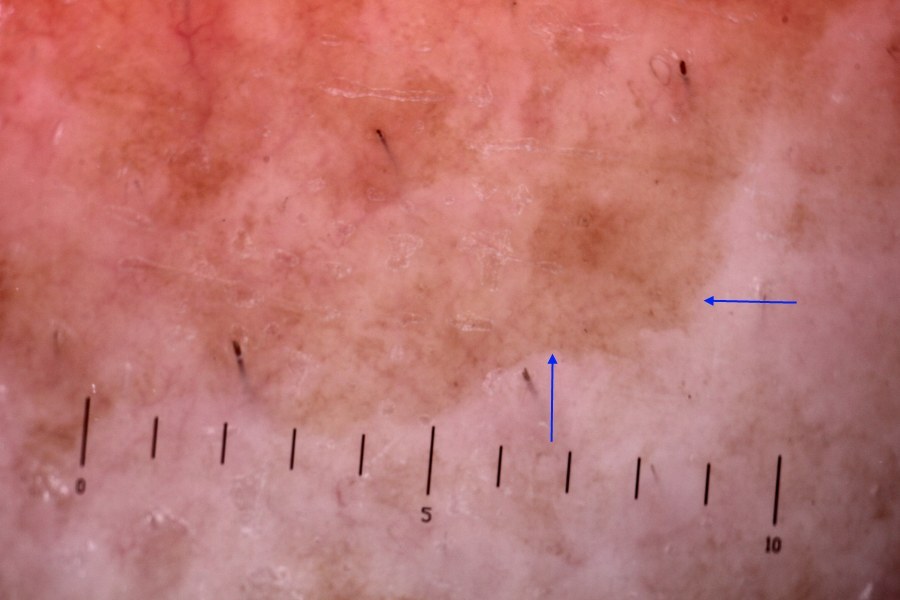
- Face - lesions have white circles on a yellow-brown background (sometimes referred to as a pseudonetwork). Lesions can also have a sharply demarcated border. Dermoscopy of flat facial pigmented lesions can be difficult, for more information refer to the related chapter Melanoma: lentigo maligna melanoma (including lentigo maligna)
Clinical Images
Please refer to notes on image rights at bottom of the page with regards to individual image
ownership.
1
2
3
4
5
6
7
8
9
10
11
12
13
14
15
16
17
18
19
20
21
22
23
24
25
Management
- Most lentigines are relatively straightforward to diagnose; however, the dermoscopic examination of pigmented lesions, especially on the face, requires considerable experience. Additionally, biopsy of lentigo maligna may occasionally miss the diagnosis. Accordingly, any lesion found to be suspicious of melanoma (or lentigo maligna) should be referred to Secondary Care on an Urgent Skin Cancer pathway
Disclaimer - the author PCDS cannot accept responsibility for any misleading or incorrect statements, and the management of individual patients remains the direct responsibility of the individual doctor. We do however hope that visitors to this site can contact us regarding comments that are considered misleading or incorrect so that we can continue to improve the site.
Image Rights - The PCDS would like to thank Dermatoweb, DermQuest (Galderma), and others who have contributed images. All named individuals and organisations maintain copyright for the relevant images.