Lichen planus - follicular lichen planus
LAST UPDATED: May 12, 2024
Introduction
Initially described by Pringle in 1895, lichen planopilaris (LPP) is a cutaneous disorder selectively involving hair follicles with a lymphocytic inflammatory process that eventually destroys the follicles leading to expanding areas of scarring alopecia (cicatricial alopecia). Together with frontal fibrosing alopecia (FFA) and the Lassueur Graham-Little Piccardi syndrome, lichen planopilaris is a form of follicular lichen planus.
This chapter is set out as follows:
Aetiology
-
The cause is unknown
-
Only about 25% of patients will have signs of lichen planus elsewhere
History
-
Follicular lichen planus (LP) is more common in women (60 to 90% of cases) than in men
-
The age of onset of follicular LP is frequently between 40 and 60 years
Clinical findings
Lichen planopilaris
-
Distribution
-
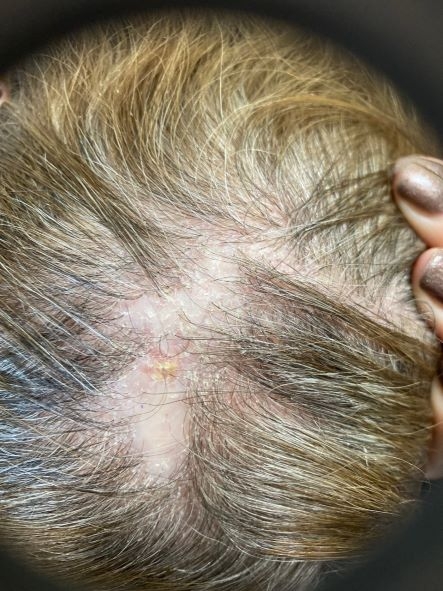
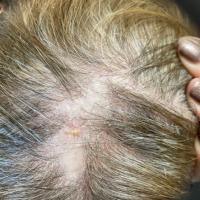
Commonly involves the vertex, but any region of the scalp can be affected
-
Morphology
-
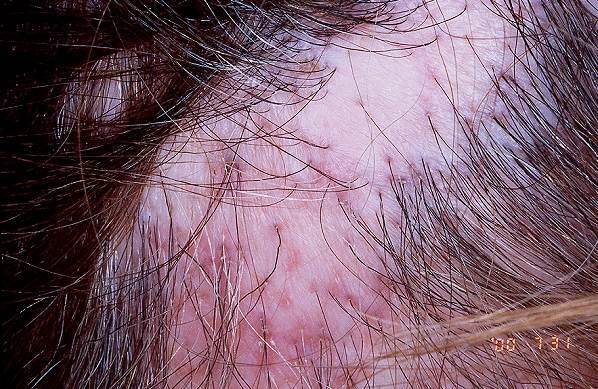
Lesions can be single, multiple or diffuse, circular to oval shaped or have finger-like projections
-
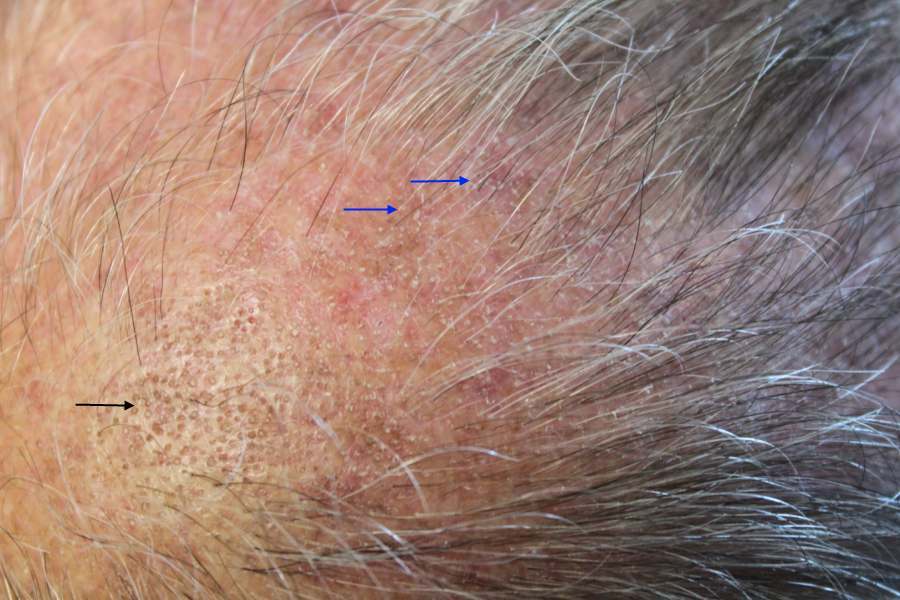
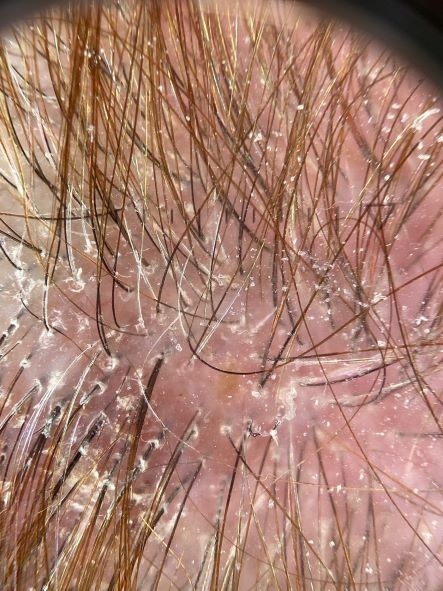
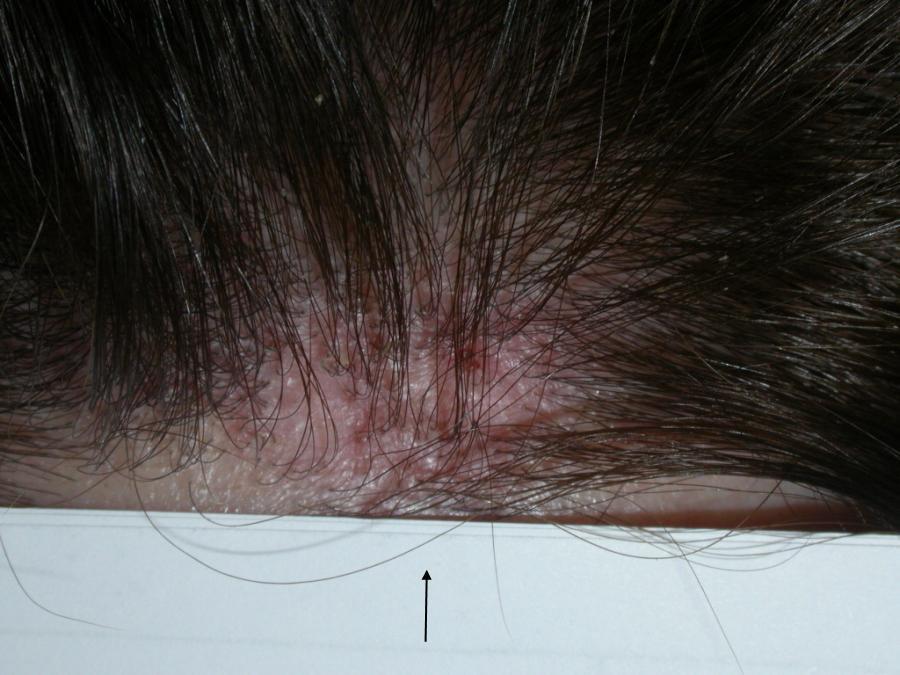
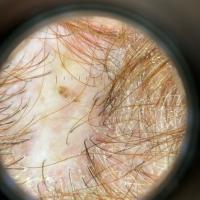
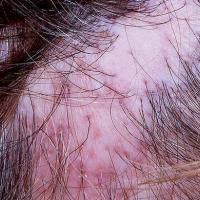
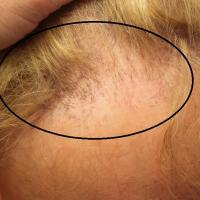
The early classically complete lesions are characterised by a follicular violaceous erythema and keratotic plugs, which are commonly located at the periphery of expanding areas of alopecia. Some hair affected by the inflammation process can persist in the centre of the bald area
-
Perifollicular inflammation or scaling can be very discreet in some cases, which makes the diagnosis more difficult
-
As with other cases of scarring alopecia tufted hairs may be seen
-
A positive pull test of anagen hairs is commonly present at the margin of alopecia, indicating the disease activity
-
After inflammation and hair shedding, atrophic scarring of areas without follicular units replaces all the other lesions
-
Typical papules of lichen planus are not observed on the scalp
-
Differentiation from discoid lupus erythematosus (DLE) of the scalp can sometimes be difficult. In DLE, inflammation is not restricted to surrounding hairs, and the affected skin can become telangiectatic. Although follicular LP and DLE can be seen in the same patient, this is very rare
-
Dermoscopic findings
-
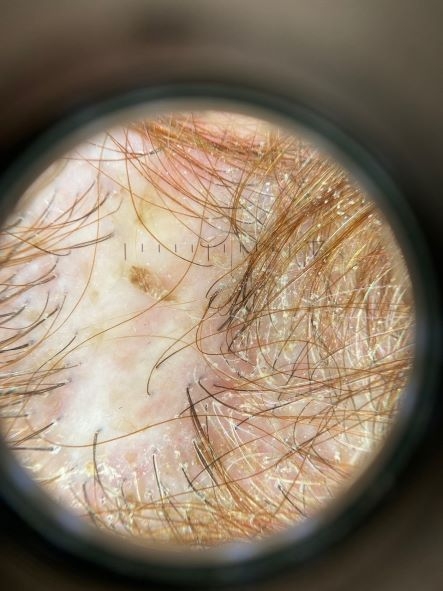
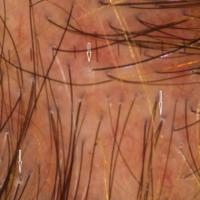
In the centre of the bald areas there is a lack follicular orifices
-
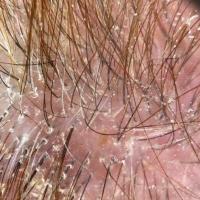
On the margin, the pink / red translucent inflammation is clearly perifollicular, with keratin scale surrounding and extending along the proximal part of the hair shafts
Frontal fibrosing alopecia (FFA)
-
Initially described in post-menopausal women, this particular entity can infrequently appear in premenopausal women and more rarely in men
-
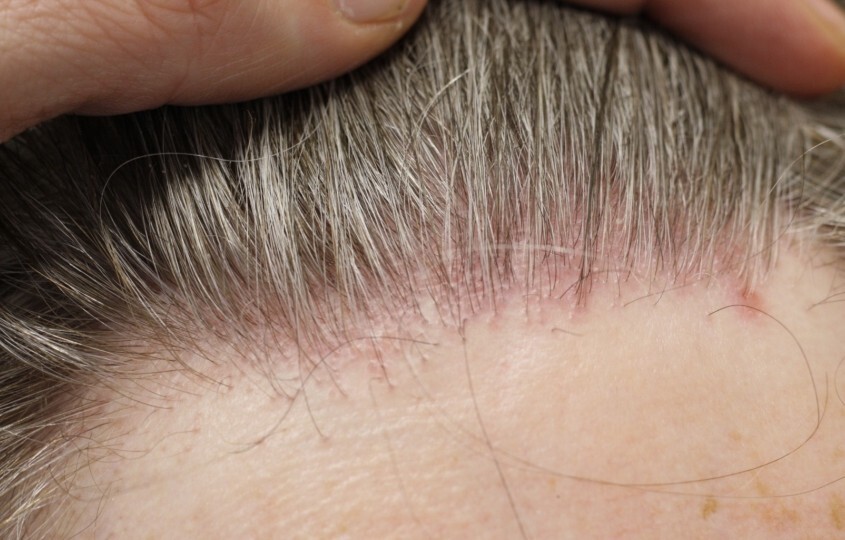
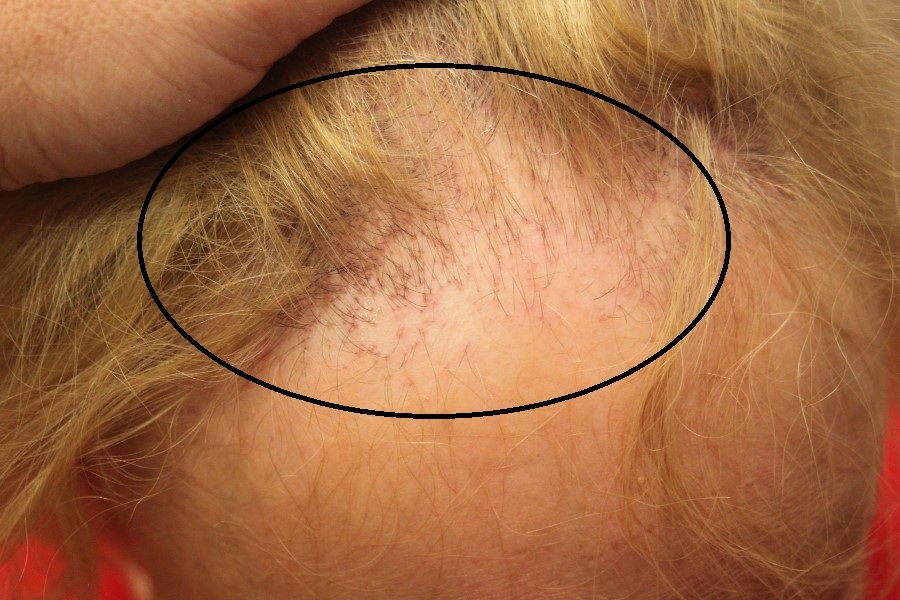
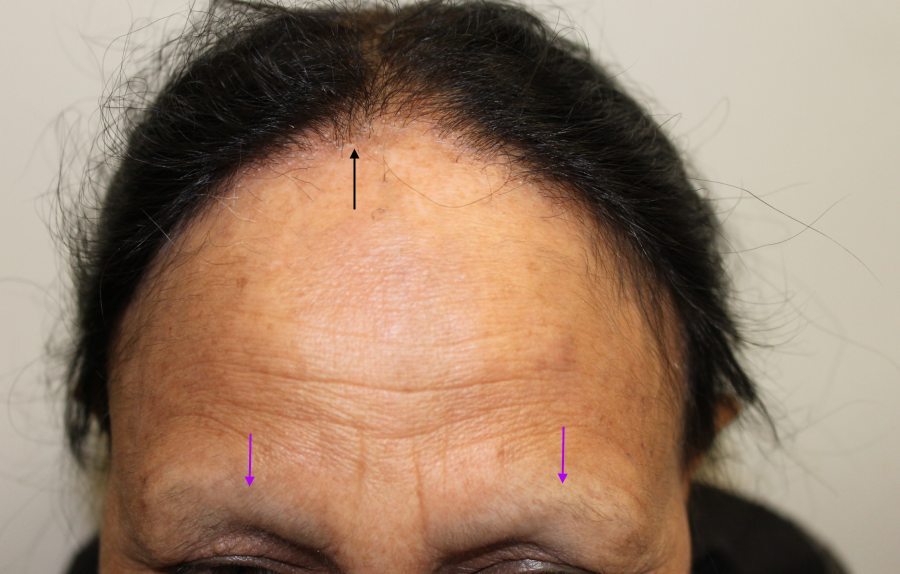
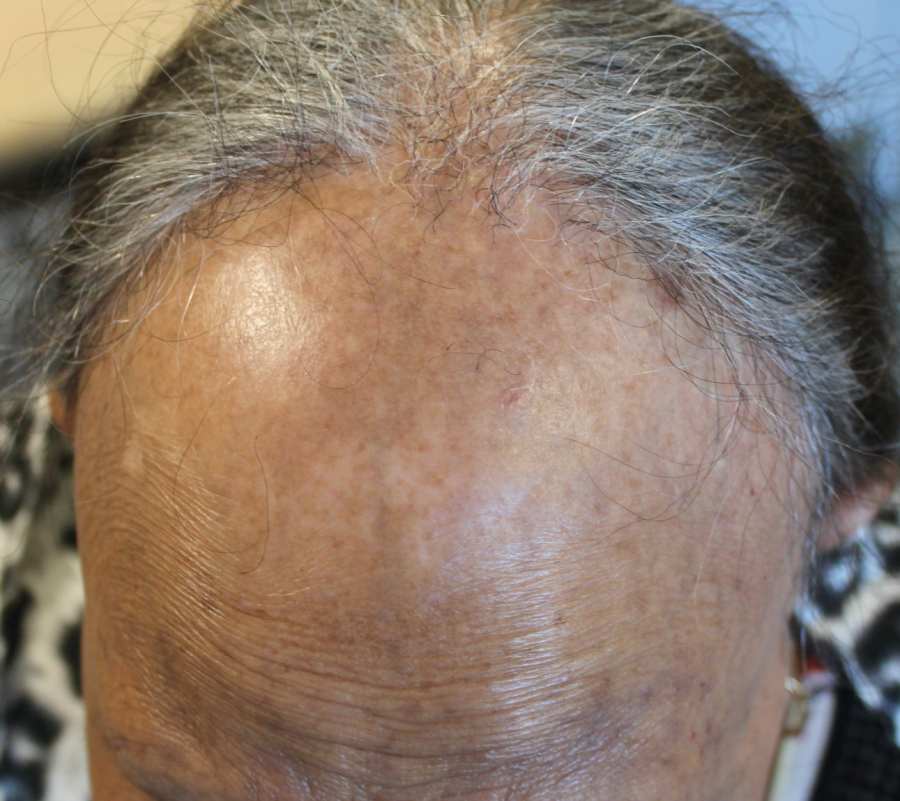
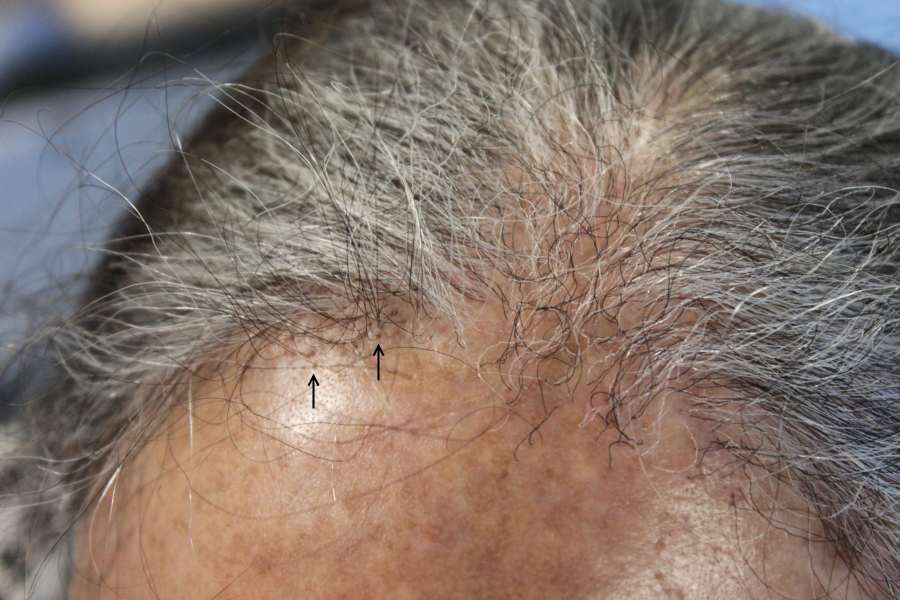
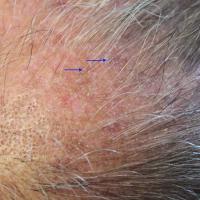
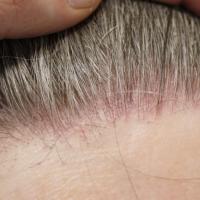
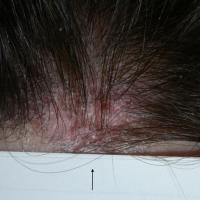
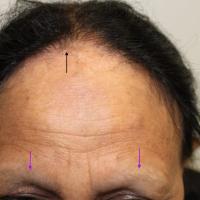
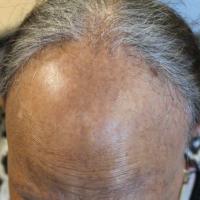
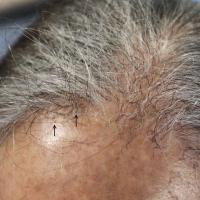
FFA presents as a progressive symmetric band-like alopecia, affecting the frontal hair line, the preauricular scalp and, less commonly and distinctively, the retroauricular areas
-
''Orphaned'' hairs ie isolated hairs, may remain in areas of hair loss
-
The eyebrows are often affected and this may occur before the frontal scalp. Clinical inflammation is not observed in the eyebrows. The other vellus or terminal hair of the face can be involved, including the eyelashes. Hair loss can also affect the body
-
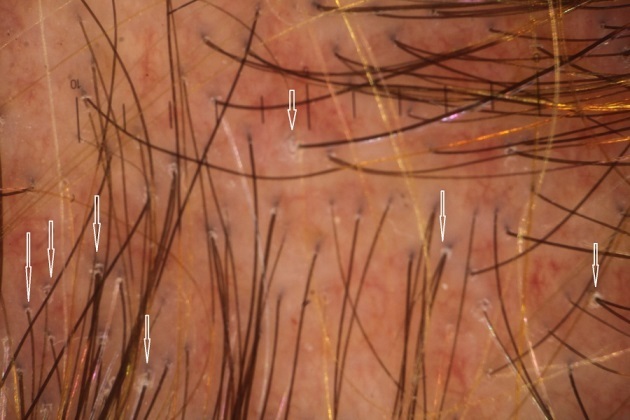
Dermoscopic features - clearly perifollicular, with keratin scale surrounding and extending along the proximal part of the hair shafts. Erythema often mild or absent
-
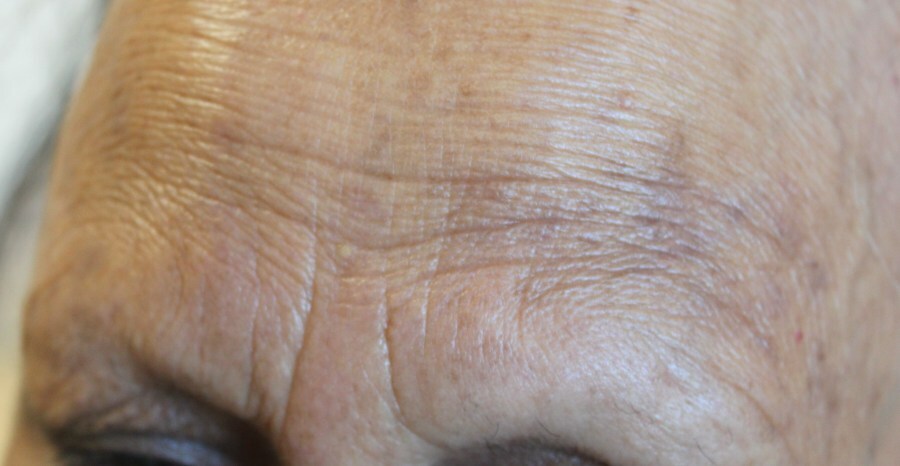
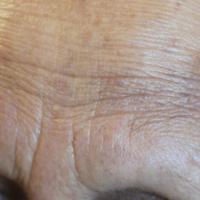
Additional clinical features - atrophy of affected sites with prominent forehead veins, facial papules
-
Progression, for the majority, is relatively slow
Lassueur Graham-Little Piccardi syndrome
-
This syndrome consists of scarring patchy alopecia of the scalp, non-scarring axillary and pubic hair loss, and a lichenoid follicular eruption
-
Most of the patients described are women ages 30 to 60 years
-
The three problems may appear simultaneously but scalp alopecia often precedes the follicular eruption of horny papules (even years before)
Clinical Images
Please refer to notes on image rights at bottom of the page with regards to individual image
ownership.
1
2
3
4
5
6
7
8
9
10
11
12
13
Management
Lichen planopilaris
General measures
- Provide a patient information leaflet
- Although LPP often burns itself out within 2-3 years, treatment should be initiated early because, as with other cause of scarring alopecia, hair loss is irreversible
Treatment
- Potent / super-potent topical steroids
- Dermovate ® scalp application applied daily
- Intralesional injections of triamcinolone acetonide can be used as an additional treatment in areas of local and severe inflammation
- Second-line treatments
- If patients are showing signs of progressive hair loss they should be referred early to a dermatologist and started on a tetracycline antibiotic, which have anti-inflammatory effects. Often higher doses are needed, eg Lymecycline ® 408 mg BD or doxycycline 100 mg BD
- The main treatments considered in Secondary Care include hydroxychloroquine and sometimes Pioglitazone. Other possible treatments include methotrexate, ciclosporin and other immunosuppressive therapy, systemic steroids, isotretinoin, and low dose naltrexone
- Monitoring
- In addition to serial photography, the amount of scale can be a good guide to treatment success. A reduction/absence of scale suggests treatment is helping. Erythema is not a good guide of activity, not least because steroids and UV exposure can give an erythematous appearance
Frontal fibrosing alopecia (FFA)
General measures
Treatment
While there is limited data showing treatment efficacy, some treatments in individual patients may slow down the rate of hair loss and if treated early may cause some regrowth.
- Many treatments have been tried including potent/super-potent topical steroids, intralesional steroids (one of the most commonly used treatments in Secondary Care), topical calcineurin inhibitors, doxycycline, hydroxychloroquine, 5-alpha-reductase inhibitors, and immunosuppressive therapy
- A recent literature review has found the most effective combination therapy to be Dutasteride 0.5 mg once a day for 5-7 days a week (see notes below), with topical 5% Minoxidil OD for 5 days a week (not available on the NHS), and Pimecrolimus cream OD for 2 days a week (alternatives include tacrolimus 0.1% ointment, and a potent/super-potent topical steroid). Treatment is generally given for 6-12 months to look for response, in those patients who respond (reduced rate of hair loss and/or evidence of regrowth) then discussion is needed in terms of whether or not to continue oral treatment
- In terms of the use of 5-alpha-reductase inhibitors (Dutasteride and Finasteride) in female patients, these are teratogenic, causing abnormalities of the external genitalia of a male foetus; as such they are predominantly used in post-menopausal women. Pre-menopausal women need to be counselled about the risks and use appropriate contraception. Adverse effects include loss of libido, depression, nausea, and hot flushes. There is a theoretical association with breast cancer; although no formal link has been established, long-term safety data is lacking and as such it is recommended to avoid 5-alpha-reductase inhibitors in those with a family history of breast cancer affecting a first degree relative
- Monitoring - treatment outcomes can be assessed by both serial photography and measurements between the eyebrows and various point along the hairline (ignoring orphaned hairs). If there is a suggestion that treatment slows down the rate of hair loss then it can be continued
Disclaimer - the author PCDS cannot accept responsibility for any misleading or incorrect statements, and the management of individual patients remains the direct responsibility of the individual doctor. We do however hope that visitors to this site can contact us regarding comments that are considered misleading or incorrect so that we can continue to improve the site.
Image Rights - The PCDS would like to thank Dermatoweb, DermQuest (Galderma), and others who have contributed images. All named individuals and organisations maintain copyright for the relevant images.