Perioral dermatitis / periocular dermatitis (syn. periorifacial dermatitis)
LAST UPDATED: Dec 17, 2023
Introduction
Perioral dermatitis is an erythematous eruption of small papules and papulopustules with a distribution primarily around the mouth. It can also affect the skin around the eyes (periocular dermatitis). It is a poorly named condition as it is not a dermatitis.
This chapter is set out as follows:
Aetiology
-
Although the exact cause of perioral dermatitis is not understood, the use of topical steroid therapy either directly or indirectly (eg the area has been touched by fingers that are treating another part of the body with steroid creams) is, for many, an important aetiological factor
-
The rash may also be induced by cosmetics, moisturisers and sunscreens
History
-
The condition predominates in younger women
-
It can be itchy or sore
Clinical findings
Distribution
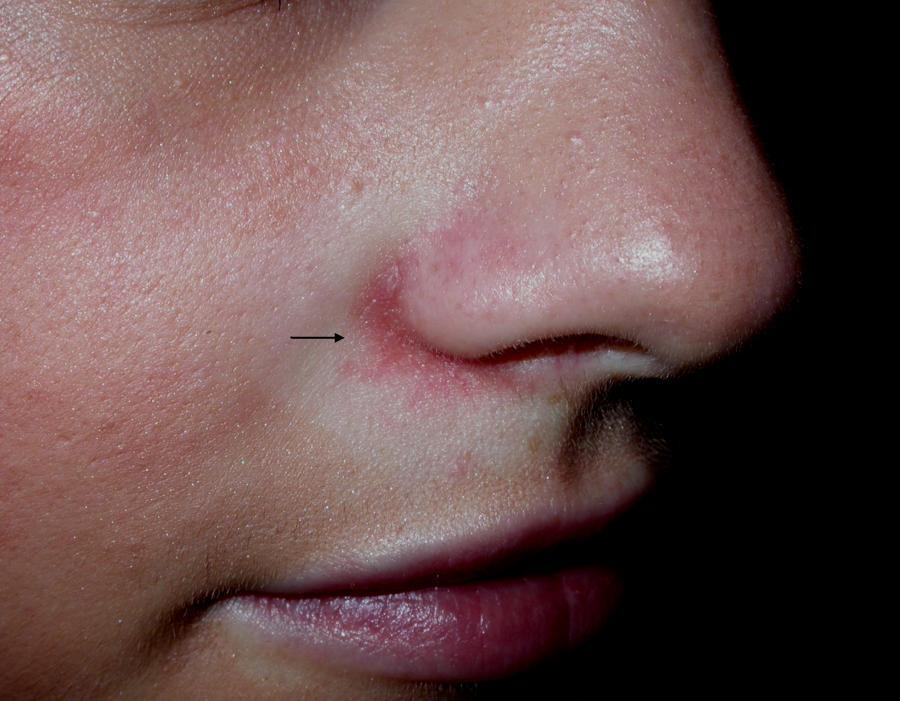
- Nasolabial erythema can be the first sign
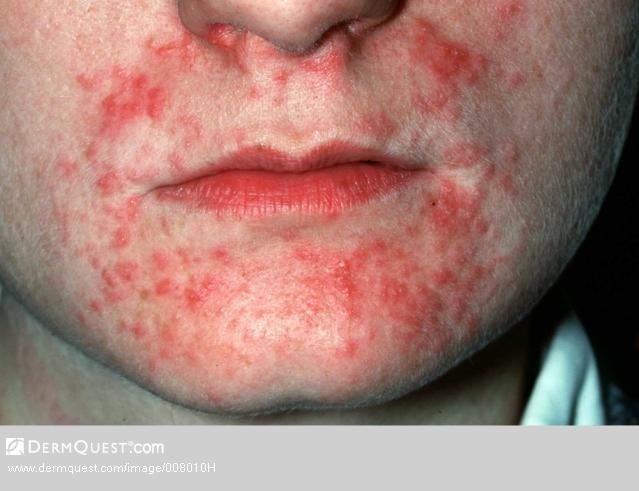
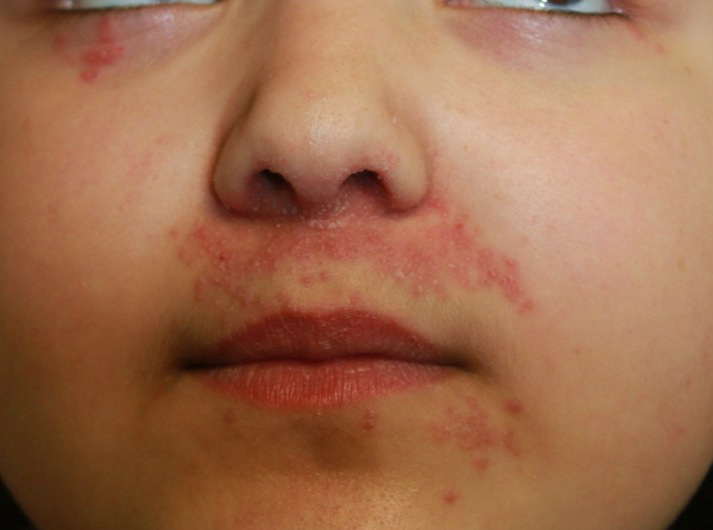
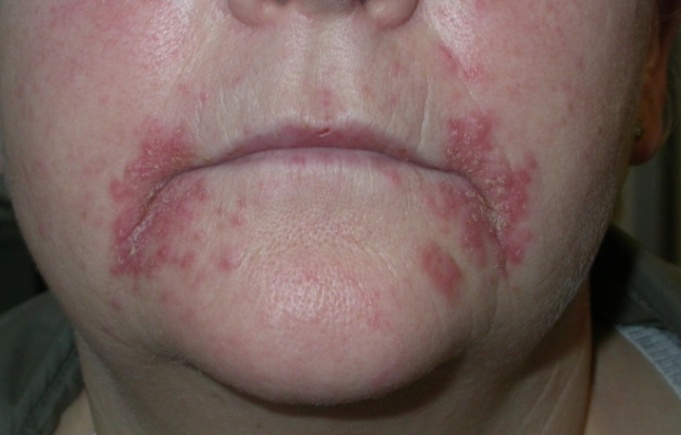
- Perioral skin (with relative sparing of the lip margins) ie perioral dermatitis
- Periocular skin involvement ie periocular dermatitis is less common
Morphology
- Monomorphic small papules and pustules
-
Erythema
-
Occasional scaling
-
Unlike rosacea, facial flushing and telangiectasia are not features of perioral dermatitis
Clinical Images
Please refer to notes on image rights at bottom of the page with regards to individual image
ownership.
Management
-
Take care if using topical steroids at a site distant to the face eg if being used to treat eczema. Make sure hands are washed after application so that the steroid is not transferred on to the face
-
Discontinue any topical steroids being used on the face, or other facial creams that may be causing the symptoms. Warn patients that after withdrawal of the steroid cream the symptoms are likely to get worse for a few days before starting to improve. This flare can be avoided by advising the patient to reduce the frequency of topical steroid application over 1-2 weeks before stopping
- Treatment
-
Milder cases - a topical antibiotic eg clindamycin or erythromycin
-
Other patients - a systemic tetracycline antibiotic for 6 weeks (lymecycline 408 mg OD or doxycycline 100 mg OD). If a tetracycline is contraindicated then treat with clarithromycin / erythromycin for the same period
-
Recurrent symptoms can be managed in the same way
Disclaimer - the author PCDS cannot accept responsibility for any misleading or incorrect statements, and the management of individual patients remains the direct responsibility of the individual doctor. We do however hope that visitors to this site can contact us regarding comments that are considered misleading or incorrect so that we can continue to improve the site.
Image Rights - The PCDS would like to thank Dermatoweb, DermQuest (Galderma), and others who have contributed images. All named individuals and organisations maintain copyright for the relevant images.