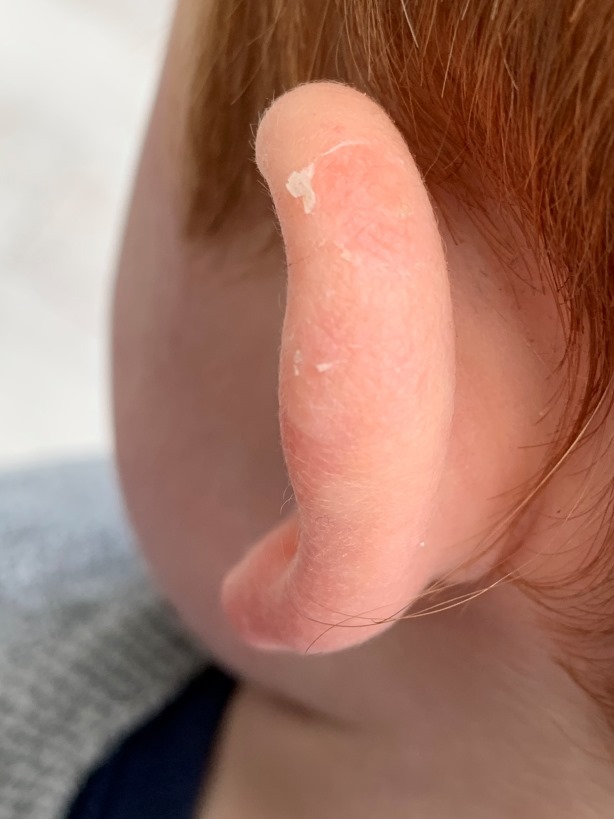
Polymorphic light eruption & juvenile spring eruption
LAST UPDATED: May 28, 2022
Introduction
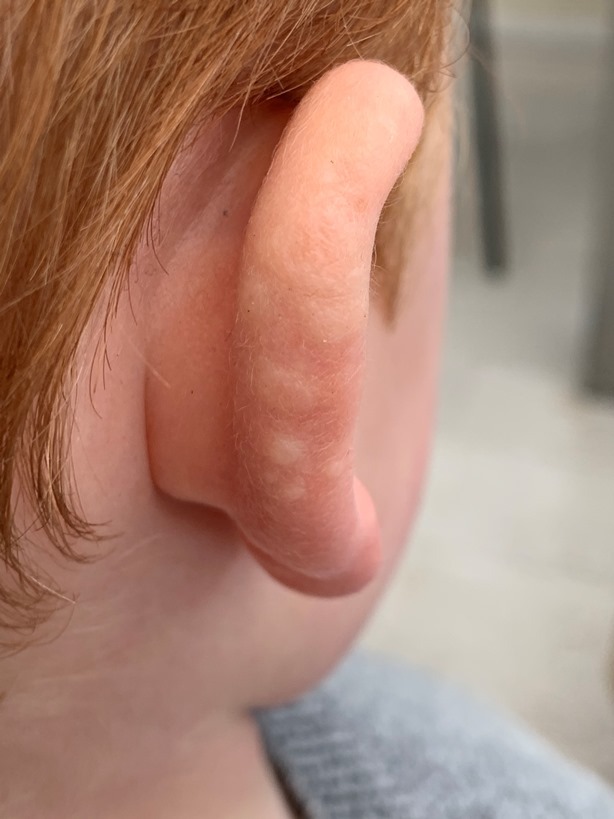
Polymorphic light eruption (PLE) is the most common of the photodermatoses, mainly occuring in young adult women in temperate climates during spring and summer. Juvenile spring eruption is a variant of PLE, affecting only the ears.
This chapter is set out as follows:
Aetiology
-
Unknown
-
UVA is more of a trigger then UVB
History
- Can affect any age but is more common in teenagers and young adults. Juvenile spring eruption affects mainly boys aged 5-14 years. Both are often moderately itchy
- Chronology with UV exposure
- The delay after exposure before onset is usually 6-24 hours
- Some, particularly those who only have a significant problem during sunny holidays, describe a ‘priming phenomenon’ - the need for 2 or 3 days of initial exposure before PLE occurs
- There is, however, an early‐onset PLE variant, with onset as soon as 30 minutes after first exposure, which may cause diagnostic confusion with solar urticaria
- Symptoms usually settle within a week
Clinical findings
Polymorphic light eruption
-
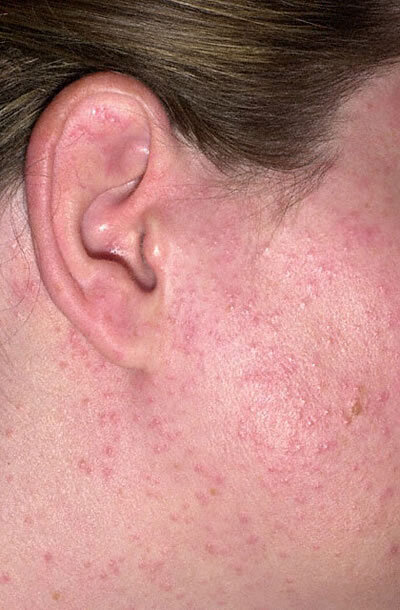
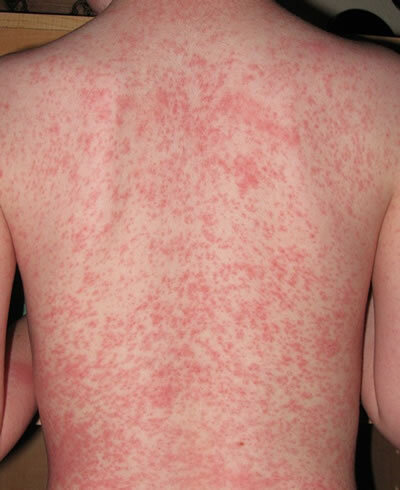
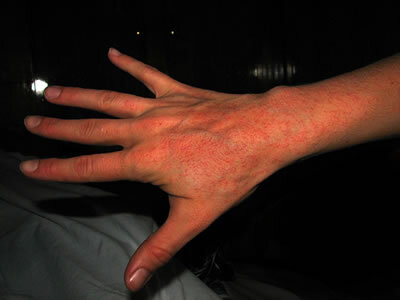
Distribution - UV-exposed areas of skin, although less-exposed sites can also be affected (through clothing), and sparing of the face and dorsal hands is quite common, presumably due to tolerance induced by repeated perennial UV exposure
- Morphology - ill-defined papules, occasionally vesicular
-
Background skin usually normal
-
In severe cases symptoms may be much more easily provoked and cause a burning sensation. Affected areas can be red and oedematous. Such patients may even be affected by light coming through glass
Juvenile spring eruption
-
Tiny blisters arise on the rim of the ears causing itch / discomfort
Clinical Images
Please refer to notes on image rights at bottom of the page with regards to individual image
ownership.
Investigations
-
In florid cases rule out lupus by checking bloods for ANA and ENA levels (particularly Ro and La autoantibodies). ENA levels can be positive even if the ANA screen is negative (many labs will not check ENA levels if the ANA screen is negative, unless it is stated on the request form that lupus erythematosus is a possible diagnosis)
Management
Step 1: general measures
-
Provide patient information leaflets on PLE and UV protection
-
For more information on sunscreen, including the Dundee formulation, refer to the related chapter Photodermatoses: an overview
-
Topical treatments - calamine and emollients may help keep the skin cool
-
Sedating anti-histamines, used periodically, may help at night
Step 2: UV exposure
-
Careful and graduated light exposure in spring may help patients become tolerant over the summer
Step 3: holidays
-
For moderate cases consider prednisolone tablets, 20-30 mg OD for five days starting the day before holiday (if away for two weeks give an extra five days supply to use if needed)
- For milder cases the use of a potent to super-potent topical steroid applied once a day for the same duration as above may suffice
Step 4: referral to dermatology in Secondary Care
- More severe cases who cannot manage despite of the above measures
- In cases of diagnostic uncertainty phototesting may be required
- First-line treatment in Secondary Care is graduated phototherapy commenced in early Spring, approximately 12-16 exposures can provide four months of tolerance. Narrow‐band (TL‐01) UVB is as effective as PUVA
- Long‐term immunosuppressive drugs, such as azathioprine and ciclosporin, have been used for refractory cases
Disclaimer - the author PCDS cannot accept responsibility for any misleading or incorrect statements, and the management of individual patients remains the direct responsibility of the individual doctor. We do however hope that visitors to this site can contact us regarding comments that are considered misleading or incorrect so that we can continue to improve the site.
Image Rights - The PCDS would like to thank Dermatoweb, DermQuest (Galderma), and others who have contributed images. All named individuals and organisations maintain copyright for the relevant images.