Photodermatoses: an overview
LAST UPDATED: Sept 03, 2023
Introduction
Photosensitivity refers to a wide range of skin conditions associated with an abnormal reaction to UV (ultraviolet) radiation. Photosensitivity can be broadly split into two groups:
-
Photodermatoses - these only happen as a result of light. Most are immunologically mediated except those related to chemicals (drugs, porphyria) and DNA repair (xeroderma pigmentosum)
-
Photoaggravated dermatoses - these are pre-existing skin conditions that can be made worse with light, eg lupus erythematosus and rosacea
This chapter provides an introduction to the photodermatoses and is set out as below, more detail about the individual photodermatoses can be found in the relevant chapters.
Refer to the chapter Photoaggravated dermatoses for more information on this group of conditions.
Aetiology
The photodermatoses can be divided by their aetiology as follows:
-
Idiopathic
-
Polymorphic light eruption (PLE) and juvenile spring eruption
-
Chronic actinic dermatitis
-
Actinic prurigo
-
Solar urticaria
-
Hydroa vacciniforme
-
Drug/chemical induced
-
Systemic medications
-
Phytophotodermatitis (contact with plant psoralens)
-
Occasionally topical drugs or chemicals (eg sunscreen), which may cause a photocontact allergic reactions
History
-
Age and sex - genodermatoses such as xeroderma pigmentosum are usually apparent in childhood, polymorphic light eruption (PLE) usually has an onset in later childhood and is more commonly seen in woman, chronic actinic dermatitis is mainly a disorder of older men
-
Timing of the eruption in relation to sun exposure / use of sunscreen - solar urticaria occurs within minutes, PLE many hours. Patients with chronic actinic dermatitis or porphyria cutanea tarda may not be aware that their symptoms are worse in the sun. Symptoms made worse after application of sunscreen suggest a photocontact allergic dermatitis to the sunscreen
-
Timing of the eruption in relation to season - PLE is typically prominent in the Spring and improves later in the Summer
-
Itch or pain - most photosensitive rashes cause itch. A burning pain is typical for erythropoieitc protoporphyria
-
Window glass - most glass only blocks UVB, whereas laminated windows (eg in some front car windscreens) also protect against UVA
-
Medications - ask about all prescribed and OTC drugs, systemic and topical. Always enquire about quinine
-
Family history - important for the porphyrias
Clinical findings
General features
-
Distribution
-
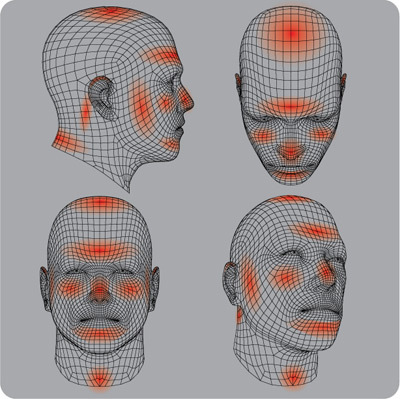
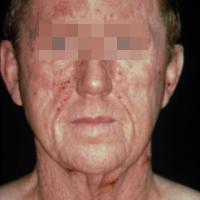
Photosensitive dermatoses mainly (but not exclusively) affect the UV-exposed areas of the skin
-
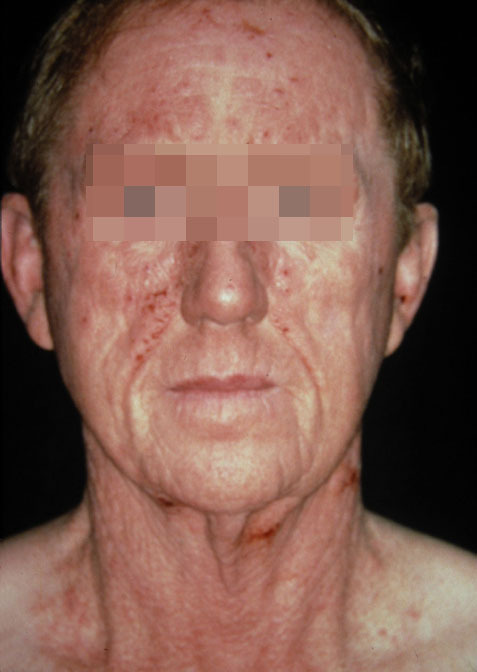
The classical presentation of several of the photodermatoses (eg drug-induced, chronic actinic dermatitis) is that there will be relative sparing of shaded areas of the face (lower eyelids, beneath the nose, behind the ears and under the chin) in comparison with airborne contact allergic dermatitis, which is not a photosensitive disorder and does not usually spare UV-protected areas. However, the diagnosis is not always clear cut as patients with more severe / chronic forms of photosensitive dermatoses may not have sparing of UV-protected areas of the face
-
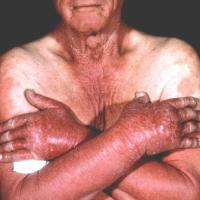
Involvement of the dorsal aspects of the hands is more patchy
-
Morphology
-
Scale - if the rash heals with scaling it is more likely to represent an eczematous eruption (eg drug-induced or chronic actinic dermatitis) as opposed to PLE or solar urticaria
Individual conditions
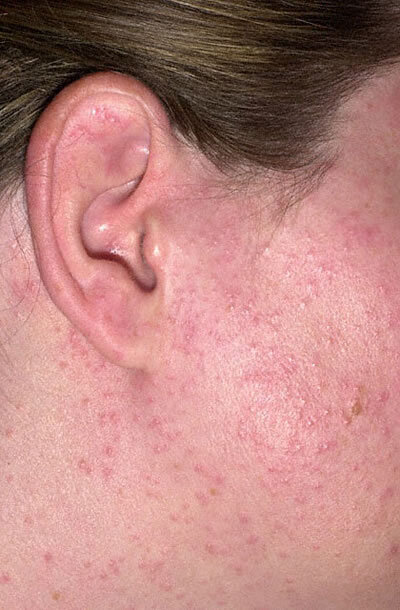
Polymorphic light eruption (syn. prickly heat)
- Symptoms commonly develop 24 hours after UV exposure but can occur anywhere between two hours and five days after
- Moderate itch
- Affects exposed areas of skin, although less-exposed sites can also be affected
- Ill-defined papules, occasionally vesicles
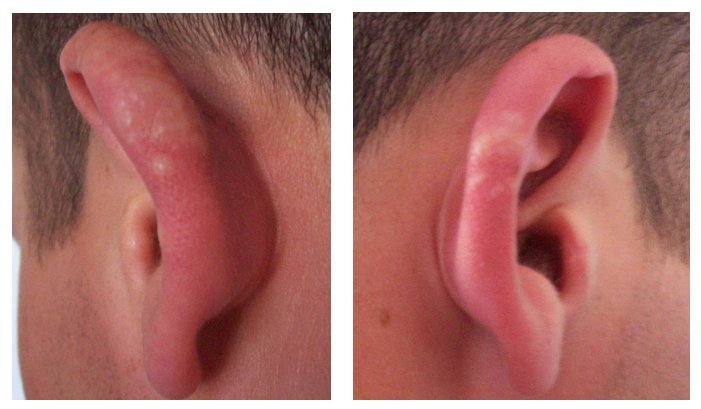
- A specific variant, juvenile spring eruption, affects only the ears
- Refer to the chapter Polymorphic light eruption
Photodermatoses – drug / chemical induced
- The length of time between when the drug is first taken to the development of the rash is very variable. Symptoms can come on within weeks, although sometimes it can take years, eg quinine
- Predominantly UV-exposed sites. There should be sparing of the UV-protected areas of the face, if not consider a contact allergic dermatitis to airborne pollens with symptoms worse in Spring
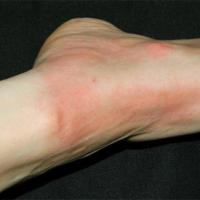
- Multiple presentations, most commonly a painful or eczematous eruption.
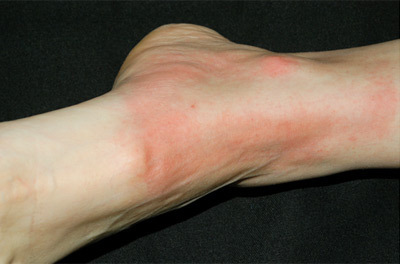
- A localised bullous reaction occurs in phytophotodermatits - a reaction with naturally occurring plant psoralens
- Refer to the chapter Photodermatoses – drug / chemical induced
Chronic actinic dermatitis
- Mainly found in older men but can occur in younger atopic patients
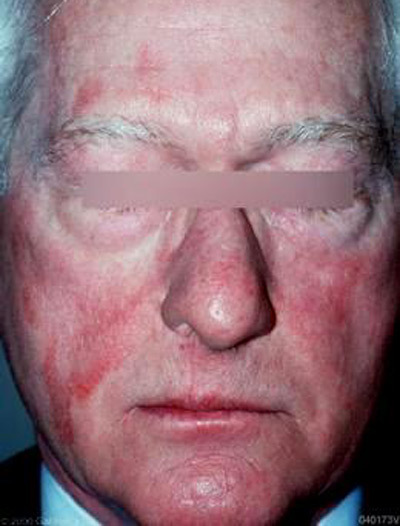
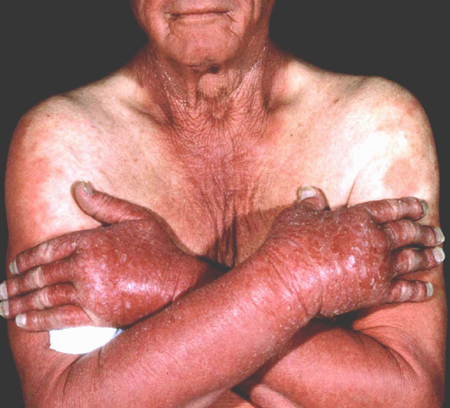
- An eczematous eruption on UV-exposed skin. Should be sparing of the UV-protected areas of the face, if not consider a contact allergic dermatitis to airborne pollens with symptoms worse in Spring
- Can developed lichenified patches
- Refer to the chapter Chronic actinic dermatitis
Solar urticaria
- Itch, burning sensation, erythema and wheals typically occur within seconds to minutes of UV-exposure, resolving within 30 minutes
- In the minority, pruritic erythema alone may occur (urticarial wheals may be elicited on phototesting)
- Differential diagnosis - erythrohepatic protoporphyria
- Refer to the chapter Solar urticaria
Porphyria
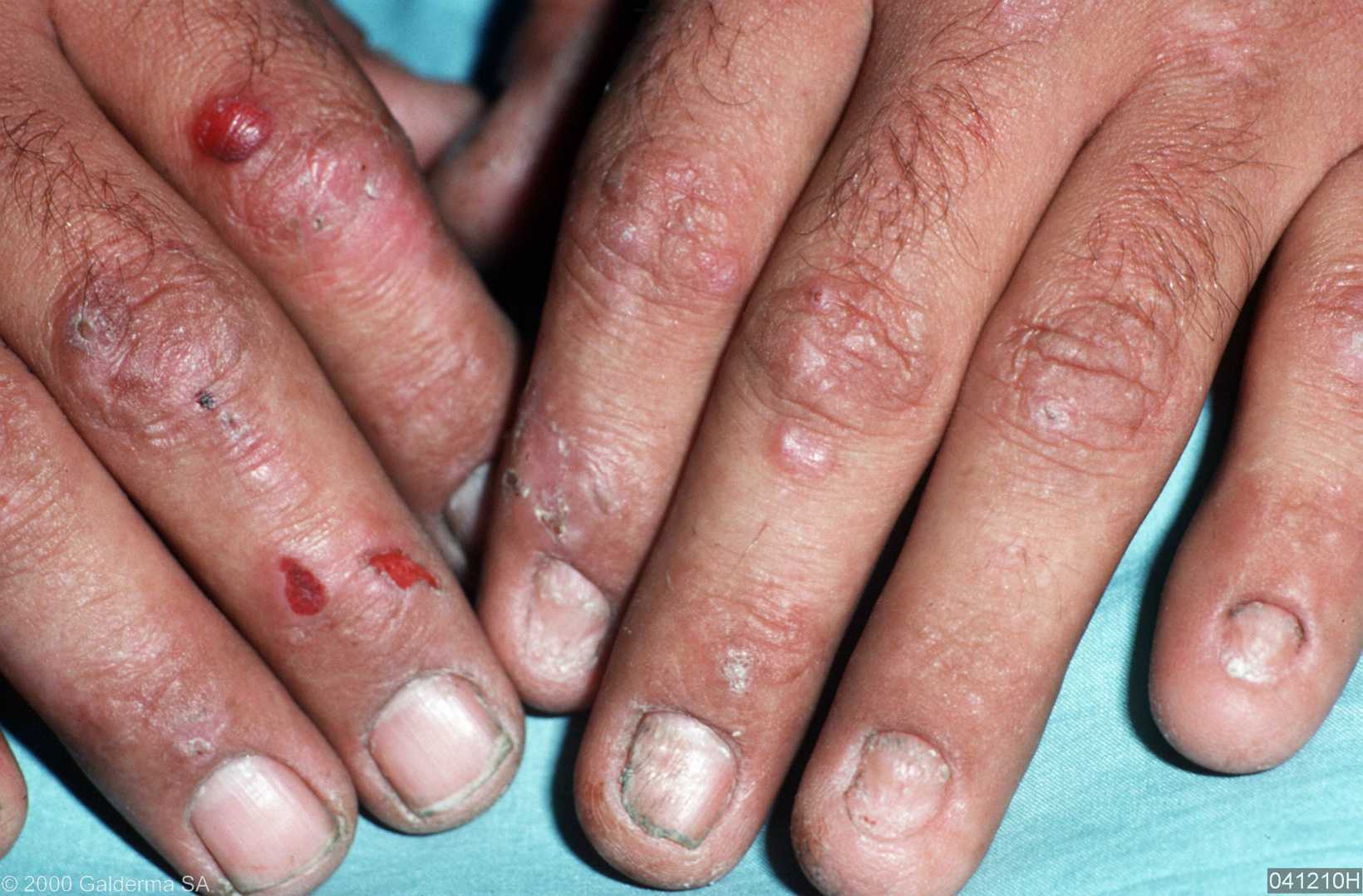
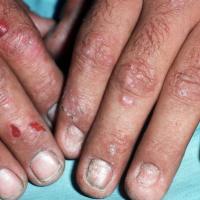
- Porphyria cutanea tarda (PCT): although often worse in summer months the patient may not be able to clearly associate symptoms with UV exposure. Skin fragility and blisters on the backs of hands and sometimes bald areas of the scalp. Lesions heal slowly and often leave scars. Milia and areas of hyperpigmentation may develop. Mild cases may present with only shedding of the skin over the backs of the hands without blisters
- Pseudoporphyria: not a true porphyria, but instead secondary to drugs, or occasionally dialysis for chronic renal failure, or sunbeds. Clinical features similar to PCT but lack milia and scarring. The most common cause are NSAID, especially naproxen and nabumetone
- Variegate porphyria: skin signs of PCT along with acute systemic attacks comprising abdominal pain and neurological features
- Erythropoietic protoporphyria (EPP): presents in childhood with episodes of severe burning, redness and swelling of exposed areas within minutes of UV exposure, persisting for 2-3 days
- Refer to the chapter Porphyria for more information
Actinic prurigo
- Often starts in the first decade of life
- Symptoms most apparent in summer, but not always clearly related to UV exposure and often fail to clear completely in the winter
- UV-exposed sites predominate although non-exposed sites can be affected
- Erythematous and often excoriated papules and nodules, becomes more eczematous with time
- Refer to the chapter Actinic prurigo
Hydroa vacciniforme
- Usually arises in childhood and is more common in boys
- Scattered, itchy or burning lesions arising in summer months, and within a few hours of UV exposure
- Discrete papules and vesicles - other than in mild cases lesions undergo necrosis and heal with pock-like scars
- Refer to the chapter Hydro vacciniforme
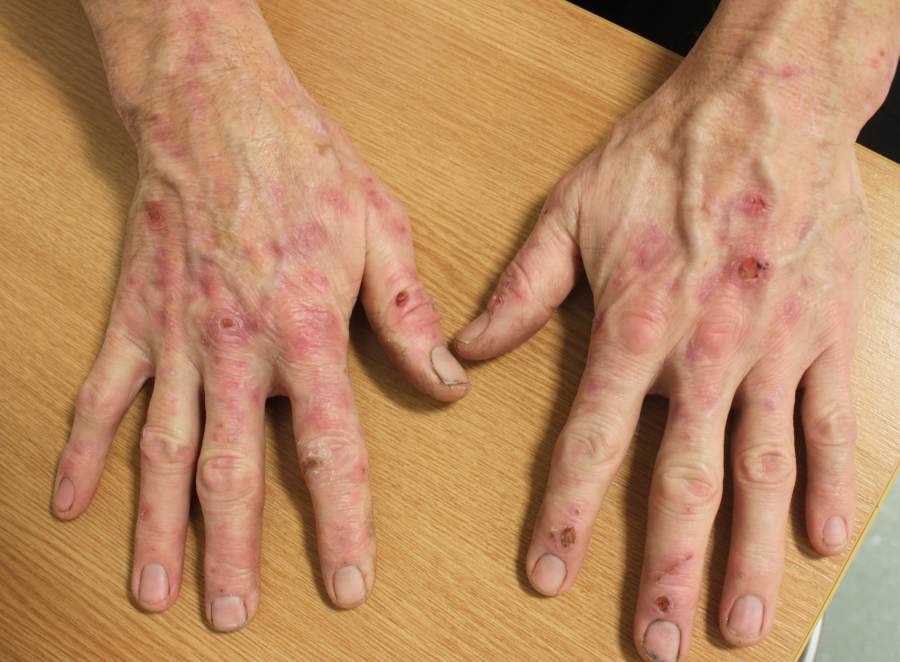
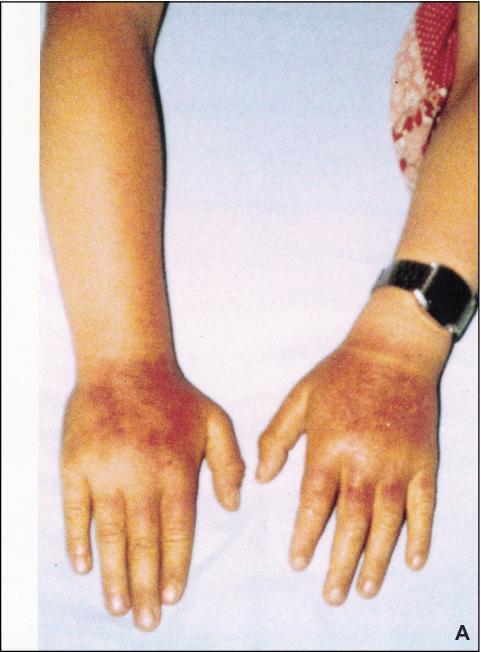
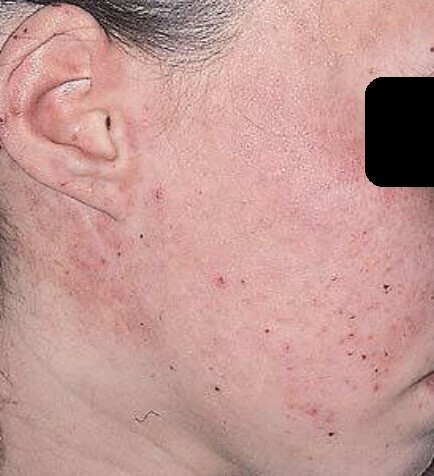
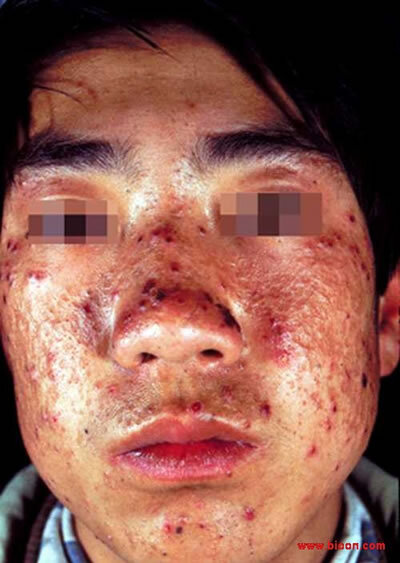
Clinical Images
Please refer to notes on image rights at bottom of the page with regards to individual image
ownership.
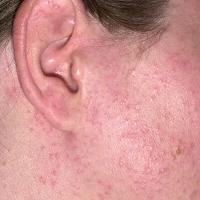
1
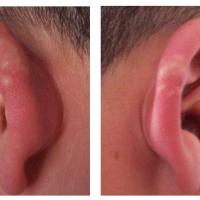
2
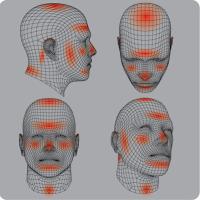
3
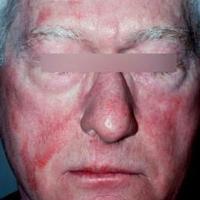
4
5
6
7
8
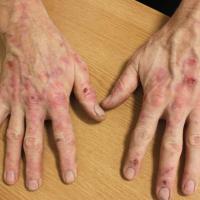
9
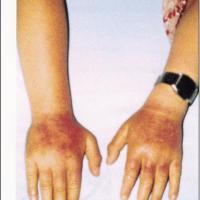
10
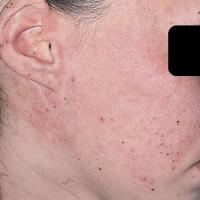
11
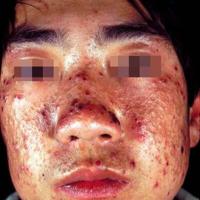
12
Investigations
-
If lupus needs to be excluded, check bloods - FBC, PV, routine biochemistry, ANA and ENA (specifically Ro and La antibodies, which can be present even if ANA is negative)
-
Phototesting
-
Can help diagnose photosensitive rashes where there is diagnostic uncertainty
-
Of particular diagnostic value, the presence of UVB photosensitivity excludes a diagnosis of drug-induced photosensitivity
-
Phototesting may also provide other useful information, which can aid in the management of some patients with moderate to severe photosensitive dermatoses
-
Photopatch testing - is of use for patients suspected of having a photocontact allergic dermatitis, eg to sunscreens (which can also be found in moisturisers and other cosmetics) and topical NSAID
Management
-
Refer to the relevant chapters
- Provide a patient information leaflet on UV protection - sunscreens are much more effective against UVB than UVA, as such photoprotection also means using appropriate shade, and wearing suitable clothing. Patients need to be advised to use a high factor sunscreen (protects against UVB) with a 4 or 5 star rating (protects against UVA). Patients may also need protection through glass in cars and at home with UV-blocking films
- Sunscreens in Primary Care - should be prescribed for photodermatoses (as opposed to photoaggravated dermatoses). One of the only formulations currently available is La Roche-Posay Anthelios SPF50
- Reflectant sunscreens that are based on titanium dioxide or zinc oxide are the most effective against UVA, but are not always cosmetically acceptable. Patients with severe photodermatoses may require a special sunscreen, known as the Dundee formulation sunscreen. This comes in 3 tints depending on the patients skin colour, for more information contact Tayside Pharmaceuticals Ltd, Ninewells Hospital Dundee, DD1 9SY, Tel: 01382 632264
Disclaimer - the author PCDS cannot accept responsibility for any misleading or incorrect statements, and the management of individual patients remains the direct responsibility of the individual doctor. We do however hope that visitors to this site can contact us regarding comments that are considered misleading or incorrect so that we can continue to improve the site.
Image Rights - The PCDS would like to thank Dermatoweb, DermQuest (Galderma), and others who have contributed images. All named individuals and organisations maintain copyright for the relevant images.