Port-wine stain (syn. naevus flammeus)
LAST UPDATED: Jun 15, 2022
Introduction
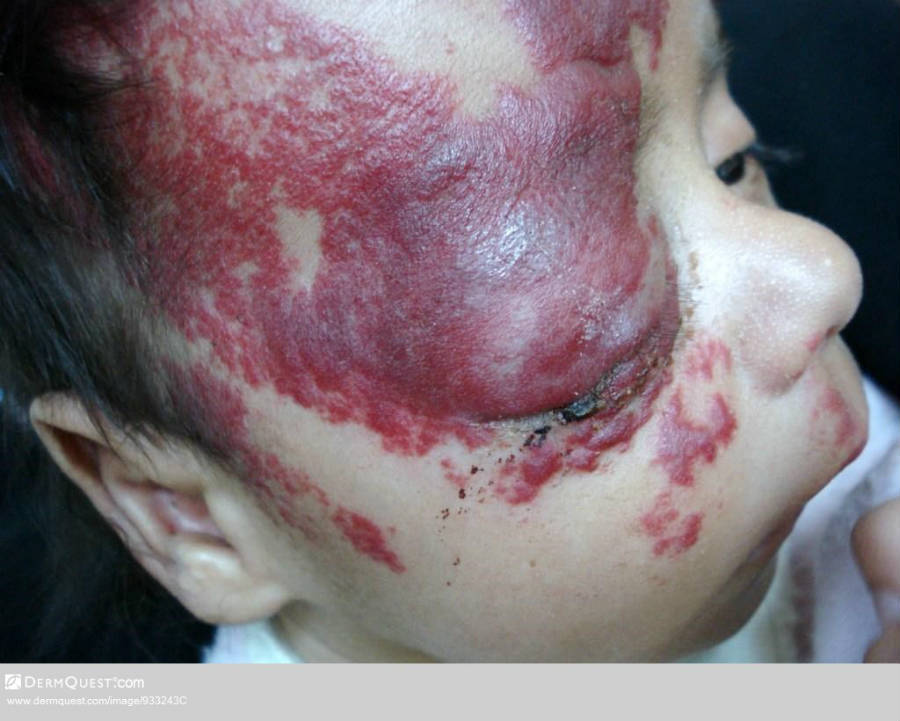
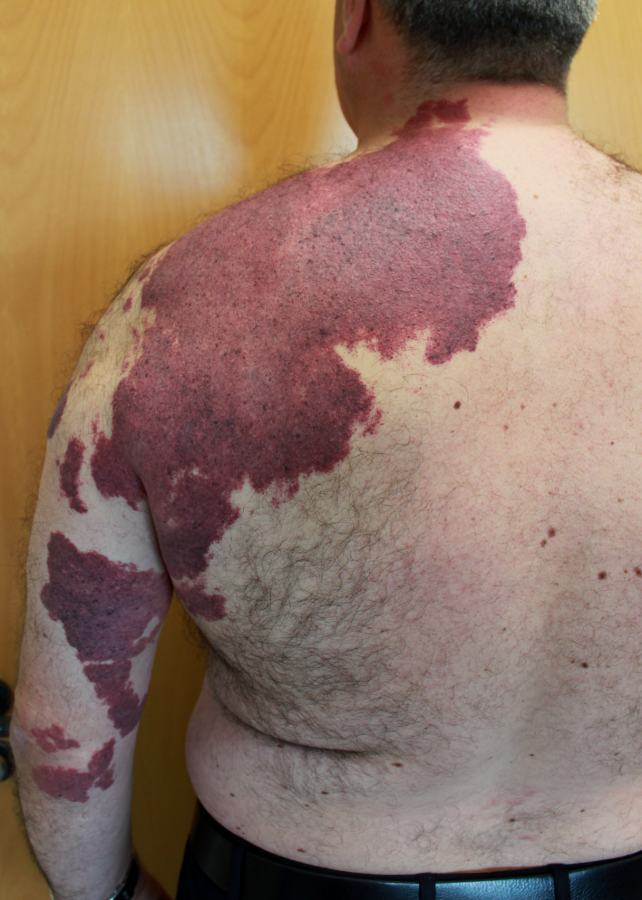
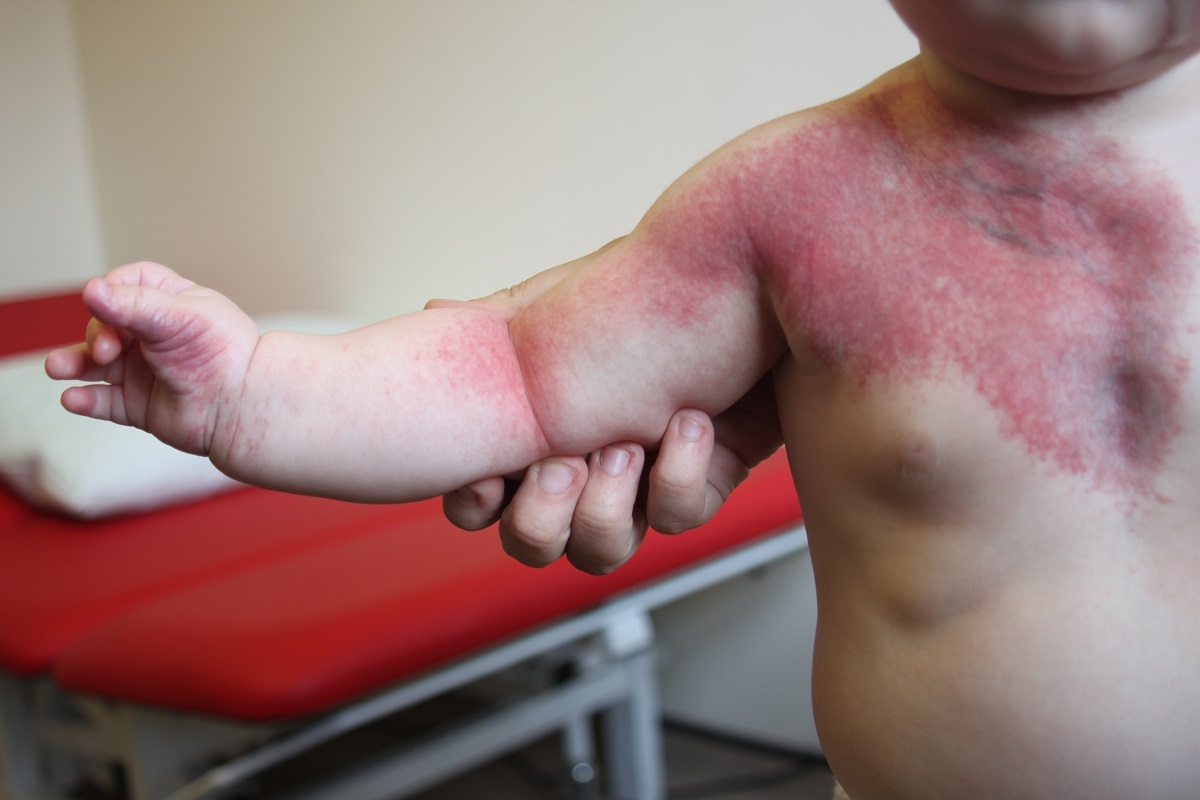
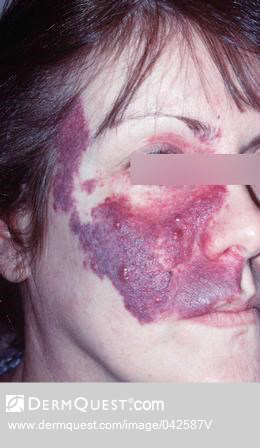
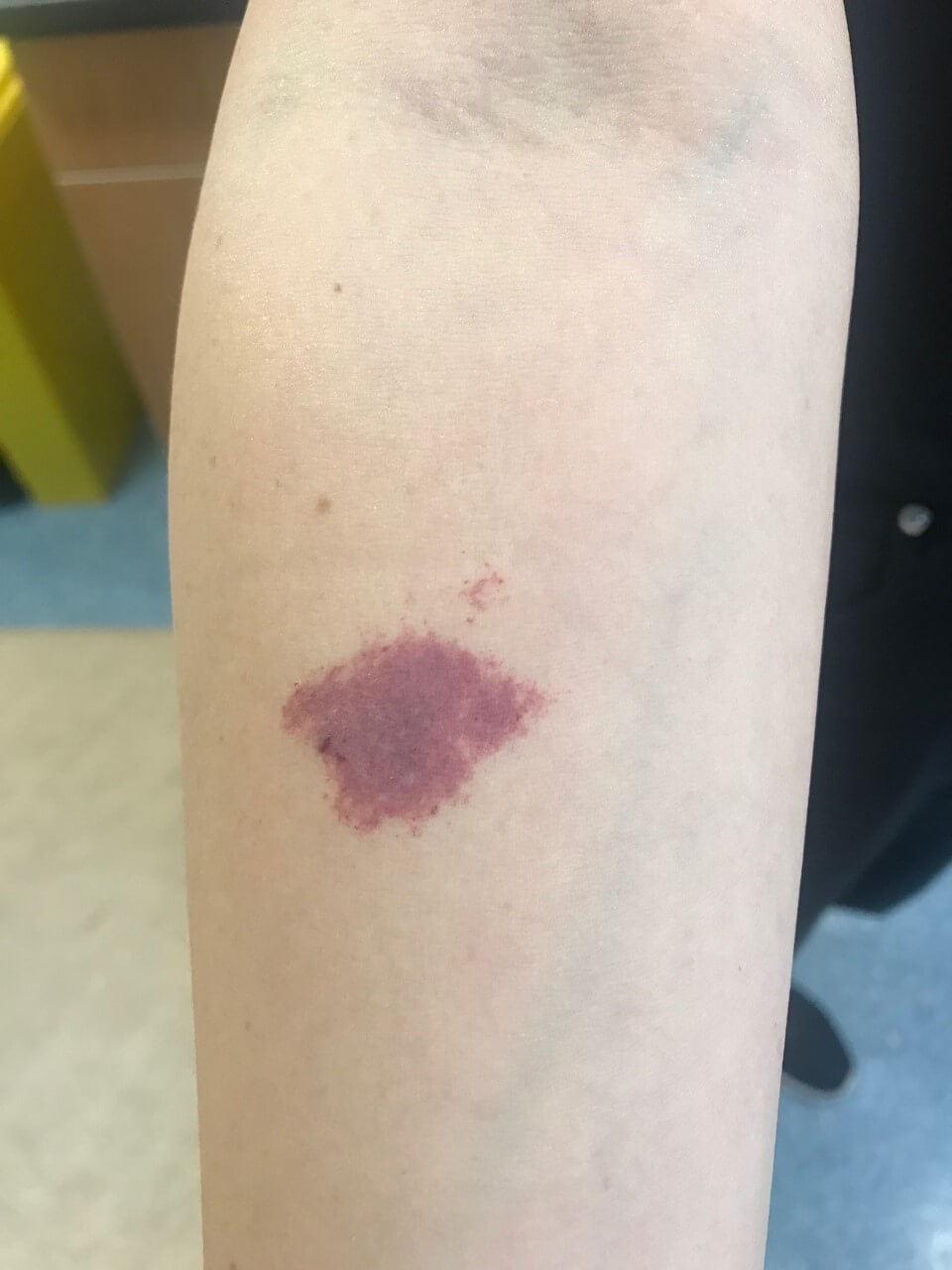
A Port-wine stain is a sporadic capillary malformation (CM) of developmental origin. It is a flat, red or purple patch that is present at birth. Over time, some port-wine stains may become thicker, darken and develop a ‘cobblestone’ appearance with raised bumps and ridges. It is associated with congenital glaucoma, the Sturge-Weber syndrome (intracranial angiomas) and the Klippel-Trenaunay syndrome (limb hypertrophy).
This chapter is set out as follows:
Aetiology
- It is caused by a genetic mutation in embryo, it is not inherited
- There is dilatation of normal numbers of capillaries of the papillary and upper reticular dermis combined with areas of increased numbers of normal‐looking capillaries
History
- Almost always present at birth
Clinical findings
Port-wine stain
-
Distribution
-
The head and neck are the most commonly affected sites (65%), although any part of the body can be affected
- Usually unilateral (on one side of the body only), occasionally bilateral (both sides)
-
Morphology
- Red-purple patch (or patches)
-
Often unilateral with a distinct cut off
-
Lesions tend to persist, darken and thicken with age
The Sturge-Weber syndrome
- Characterized by a CM located on the forehead and the upper eyelid (above a line that can be drawn from the corner of the eye to the top of the ear), associated with ipsilateral leptomeningeal capillary–venous anomaly and / or ocular involvement
- The CM can be bilateral and / or more extensive, covering the territory of the maxillary (V2) and mandibular (V3) branches of the trigeminal nerve, and sometimes the trunk and the limbs
- About 75% of children with intracranial vascular anomaly develop seizures, most often before the age of 2 years, with a risk of contralateral neurological deficit and learning difficulties. Gyral calcifications can be observed
- The major ocular complication is glaucoma, occurring in more than 50% of patients - patients require a same day ophthalmology opinion
- Patients without seizures fare much better
The Klippel-Trenaunay syndrome (KTS)
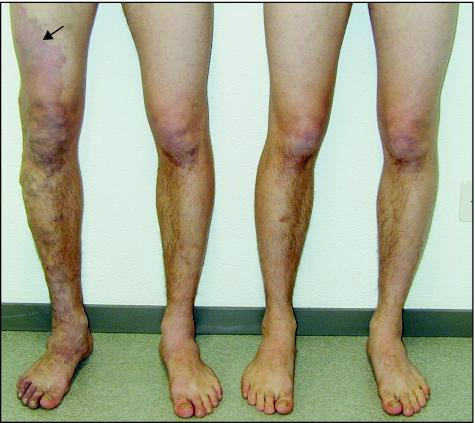
- KTS is characterised by three features: (i) a capillary malformation (port‐wine stain) of the skin associated with (ii) a soft‐tissue and bone overgrowth and hypertrophy in combination with (iii) varicose veins, with or without deep venous and lymphatic abnormalities. It can be diagnosed with either two or three of these features
- The capillary/venular malformation (port‐wine stain) affects 98% of KTS and is usually present at birth. The abnormal veins affect 72% of cases, and as with this case may not affect typical sites; some of the varicosities are only visible once the child is walking. Limb hypertrophy affects 67% of affected individuals - segmental lower extremity CMs need scaniometry at around 8 years of age to evaluate growth discrepancy
- Skin changes
- Most commonly involve the lower limbs, followed by the arms, the trunk and rarely the head and neck
- The capillary/venular malformation (port‐wine stain) is pink-reddish with linear borders, may darken with age to purple. 10% are nodular
- The changes seldom cross the midline
Clinical Images
Please refer to notes on image rights at bottom of the page with regards to individual image
ownership.
Management
Sturge-Weber syndrome
- Same day ophthalmology opinion
- In the medium to long term, a multidisciplinary approach is needed
The Klippel-Trenaunay syndrome (KTS)
-
Effective treatment can be given to the capillary malformation using pulsed dye laser
-
Given the possible limb changes, difficulties with varicose veins and other potential complications (including genitourinary haemorrhage, gastrointestinal haemorrhage, haemothorax) a multidisciplinary approach is required
Capillary malformations - other
- The cosmetic impact of such lesions can be substantial - referral to a dermatology department with laser facilities is appropriate
Other resources
Disclaimer - the author PCDS cannot accept responsibility for any misleading or incorrect statements, and the management of individual patients remains the direct responsibility of the individual doctor. We do however hope that visitors to this site can contact us regarding comments that are considered misleading or incorrect so that we can continue to improve the site.
Image Rights - The PCDS would like to thank Dermatoweb, DermQuest (Galderma), and others who have contributed images. All named individuals and organisations maintain copyright for the relevant images.