Pemphigoid gestationis (pemphigoid of pregnancy)
LAST UPDATED: Mar 23, 2025
Introduction
Pemphigoid gestationis is a rare pregnancy-associated immunobullous reaction characterised by an itchy rash that develops into blisters. It is most common during the second and third trimesters of pregnancy. It was previously known as herpes gestationis although it has no association with the herpes virus.
This chapter is set out as follows:
Aetiology
-
Pemphigoid gestationis is rare, affecting 0.5 per million population
- 11% of cases are associated with Graves' disease; there may be a family history of autoimmune conditions
-
IgG autoantibodies are directed to the same hemidesmosome target antigens in the basement membrane as bullous pemphigoid, BP180 and less commonly BP 230. The hemidesmosome is the cell component that sticks the epidermal keratinocyte cells to the dermis. The result is inflammation and separation of the epidermis from the dermis allowing fluid to build up and create a blister
History
-
Pemphigoid gestationis may arise at any time between four weeks gestation and five weeks postpartum, with the majority presenting in the second and third trimesters. Almost half the cases develop in the first pregnancy
-
Lesions are intensely itchy
Clinical findings
Distribution
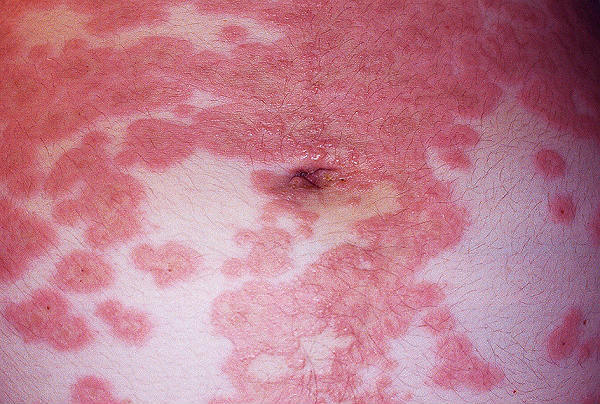
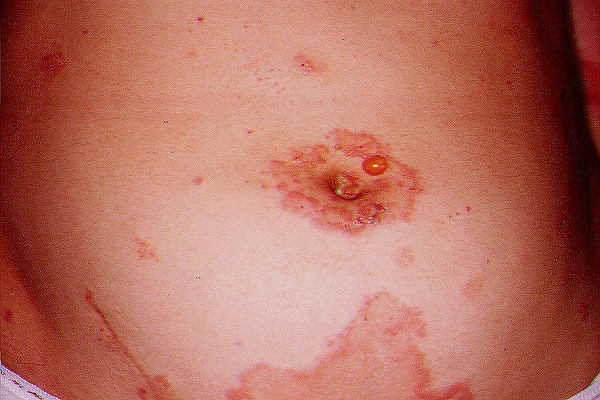
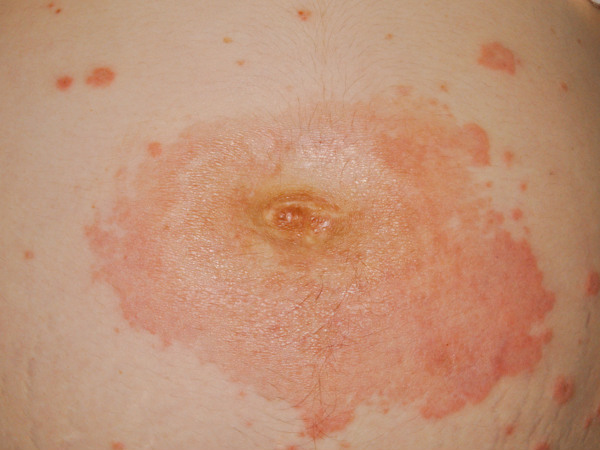
- Lesions arise characteristically around the umbilicus
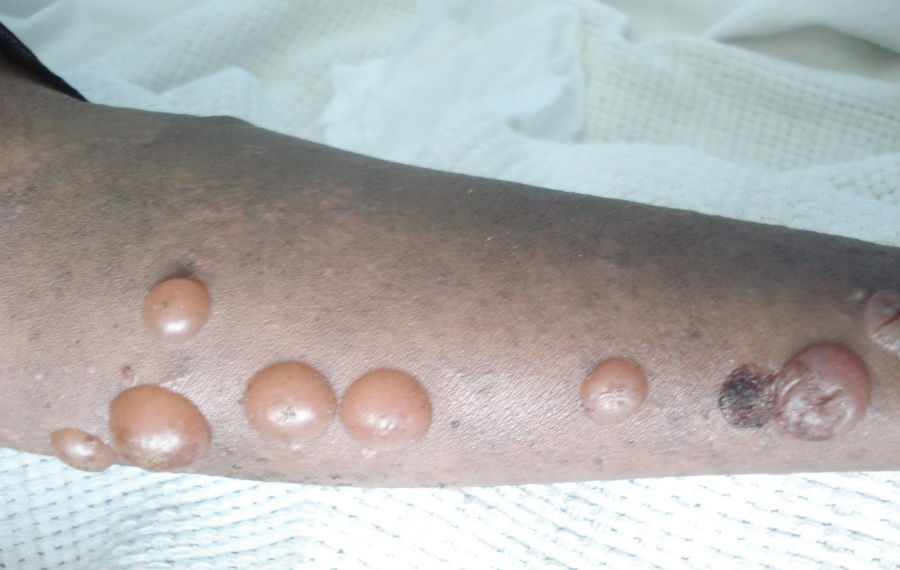
- Within days to weeks the rash spreads to other parts of the body including the trunk, back, buttocks, and arms. The face, scalp, palms, soles and mucous membranes are usually unaffected
Morphology
- The rash usually arises as urticated papules, plaques, target lesions and annular wheals
- This is followed by the development of vesicles and large, tense blisters
Compared to the polymorphic eruption of pregnancy
- Both have urticated papules
- Vesicles - 50% polymorphic eruption of pregnancy, 95% pemphigoid gestationis
- Peri-umbilical lesions - 10% polymorphic eruption of pregnancy, 90% pemphigoid gestationis
- Lesions in striae - 80% polymorphic eruption of pregnancy, 3% pemphigoid gestationis
Clinical Images
Please refer to notes on image rights at bottom of the page with regards to individual image
ownership.
Investigations
The diagnosis can be made using serum analysis of skin antibodies (pemphigoid antibodies) and skin biopsies for histology and immunofluorescence, the characteristic findings of which are:
- Histology shows typical features of subepidermal blistering
- Direct immunofluorescence (DIF) shows a linear band of C3 deposition with or without IgG (present in 20-25% of patients) along the basement membrane
- For more information on these investigations refer to the relevant section in the chapter Bullous pemphigoid
Management
Understanding the natural history of pemphigoid gestationis
- In some cases pemphigoid gestationis occurs throughout pregnancy. Symptoms may lessen or spontaneously resolve towards the end of the pregnancy but this is often short-lived, 75-80% of women will experience a flare around delivery
- Usually the condition lasts several weeks to months after childbirth, with an average of six months. However in some, the condition may remain active for years, which is more likely in older patients, multiparity, and with mucosal involvement. There are often flares with menstruation and the oral contraceptive, which is contraindicated when the disease is still active
- It is likely to recur in subsequent pregnancies (although can skip a pregnancy), may be more or less severe, and the onset is likely to be earlier than in previous pregnancies
Pemphigoid gestationis and the newborn
- Pemphigoid gestationis is associated with premature delivery and a risk of low birth weight. The foetal prognosis is worse with early onset
- Neonatal pemphigoid gestationis occurs in 3% of pregnancies - blisters usually resolve with clearance of maternal antibodies over about 3-4 months
Treatment
- Patients suspected of having pemphigoid gestationis should be referred urgently to dermatology
- In milder cases patients may only require emollients, topical steroids, and antihistamines - the maximum recommended total dose of topical steroids in pregnancy is 300 g. Both loratadine and cetirizine are believed to be safe in pregnancy and while breast feeding
- Once blisters develop systemic corticosteroids are usually required, which do not appear to have an adverse effect on the pregnancy
- A multidisciplinary team approach is required, and delivery of the child should take place in an obstetric department that has specialist paediatric support if needed
Other resources
Disclaimer - the author PCDS cannot accept responsibility for any misleading or incorrect statements, and the management of individual patients remains the direct responsibility of the individual doctor. We do however hope that visitors to this site can contact us regarding comments that are considered misleading or incorrect so that we can continue to improve the site.
Image Rights - The PCDS would like to thank Dermatoweb, DermQuest (Galderma), and others who have contributed images. All named individuals and organisations maintain copyright for the relevant images.