Scabies
LAST UPDATED: Feb 16, 2026
Introduction
Human scabies is caused by infection with a mite known as Sarcoptes scabiei var. hominis. Scabies is normally acquired by skin-to-skin contact with someone else who has scabies, contact does not need to be prolonged. Scabies is frequently acquired from children and can also be sexually transmitted.
This chapter is set out as follows:
History
-
Itch, which is characteristically worse at night
-
Scabies should be part of the differential diagnosis of any itchy rash where no other cause can be readily identified. It is possible for patients with eczema to also acquire scabies
Clinical findings
Scabies
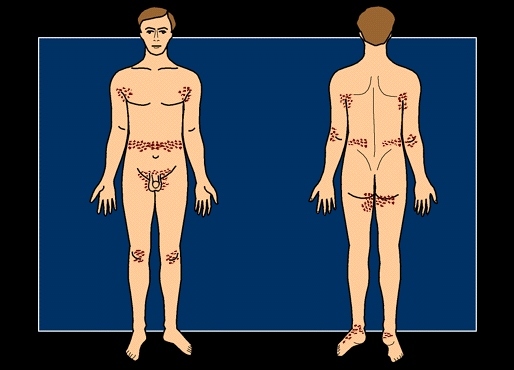
- Distribution
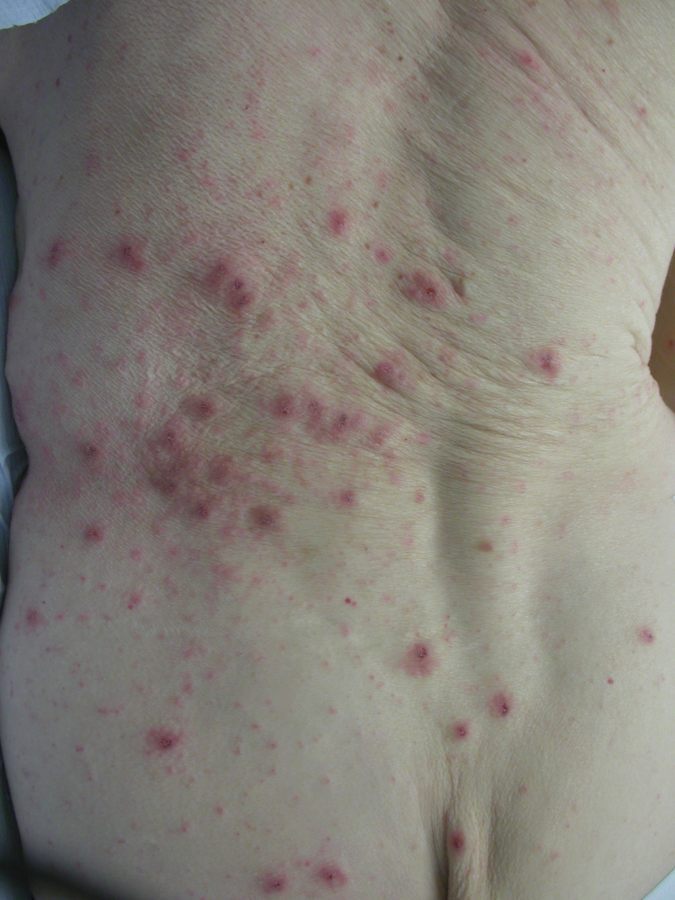
- The trunk and limbs are the predominant sites that are affected
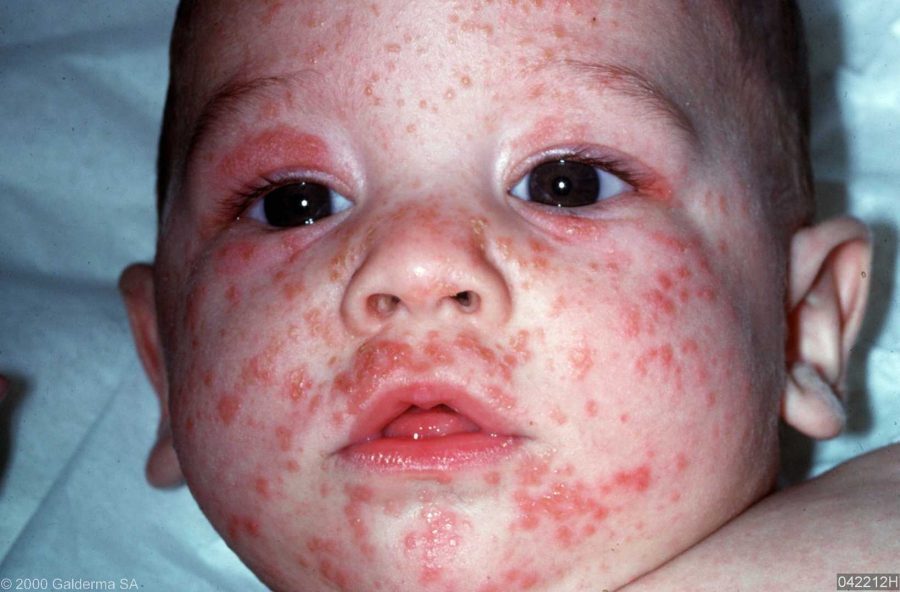
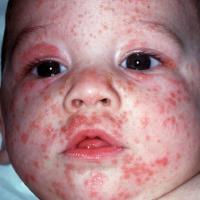
- The face and scalp are rarely involved other than in infants and bed-bound elderly patients
- Morphology
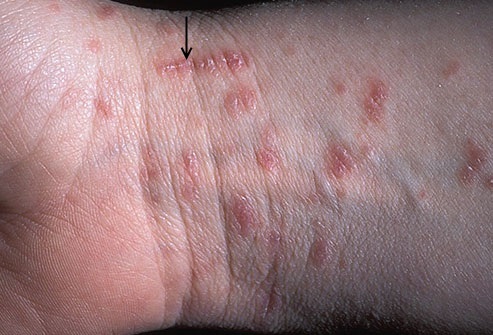
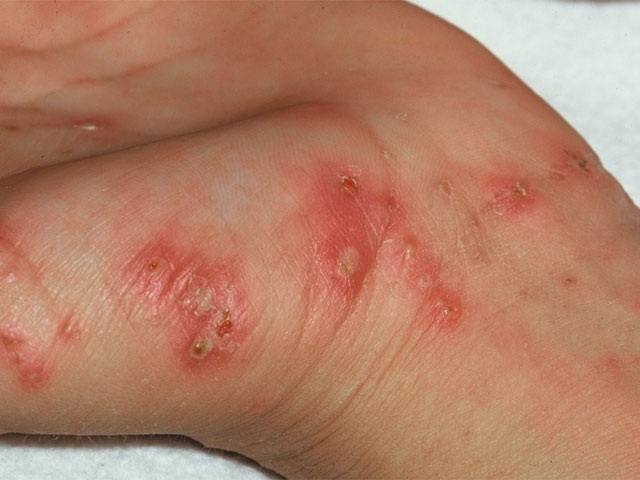
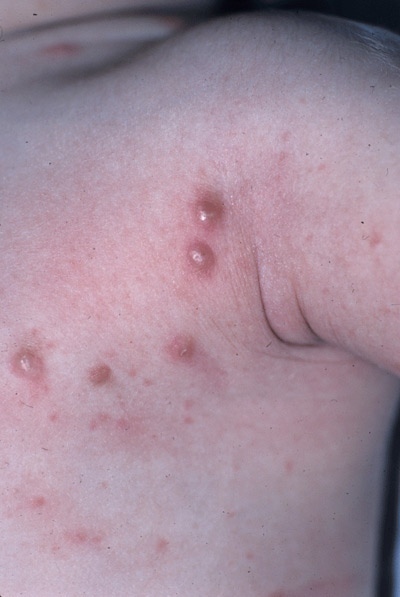
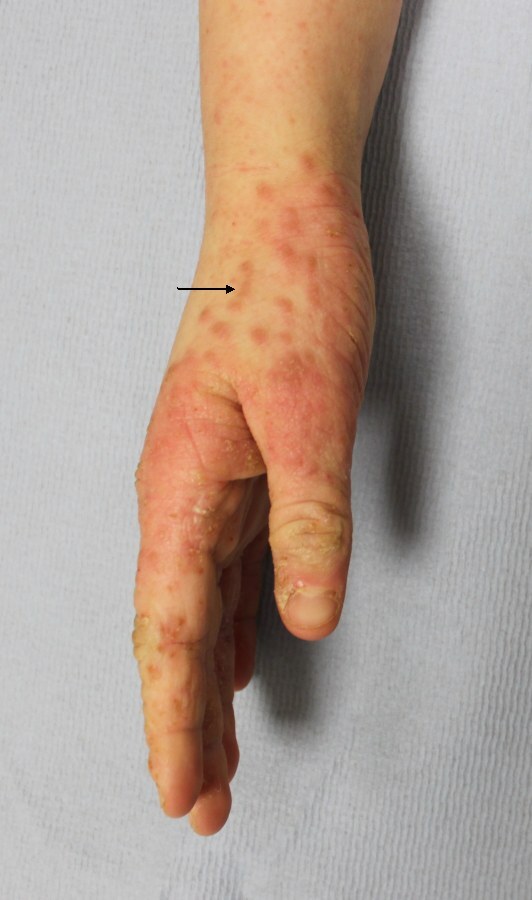
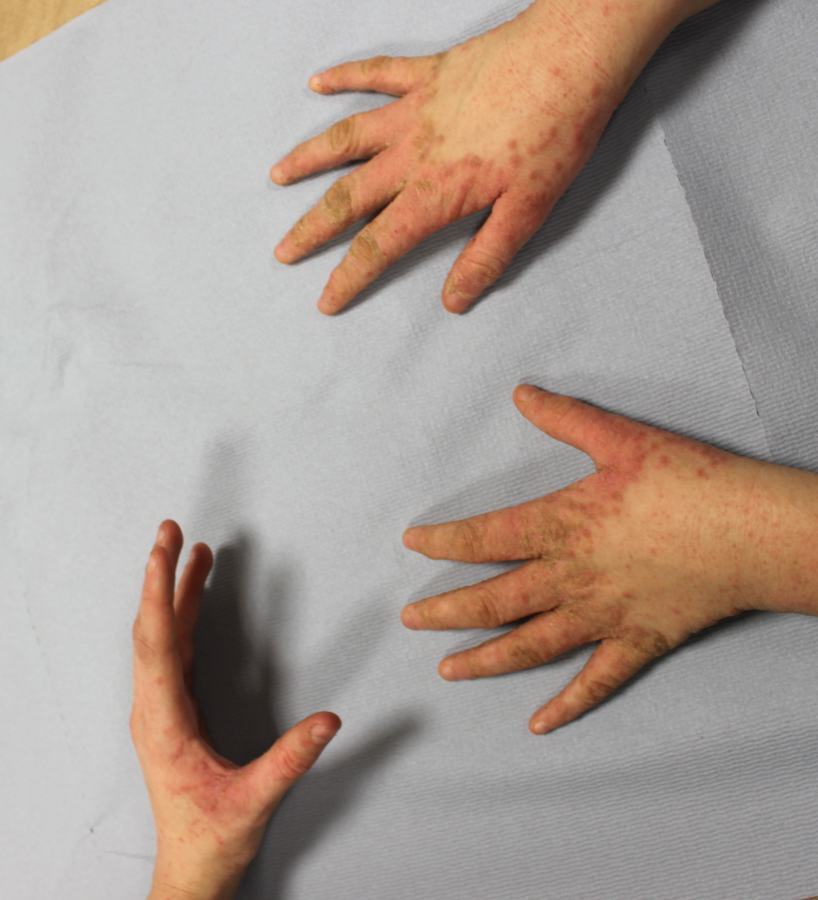
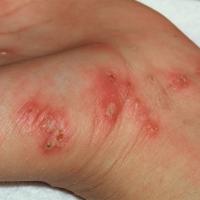
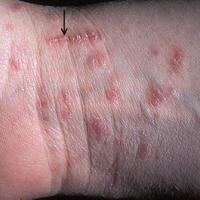
- A generalised rash with erythema, papular and urticated lesions. This is caused by an allergy to the mites and their products, and may take several weeks to develop after infestation
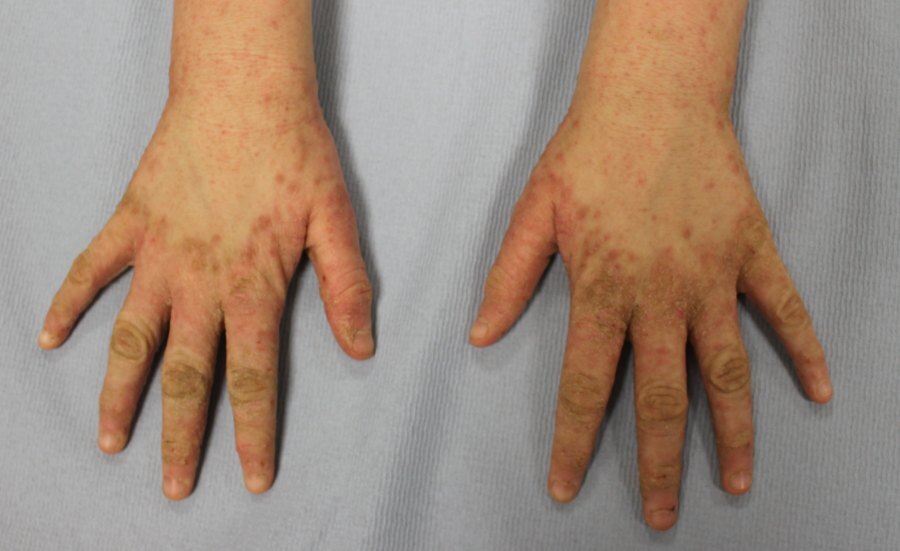
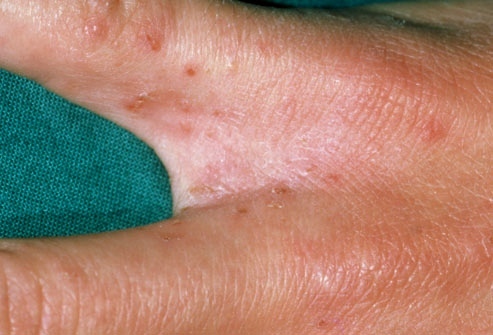
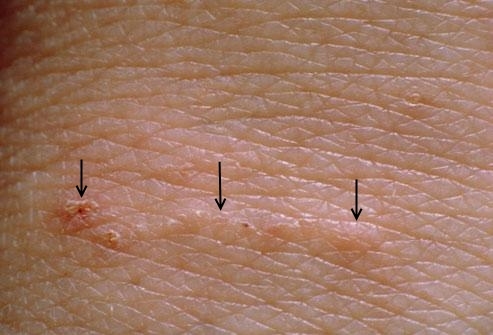
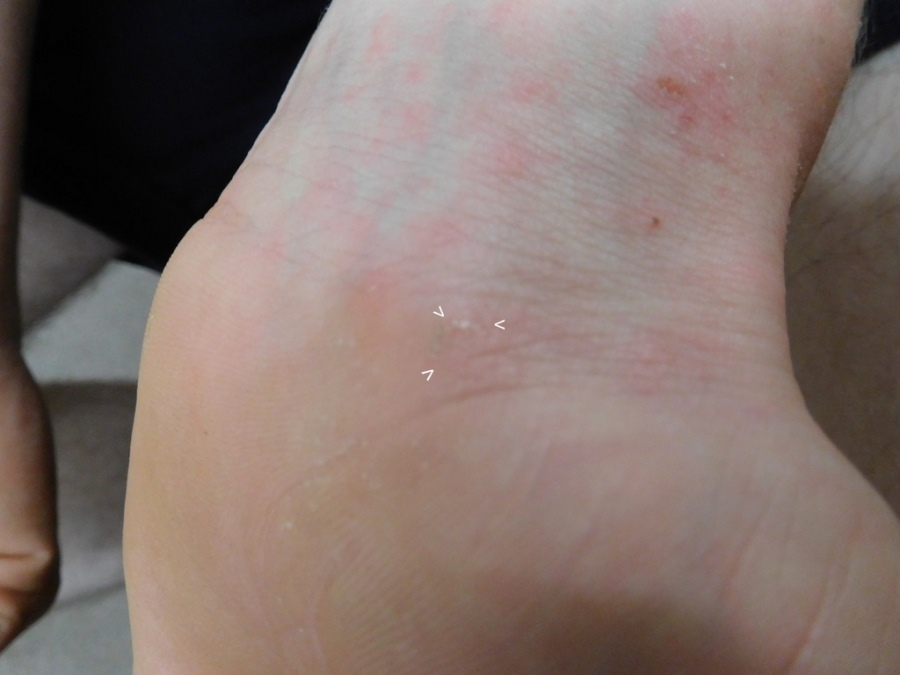
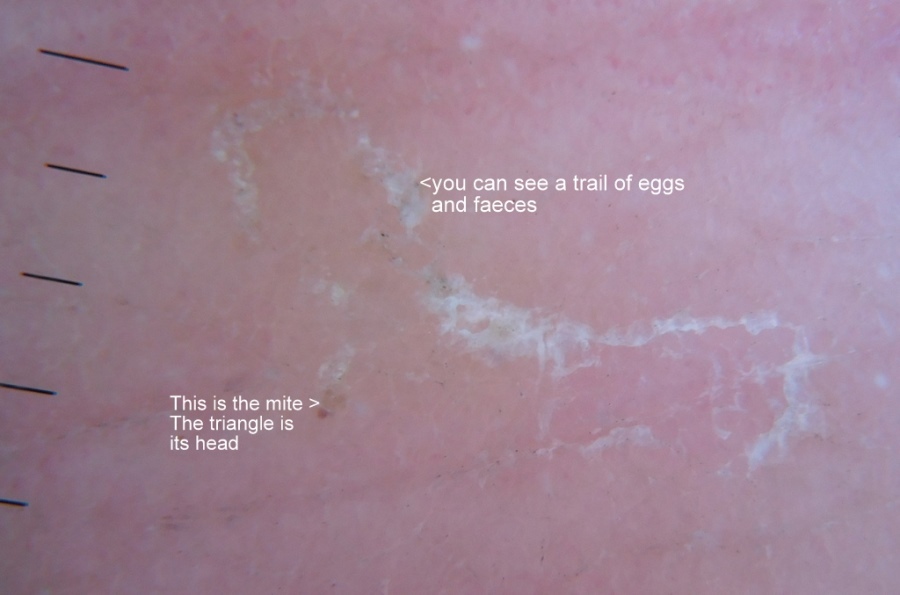
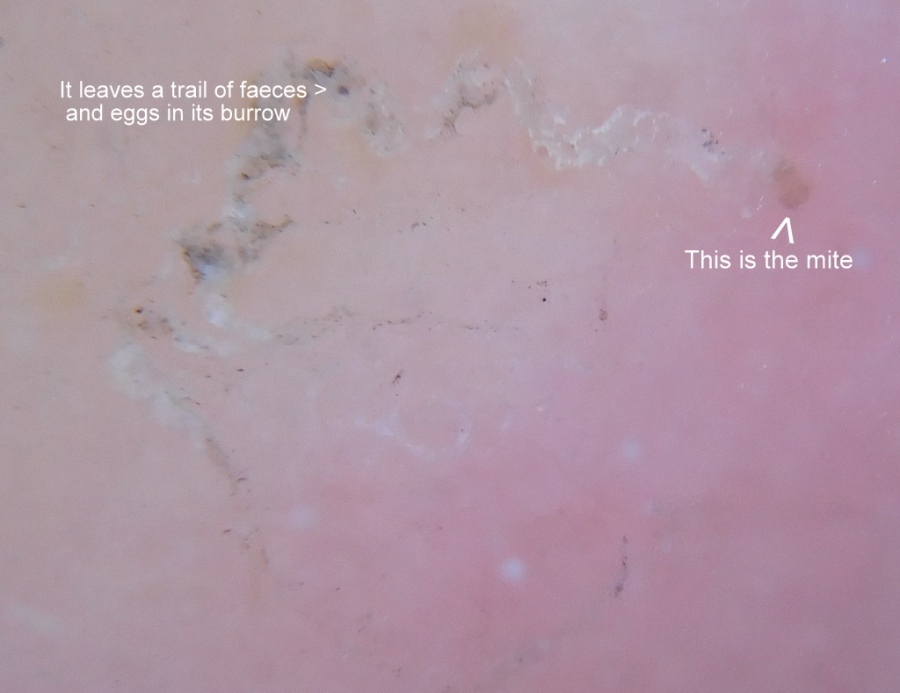
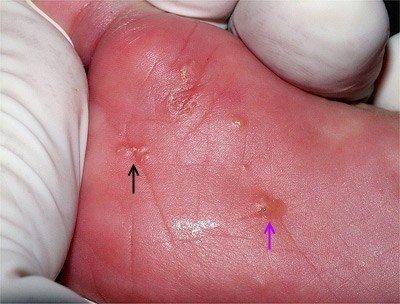
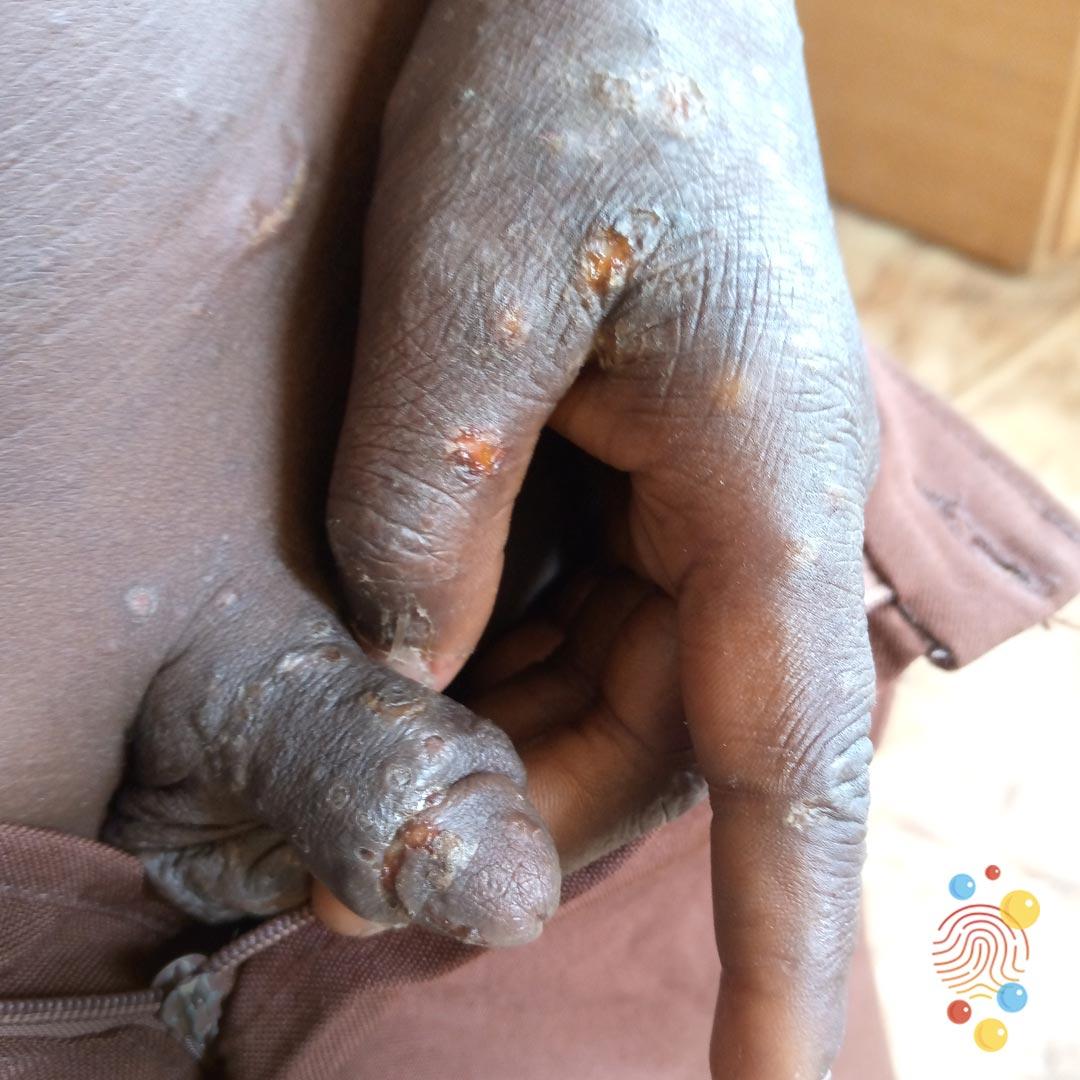
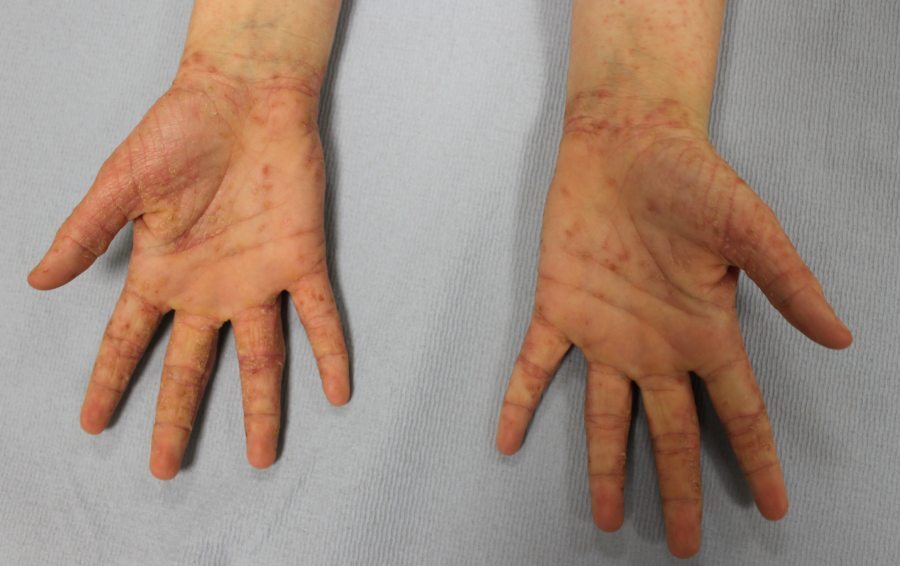
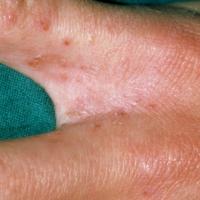
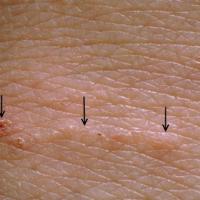
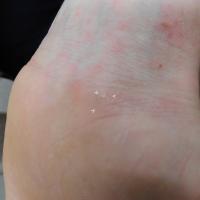
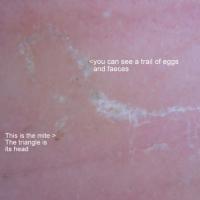
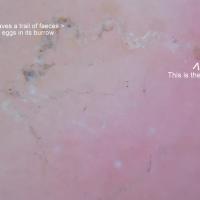
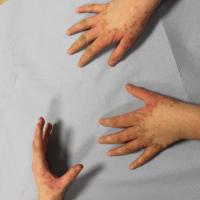
- Burrows can be seen as very small irregular tracks. These are most common on the sides of fingers, the webs, the borders of the hands, the wrists and the feet. They can also be found on the male genitalia, axillae and buttocks
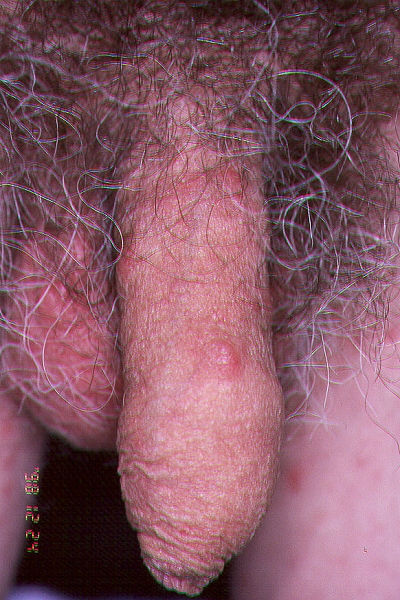
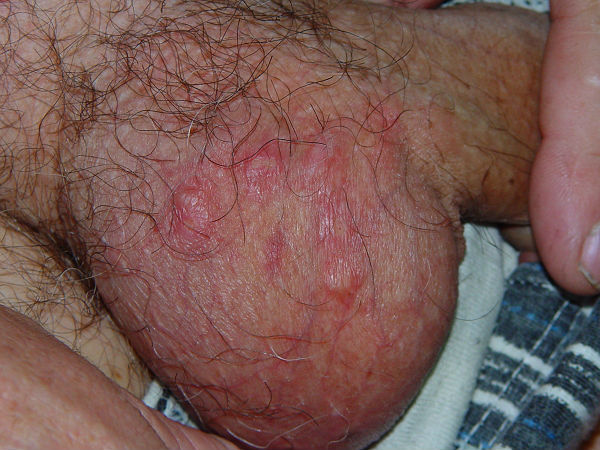
- Papules and nodules, most commonly seen on the shaft of the penis (pathognomonic), the groins and in the axillae. They may persist for several weeks after the scabies has been eradicated
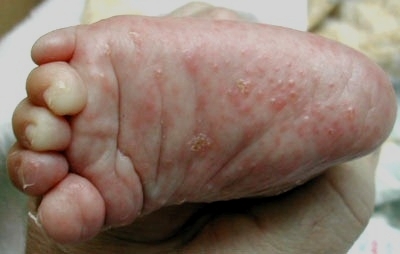
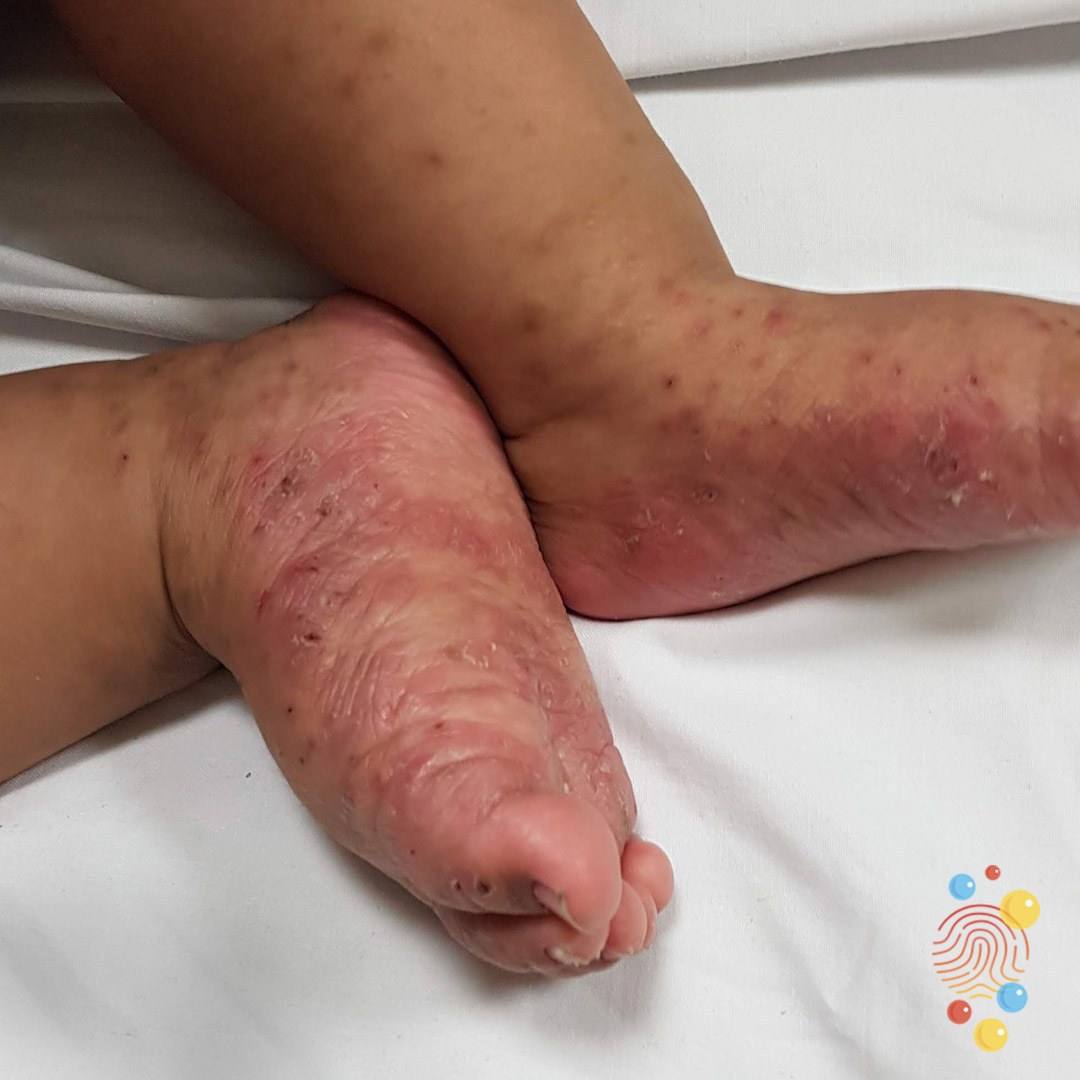
- Papules and pustules on the palms and soles are characteristic of scabies in infancy
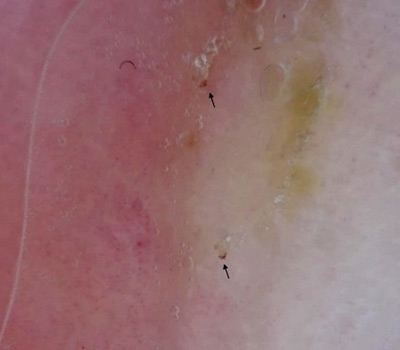
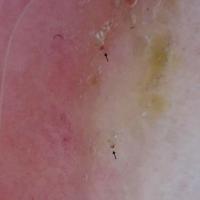
- Dermoscopic findings - the typical dermoscopic pattern consists of small dark brown triangular structures located at the end of whitish structureless lines (curved or wavy), giving an appearance reminiscent of a delta-wing jet with contrail
- Secondary infection with impetigo is relatively common. Patients develop local areas of pustules and crusting
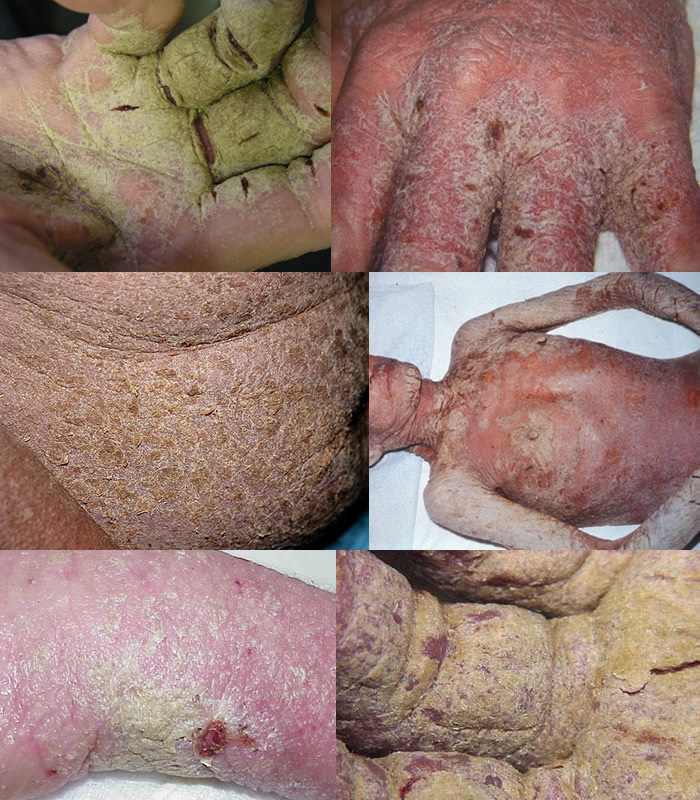
Hyperkeratotic scabies (syn. Crusted scabies; Norwegian scabies)
- An uncommon form of scabies
- Highly contagious with huge numbers of mites
- It most commonly arises in patients with neurological impairment (eg dementia and Down's syndrome), immunosuppression, and those inappropriately treated with potent or super-potent topical steroids
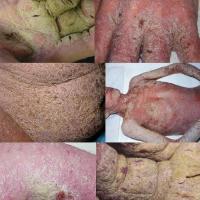
- Clinical features - generalised scaly rash. Prominent scale in the finger webs, on wrists, elbows, breasts and scrotum. The itch is often significantly less than with classical scabies. The scalp may be involved
Clinical Images
Please refer to notes on image rights at bottom of the page with regards to individual image
ownership.
1
2
3
4
5
6
7
8
9
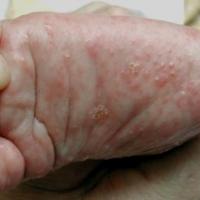
10
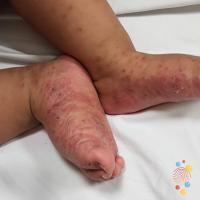
11
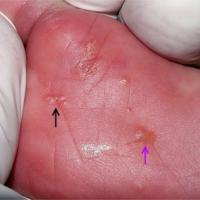
12
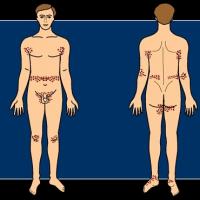
13
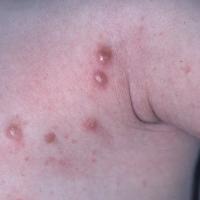
14
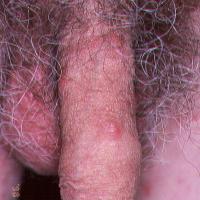
15
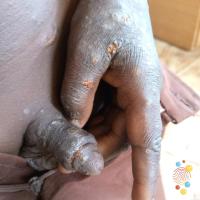
16
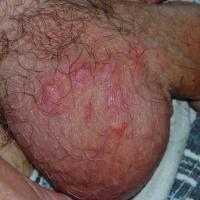
17
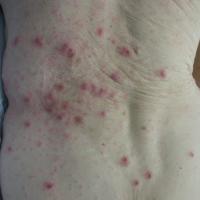
18
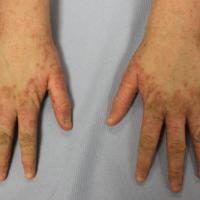
19
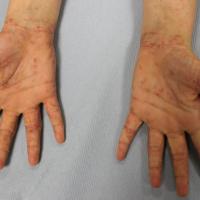
20
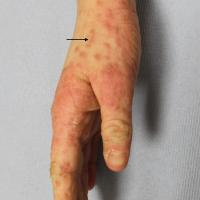
21
22
23
Management
Step 1: general measures
- Refer to the top right of the page for a patient information leaflet available through a QR code or printable PDF
- Public health must be informed if an outbreak occurs in an institution such a nursing home
Step 2: treatment of the patient
- 5% permethrin cream (Lyclear ®) is the treatment of choice and is safe to use in pregnancy; other scabicides are more irritant and less effective - treatment needs to be repeated after 7 days
- A thin layer of cream should be applied over the whole body including the face, neck, scalp, and ears - it is important to include in between the fingers and toes, under the fingernails, on the genitals, and in-between the buttocks
- The cream should be left on for at least 12 hours. Some people may benefit from leaving it on for a full 24 hours with further application after 12 hours
- For the two applications, an adult is likely to need 60-120 g of cream (3-4 tubes i.e. 1-2 tubes for each application), older children will need 30-60 g cream in total (½ tube for each application) and younger children will need 15-30 g cream in total (¼ tube for each application)
Step 3: treatment of contacts
- This includes anyone living in the same house, partners, and others with significant contact e.g. grandparents
- Contacts infected with scabies may remain asymptomatic for several weeks
- All such contacts need to be managed in exactly the same way as the patient, however for most only one treatment is needed. Only symptomatic contacts require two treatments
- Symptomatic individuals and contacts must commence treatment at the same time
Step 4: persistent symptoms
- The itch of scabies may not clear for at least a month after successful eradication of the mite. Treatment with crotamiton cream (Eurax ®) or hydrocortisone with crotamiton cream (Eurax HC ®) helps reduce itch and it also acts as a mild scabicide. Nodules, which are not contagious, can occasionally persist for several months and should be treated with a moderately potent topical steroid
- Re-infection is common if patients and contacts are not compliant: re-treat and check contacts
- If scabies is still present consider malathion (Derbac-M liquid ®), used in the same way as 5% permethrin cream
Step 5: oral ivermectin
- Should be considered in the following cases:
- If topical treatments have not resolved symptoms and there is evidence of ongoing infestation with the presence of burrow etc
- If topical treatments are hard to access/unavailable
- In conditions where topical treatments may be difficult to apply effectively e.g. care homes and other circumstances where treatment of a large number of people is required
- Hyperkeratotic scabies
- There is no conclusive safety data for the use of oral ivermectin in pregnancy
- Dose
- Ivermectin is available in 3 mg tablets
- The dose is 200 micrograms/kg, with a second dose advised after 10-14 days to deal with recently hatched mites
- For example, a dose of 15 mg (5 tablets) is applicable for a 70 kg person, to be repeated as above
Step 6: discussion with / referral to a dermatologist should be considered in the following cases:
- Diagnostic uncertainty / failure to respond to adequate treatment of the patient and contacts
- An outbreak in a nursing or other care home
Disclaimer - the author PCDS cannot accept responsibility for any misleading or incorrect statements, and the management of individual patients remains the direct responsibility of the individual doctor. We do however hope that visitors to this site can contact us regarding comments that are considered misleading or incorrect so that we can continue to improve the site.
Image Rights - The PCDS would like to thank Dermatoweb, DermQuest (Galderma), and others who have contributed images. All named individuals and organisations maintain copyright for the relevant images.