LAST UPDATED: Dec 05, 2025
Scabies is a common skin infestation caused by a mite that burrows into the skin causing an itchy rash. It affects people of any age but is most common in the young and the elderly. Scabies is passed from one person to another by direct skin contact.
Scabies is usually very itchy; the itch is often worse at night.
The mites are mainly found in between the fingers and toes, the palms and soles, wrists, ankles, groins, and breasts. Mites burrow into the skin and lay their eggs, giving the appearance of a silvery line on the skin surface (a ‘burrow’). It can take a couple of weeks for the eggs to develop into adult mites.
The body’s immune system is alerted to the infestation, causing a widespread red (erythematous) rash on the body and limbs; in richly pigmented skin this can be darker than the surrounding skin. The face and scalp are usually not affected, except in infants and bed-bound elderly patients.
Multiple firm bumps on the skin 0.5 to 1 cm in diameter (papules and nodules) may occur, most commonly on the penis, groins and in the armpits (axillae). They can persist for several weeks after the scabies has been successfully treated.
Spots (papules), some with a white head (pustules) on the palms and soles are characteristic of scabies in infancy.
People with crusted scabies (a much less common form of scabies) develop thick areas of crust on the finger webs, wrists, elbows, breasts, and scrotum, which can become widespread. The itch is often significantly less than with normal scabies.
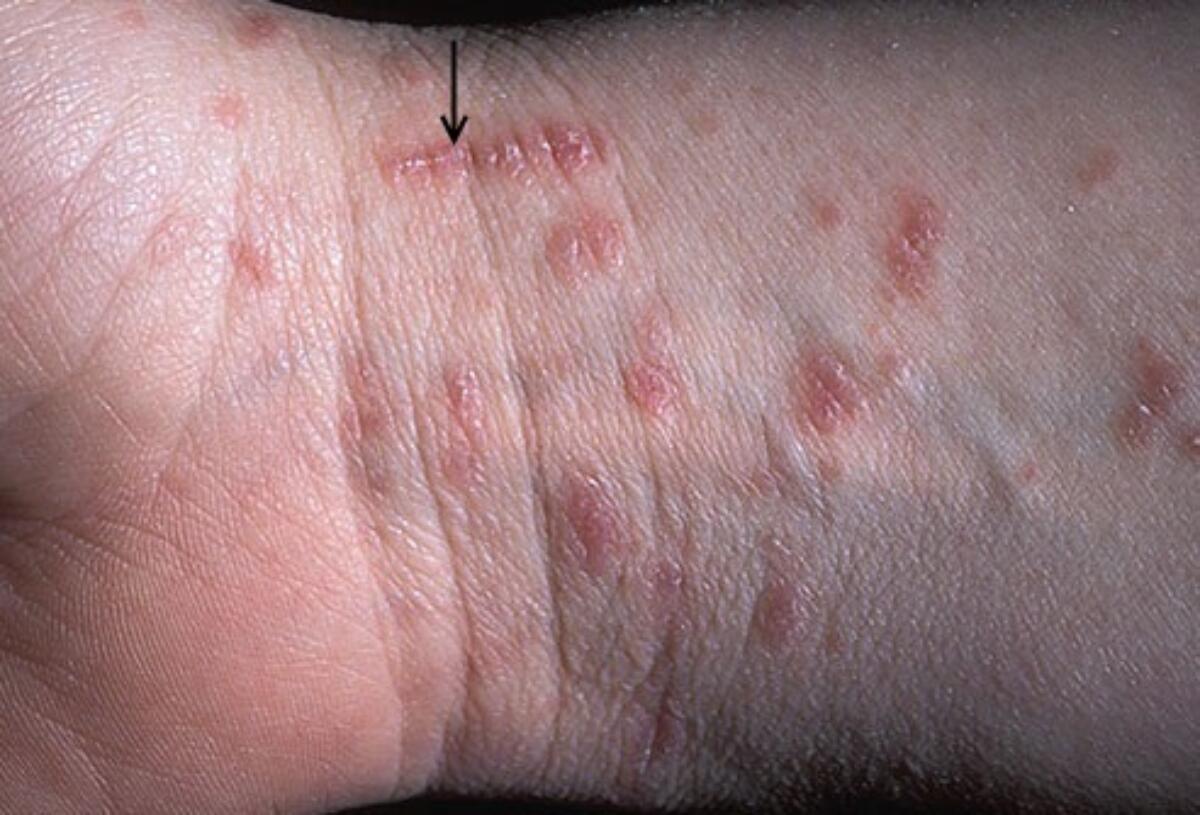
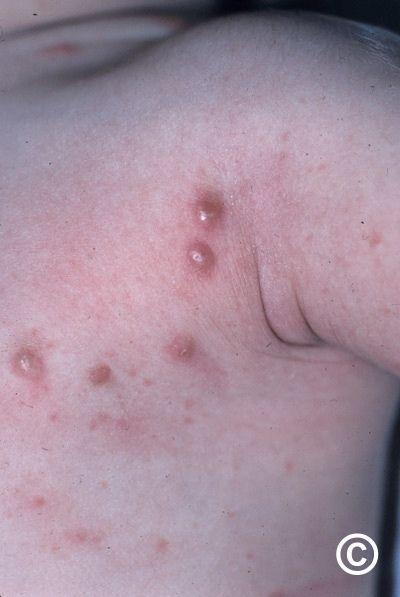
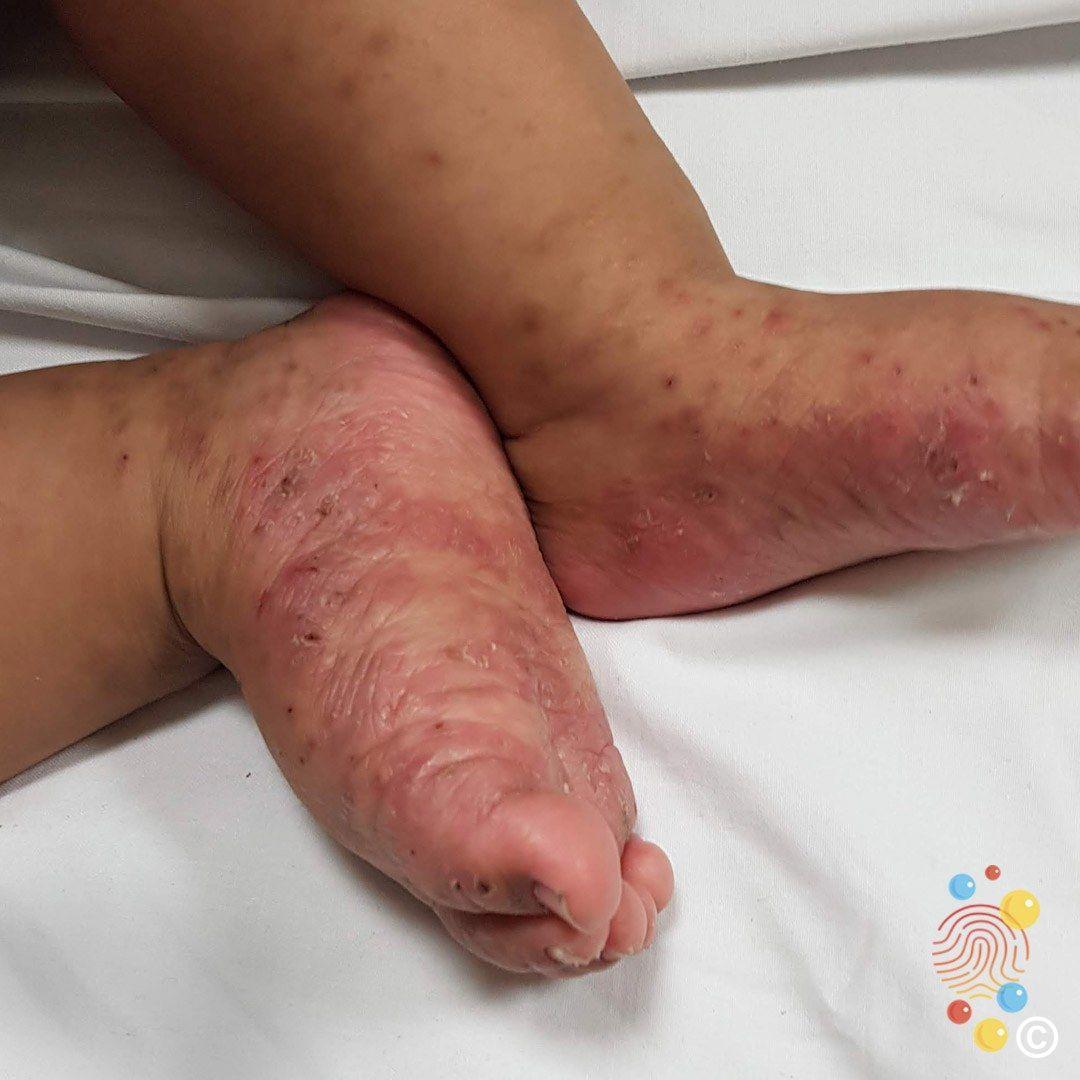
Human scabies is caused by infection with a mite known as ‘Sarcoptes scabiei var. hominis’. The mites are smaller than a pinhead. People get scabies through direct skin contact with someone else who has scabies, or through sharing items such as clothing and towels.
Scabies is not hereditary (i.e. not genetic), but it is common for several members of a family to have scabies at the same time as it spreads easily among people who live together.
People with a weakened immune system (immunosuppressed), neurological impairment (e.g. dementia and Down's syndrome), and those inappropriately treated with strong topical steroids are more likely to get crusted scabies, in which there are very large numbers of mites.
Take advice from a pharmacist as treatment for scabies can be bought without a prescription, though you may choose to see your GP first to confirm the diagnosis.
The most common medications for scabies are topical insecticide treatments (applied directly to the skin). While several topical treatments are used in the treatment of scabies, use of permethrin 5% cream is often advised first. It is important to follow all the instructions carefully (see further down for detailed advice).
Anyone with scabies needs two treatments, one week apart. If you have scabies, all your household members, close contacts (e.g. grandparents), and sleeping/sexual partners should also be treated twice - even if they have no symptoms. This is because it can take up to six weeks to develop symptoms after you become affected. Everyone should use their treatment on the same day. You may need to take advice from your GP for young babies.
Contact your GP surgery if the creams are not available or not working despite being used by everyone as directed with washing of clothes etc as detailed. An oral medication (tablet) called ivermectin is usually needed for crusted scabies and may be offered for scabies that seems to be resistant to creams/lotions.
A strong steroid cream may be needed for skin itching that can continue for several weeks after the scabies treatment is complete. Click on this link for more information.
If scabies is ongoing or recurrent, then all cases and all relevant contacts will need further treatment.
The following groups of people may need to be referred to a specialist, who will be either a Dermatologist or a GPwER/GPwSI (a GP who has been trained in relevant areas of dermatology):
The appointment may be face-to-face (the person attends the clinic), or a video call (teledermatology).
Additional resources on scabies that some adults might find useful can be found on the BASH website.
If you, a family member, or friend have an undiagnosed skin condition; or you want to learn more about how to treat skin conditions, please view our short video on how to get the best from this website.
Disclaimer - the author PCDS cannot accept responsibility for any misleading or incorrect statements, and the management of individual patients remains the direct responsibility of the individual doctor. We do however hope that visitors to this site can contact us regarding comments that are considered misleading or incorrect so that we can continue to improve the site.
Image Rights - The PCDS would like to thank Dermatoweb, DermQuest (Galderma), and others who have contributed images. All named individuals and organisations maintain copyright for the relevant images.
The following pharmaceutical companies have had no involvement in the content of this website or in our conference programmes