Bowen's disease

LAST UPDATED: Jan 31, 2025

Patient Information Leaflet
Link: Bowen's disease

https://pcds.org.uk/patient-info-leaflets/bowens-disease

What is Bowen’s disease?

Bowen’s disease is an area of sun-damaged skin, which left untreated can very occasionally turn into a type of skin cancer called squamous cell carcinoma.
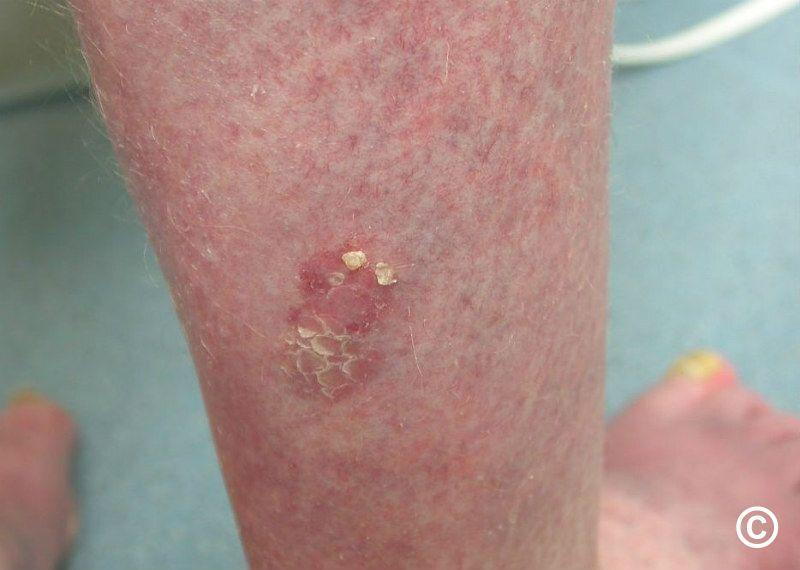
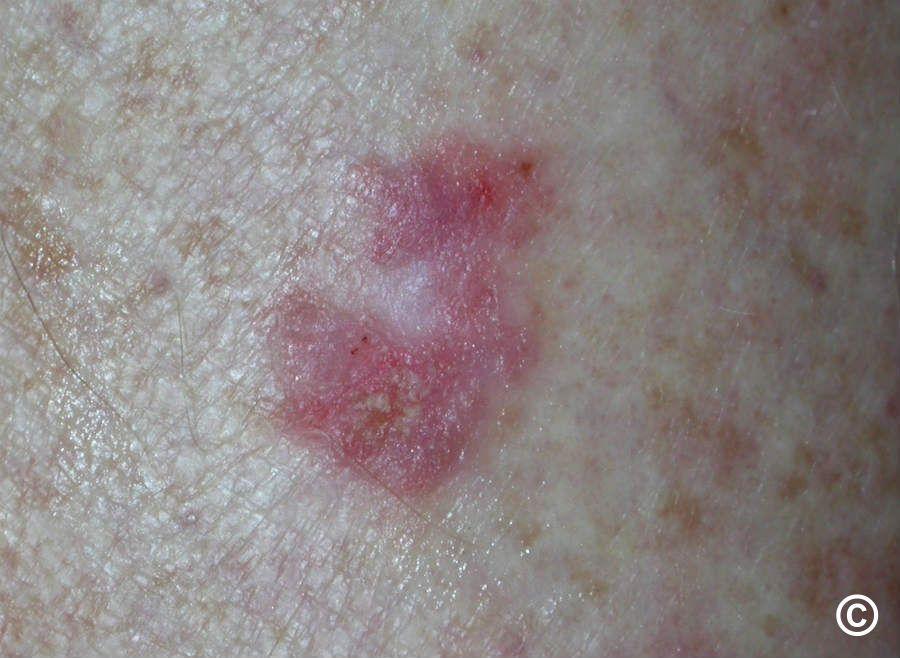
What does Bowen’s disease look and feel like?

  • Commonly affects the most sun-exposed area of skin such as the face, hands, and lower legs
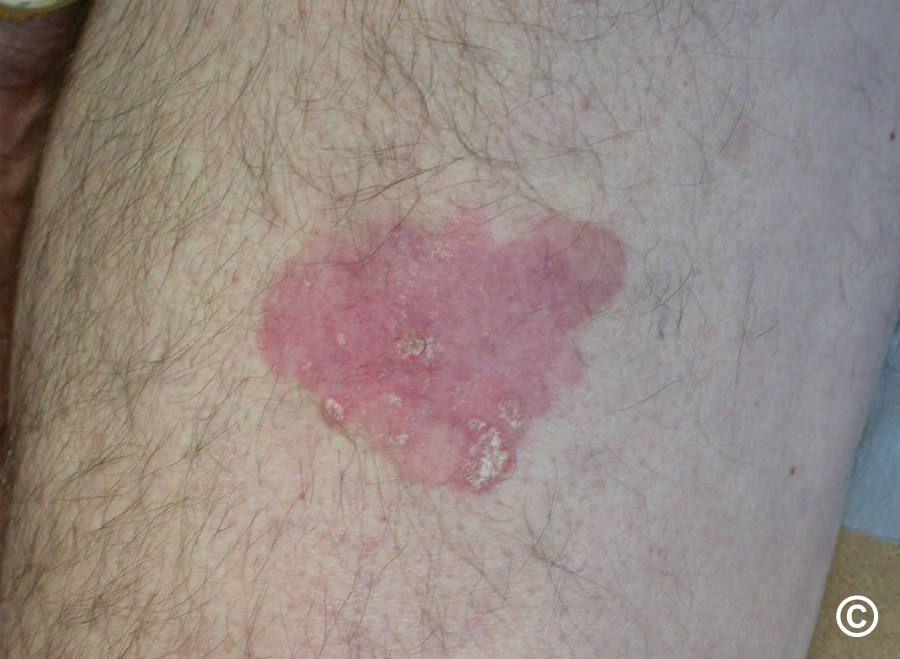
  • Starts as a small red scaly area, which grows very slowly and may reach a diameter of a few cm across
  • Often feels rough
  • Usually there are no symptoms (unlike eczema, which is often itchy)
  • There may be more than one area affected
  • The development of a new painful/tender lump, or occasionally ulcer, within a patch of Bowen’s disease may signify change into a squamous cell carcinoma

What causes Bowen’s disease?

  • The most common cause is long-term sun exposure
  • People most at risk are those with fair skin who burn easily and rarely tan
  • The risk of developing Bowen’s disease increases with age
  • People who have a weakened immune system or are on long term immunosuppression medication are also at an increased risk
  • Very occasionally, Bowen’s disease may be due to the human papillomavirus (a common virus that can cause viral warts)

Things you can do to help yourself

Protect yourself from UV damage

  • It is very important to employ adequate UV protection both in the UK and when abroad. The most important UV protective measures are:
    • Avoiding sitting or lying directly in the sun
    • Wearing a broad-brimmed hat
    • When in the sun use a ‘high protection’ sunscreen of at least SPF 30 which also has high UVA protection (4 or 5 star). Apply sunscreen generously 15 to 30 minutes before going out in the sun, or go swimming, and make sure you reapply frequently when in the sun
  • For more detailed information on UV-protection and advice on increasing your vitamin D intake (your vitamin D levels will drop if you reduce your UV exposure significantly) please refer to our patient information leaflet on Skin Cancer Prevention

Self-examination

  • Once you have had Bowen’s disease, you are at a higher risk of developing another patch of Bowen’s disease, squamous cell carcinoma (SCC), and other types of skin cancer
  • For more information on different types of skin cancer please refer to our guidance on the Self-examination of Moles
  • If you are concerned that you may be developing a squamous cell skin cancer (or other skin cancer) you must contact your specialist (if currently under the care of a specialist), or GP, urgently

Referral to a specialist

Many cases of Bowen’s disease can be managed by your GP or other member of the primary healthcare team. If your doctor is not sure of the diagnosis they may refer you to a specialist, who could be a dermatologist or a GPwER/GPwSI (a GP who has also been trained in relevant areas of dermatology).

Increasingly, the initial referral may be through teledermoscopy, where a picture of your skin lesion is sent to a specialist to advise the best course of action.

Occasionally, a small skin biopsy may be needed, using local anaesthetic, to confirm the diagnosis. This could be done by your GP if they are experienced in skin surgery, or a specialist.

Management of Bowen’s disease

It is important to ask a healthcare professional for a full skin examination to check for other skin lesions that may also need attention.

In terms of treatment, this depends on various factors including size & site (where the Bowen’s disease is located), and your general health.

Treatment options include:

  • Efudix ® cream (5-FU cream) – applied thinly once a day to the affected area and up to 4 mm of normal surrounding skin, usually for 4 weeks; occasionally your doctor may recommend longer. Hands should be washed thoroughly after application. The treated area must be left uncovered, and the cream washed off approximately 8 hours after application. During treatment the skin will become more red and crusty. Other topical treatments may also be offered
  • Cryosurgery – this is the same cold spray (liquid nitrogen) used to treat warts. Treatment is usually needed for 20-30 seconds, which may result in a blister, and often a pale scar
  • Photodynamic therapy – this involves the combination of a cream with a special light source. This treatment is not available in all areas
  • Skin surgery – given the usual good response to non-surgical treatments, the main indications for surgery are if the diagnosis is uncertain and/or the lesion is not responding to treatment. Two surgical techniques can be used:
    • Curettage – the most commonly used surgical treatment for Bowen’s disease during which the lesion is scooped out, the bleeding stopped, and the wound left to heal itself without stitches
    • Excision – in which the Bowen’s and a small margin of surrounding normal skin is cut out and stitched back together
  • No treatment watch and wait. Sometimes the healthcare professional along with the patient and/or carer may decide to leave the Bowen’s alone if they believe that the patient is very unlikely to come to any harm

It is important that you discuss treatment options with your specialist (or GP) and ask about anything that you do not understand.

Helping with other skin conditions

If you, a family member, or friend have an undiagnosed skin condition; or you want to learn more about how to treat skin conditions, please view our short video on how to get the best from this website.

Disclaimer - the author PCDS cannot accept responsibility for any misleading or incorrect statements, and the management of individual patients remains the direct responsibility of the individual doctor. We do however hope that visitors to this site can contact us regarding comments that are considered misleading or incorrect so that we can continue to improve the site.

Image Rights - The PCDS would like to thank Dermatoweb, DermQuest (Galderma), and others who have contributed images. All named individuals and organisations maintain copyright for the relevant images.

Download the Patient Information Leaflet PDF

Download

The following pharmaceutical companies have had no involvement in the content of this website or in our conference programmes


Almirall
Galderma
Glenmark
Johnson & Johnson
La Roche-Posay
LEO Pharma
Pierre Fabre
Schuco