LAST UPDATED: Jan 31, 2025

https://pcds.org.uk/patient-info-leaflets/myxoid-cyst-digital-mucous-cyst
A myxoid cyst, or digital mucous cyst, is a small, non-cancerous bump most often found near a joint at the end of your finger. They are often related to osteoarthritis. Myxoid cysts usually don’t require treatment.
Myxoid cysts are most common near the nail on the index, middle or ring finger of your preferred (dominant) hand. They are not as common on the toes. You will usually only have one cyst, but you may develop more.
Myxoid cysts have a smooth, shiny surface. They are usually skin-coloured and look almost translucent (light can shine through). They range in size from 5 mm to 1 cm across, which is about the size of a pencil eraser. The bumps are filled with a jelly-like, sticky fluid that may ooze from the cyst, and can sometimes be blood-stained. They typically don’t cause any pain; however, you may experience arthritis pain and stiffness in the nearby joint.
Rarely, a myxoid cyst may grow under your nail or involve the root of the nail. This type of cyst can be painful. It can cause a groove to develop down the length of your nail. You may also see slight depressions or colour changes. Your nail may split, or you may lose your nail.
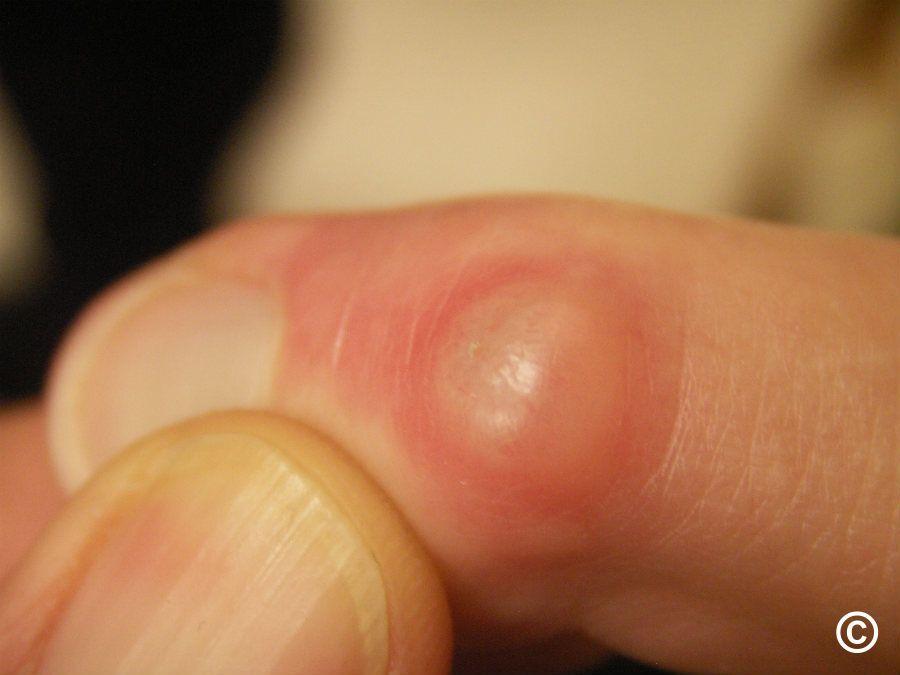
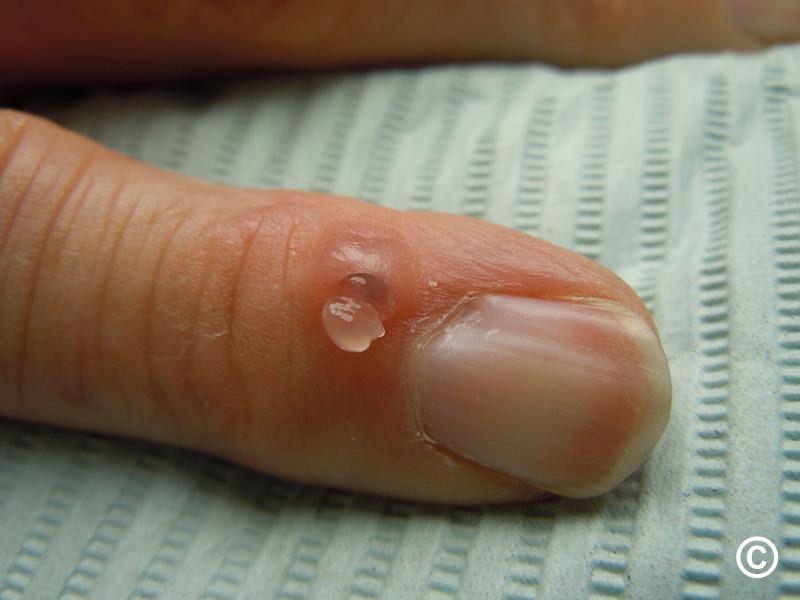
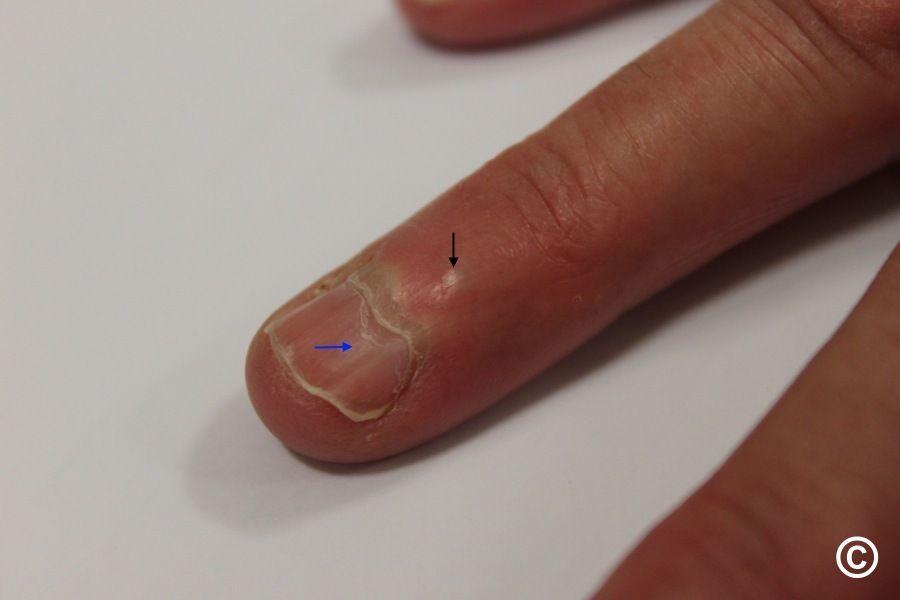
The exact cause is unknown. Digital myxoid cysts occur most frequently in people in their sixties but may develop at any age. Individuals with osteoarthritis and women and are more at risk, and in some cases there might be history of trauma to the affected finger or toe.
Most myxoid cysts don’t need treatment. Firmly pressing on the cyst repeatedly for several weeks may help reduce the size of the cyst in some cases. You shouldn’t try to drain or puncture the cyst yourself as this can cause an infection.
You should only see a health professional if the cyst is causing pain, affecting your quality of life, or becomes infected (red, warm to touch and tender).
There is no reliably effective medical treatment for a myxoid cyst, so if a referral is needed a surgical approach would need to be considered and you should ask to be referred to a doctor who undertakes regular hand surgery, this could be a plastic surgeon, orthopaedic surgeon, or sometimes a dermatologist.
The specialist will discuss whether or not surgery is appropriate - even though surgical removal is the best option, some cysts will recur.
Other treatment options, which are less likely to be successful, include - repeated drainage of the cyst using a sterile needle, injection with steroid or a chemical that shrinks the cyst, and a freezing method known as cryosurgery.
If you, a family member, or friend have an undiagnosed skin condition; or you want to learn more about how to treat skin conditions, please view our short video on how to get the best from this website.
Disclaimer - the author PCDS cannot accept responsibility for any misleading or incorrect statements, and the management of individual patients remains the direct responsibility of the individual doctor. We do however hope that visitors to this site can contact us regarding comments that are considered misleading or incorrect so that we can continue to improve the site.
Image Rights - The PCDS would like to thank Dermatoweb, DermQuest (Galderma), and others who have contributed images. All named individuals and organisations maintain copyright for the relevant images.
The following pharmaceutical companies have had no involvement in the content of this website or in our conference programmes